Showing posts with label Movies I'm Watching. Show all posts

Sunday, June 19, 2022

Movies I'm Watching: What's so great about Blade Runner?

I generally avoid movies and TV shows that are relentlessly hyped and talked about in the media (I'm the guy who saw the first episode of 'Breaking Bad' the day the final episode aired). As a result, despite being a fan of movies in general, there are quite a few famous films I've never seen. These excessively promoted flicks are often a big disappointment, I find, so I shy away from them. For example, I didn't see any of the Godfather movies until about 2005 (the first two, against the trend, were not disappointments, and, for the record, I binge-watched 'Breaking Bad' in about two weeks). That said, I've still never seen 'Midnight Cowboy', 'Apocalypse Now', 'The Deer Hunter', any of the Star Wars films, 'Titanic', any of the Tolkein adaptations, 'Blade Runner', and on and on (as Kurt Vonnegut used to say). 

Last night, however, 'Blade Runner' was on Netflix, so I gave it a shot. I have to say, I don't understand why so many people seem to think this is a great film. First, this is supposed to be Los Angeles. Why is it raining all the time? Second, this is supposed to be Los Angeles. Why are all the stores advertising themselves in Japanese? Third, why are half the inhabitants Japanese and Chinese? Fourth, if, the job of the burnt-out cop, Rick Deckard, the Harrison Ford character, is to kill replicants, as we are told, why doesn't he eliminate the Rachel character immediately? Is he smitten? Does he see something different in her? If so, the director has failed to explain to us what makes it easy for him to 'retire' the other female replicant but not Rachel. It is suggested that she is a newer version that has been given manufactured memories and that she herself is unsure about whether she is a replicant, but never is Deckard's motivation made clear.

So, she's pretty. He's attracted to her--presumably so strongly that he's willing to rebel--but we don't even get a good sex scene to make clear his desire for her (working here on the assumption that replicants are so human-like that they can have sex, even if it's non-reproductive sex). 

Aside from that, while the acting is not notably bad, in my view, it's notably notable either. In short, I don't see why this has the following that it seems to have--I don't understand why I've been hearing about it over and over for so many years. When it was first released, I lived in Tokyo (1982). I remember seeing a billboard for the movie being painted to the right side of the entrance to Shinjuku Station (East Exit) back when real people still painted movie billboards by hand in Japan when a film was first released. Apparently, there are different versions made subsequently, though. I saw the 'Final Cut'. 

I haven't read the story the film is based on. Given the reputation of Philip K. Dick and, having read (and enjoyed) 'The Man in the High Tower', I suspect it worked better on the printed page than as an adaption. In short, I don't get it.... 

Wednesday, February 3, 2016

Movies I'm Watching: Wings (1966)

The Criterion Collection streaming on Hulu Plus is a treasure. I don't watch the films available there as often as I should, but last night I randomly selected a Russian film called Wings (1966) that was a real treat. Beautifully filmed and acted. Storytelling at its best. Well worth the 84 minutes it runs. Made by Larisa Shepitko. Starring (if that's the right word—there is no Hollywood glitz here)—character actress Maya Bulgakova as a once-heroic Soviet fighter pilot now living a life of quiet desperation as a school principal.

Somehow, I found myself watching Hobson's Choice (1954) afterward—a beautifully restored print and another fine film. I noticed something funny in Hobson's Choice: a nuclear power plant cooling tower is visible in the background of one of the scenes. I've seen the film maybe five times and never noticed it before. The story is set in the age of the bustle—when the bustle was brand new in the world of feminine fashions—so, perhaps around 1870, long before nuclear reactors....

Photo from The Criterion Collection website.

Wednesday, December 19, 2012

Movies I'm Watching: Lincoln (December 18, 2012)

I've just seen Lincoln, directed by Steven Spielberg, starring Daniel Day-Lewis, Sally Field, David Strathairn, Hal Holbrook, Tommy Lee Jones, and many others. I enjoyed the film. It never felt like it was dragging, despite its length (150 minutes), but it could have been much better, it seems to me.

The period is nicely re-created. The props and costumes seem carefully researched and accurate. The use of a muted color palette--colors that look slightly faded--is an anachronism, but it works, somehow making it easier to believe that we are back in 1865. Although it's nonsensical to think color would have been any less vibrant then than it is now, the subdued tones somehow make it easier to suspend disbelief, despite the logical contradiction involved. It is the one anachronism in the film that seems worth the sacrifice of truth. The device is used particularly in some of the outdoor scenes.

For the most part, the cast seemed of the period. The rather colorful goings-on in the House of Representatives and the flamboyant language used seems consistent with the history I know (imagine how much better C-Span ratings would be if our representatives spoke with the same forthrightness, animation, and verbal invention today). Daniel Day-Lewis is entirely believable as Lincoln, and the long shots of him, in particular, beautifully capture the tall, lanky form we associate with our 16th president. As usual, Day-Lewis delivers what seems a pitch-perfect performance. David Straithairn (as Seward) and Hal Holbrook (as Blair), are stand-outs among the supporting cast. Sally Field gives a fine performance, but her face is so strongly associated in my mind with her early TV role as "The Flying Nun" that I'm afraid I found it hard to completely accept her as Mrs. Lincoln--a curse of my generation. No fault of Ms. Field's, of course. The boy playing Tad (Gulliver McGrath) seemed right as well. It would take a second viewing to connect all the names of the various other actors with the many well-played smaller roles. The end credits rolled by much too quickly.    

Above I've listed some of what seemed right about Lincoln. A few scenes seemed out of kilter with the rest of the movie, however. The bloody opening scene, in particular, seemed entirely unnecessary--a gratuitous reminder that the Civil War involved a great deal of bloody hand-to-hand conflict with comparatively primitive weapons, a point that no longer needs to be made. This seemed an overdramatization. Spielberg never seems willing to give his audience credit for any intelligence, but perhaps this particular choice was more the fault of the script than the director. The early scenes seem to be designed also to make the point that former slaves and freedmen were fighting as soldiers for the Union, a point that could have been more subtly made.

I found it hard to accept another early scene that had Lincoln talking to soldiers, both black and white, that recite by heart his Gettysburg Address--a piece of writing that is rightly revered, but a speech I doubt was accorded then (scarcely a year after it was uttered) the same almost worshipful appreciation it enjoys today. It was admired among the president's political supporters (although ridiculed by newspapers unsympathetic to the president) and it was widely printed and disseminated, yet it seems unlikely that so many soldiers would have known the lines by heart that a randomly chosen handful would be made up entirely of men that had mostly committed Lincoln's now-famous words to memory. Perhaps I'm wrong about this. I don't know.

A later scene involves the president arguing with his oldest son, Robert, who wants to enlist and fight (President Lincoln and his wife, still grieving from the loss of another son, have done all they can to keep Robert out of the army). Robert feels his non-participation is an affront to his manhood. He is finally prompted to defy his father by the sight outside a military hospital of two men pushing a wheelbarrow dripping blood. Robert follows the men to the back of the building where they dump a pile of amputated limbs into a pit already partly filled with arms and legs. What seems wrong about the scene (if it was necessary at all) is that a blanket or some such large piece of cloth is thrown over the wheelbarrow, hiding the limbs. After four years of bloody war and in an age when people were far less squeamish than we are, it is likely that no one would have bothered, and it takes little imagination as a viewer to guess what the men are transporting. Why be coy? This seems another example of overdramatization and lack of respect for the moviegoer's intelligence. Are we supposed to be surprised when the cloth is drawn away and the limbs tumble into the pit when it has been obvious from the outset?

Among the biggest failings, in my view, is the handling of the climactic scene--the roll call vote on the 13th Amendment to the constitution that abolished slavery. It's drawn out needlessly here. It's very simply preposterous to think that there would have been any kind of cliffhanger moment--that no one would have known the outcome until it was formerly announced to the speaker of the house. As the count came in, those present would surely have been keeping tally themselves. It would have been apparent that the amendment had passed as soon as the required number of votes came in—before the entire roll had been called. Another example of force-fed drama where a quieter, more subtle approach would have been sufficient—and ultimately more powerful. Repeatedly in this film we see Spielberg as magician reaching into his hat to pull out a rabbit, the magician seemingly oblivious to the fact that he's chosen a top hat made of glass: We can see the rabbit before the trick is done.

The end of the film, too, seems poorly conceived. The scene between Thaddeus Stevens (Tommy Lee Jones) and his quadroon housekeeper in bed, for example, was somewhat baffling, as it comes out of the blue (unless you already know the history). Their relationship was a real one. The housekeeper was Lydia Hamilton Smith and apparently she and Stevens were lovers, but the relationship could have been more subtly suggested if there were no time to develop it as part of the story. Instead of trying to surprise us with this sudden revelation (another rabbit), why not explain what their relationship actually was? Throughout Lincoln there is an overt, well-intentioned surface effort to be respectful of the African Americans portrayed without any attempt to clarify exactly what these people were doing at the time, which, apparently, was far more than the film suggests. Spielberg's treatment gives the impression that free blacks in Washington and elsewhere were patiently waiting around for white men to hand them freedom--which is not entirely true.

Likewise, I fail to understand the point of the late clip of Lincoln delivering part of his Second Inaugural Address, which comes after we are shown Lincoln dead. The way it's presented, it has the feel of an outtake pinned to the film's backside just because someone thought it would be a shame to waste it. The assassination itself could have been left out, too, for that matter. We know that part of the story. The film would have been far more effective if it had concentrated on the drama chosen for its focus--the politics--letting that drama speak for itself.

Not a bad film. As I say, it's sufficiently interesting that it doesn't seem overly long, despite its two-and-a-half hour running time, but it suffers from perhaps the most common flaw of much Hollywood filmmaking: It is heavy-handed where it doesn't need to be. It assumes that its audience lacks intelligence and is incapable of enjoying anything but the crudest forms of entertainment.

Monday, April 18, 2011

Movies I'm Watching: Little Voice

Our local Blockbuster Video shop shut down recently. I took advantage of the opportunity the closing afforded to pick up about a dozen films for only $2.99 each, as well as two seasons of Mad Men at a dollar a disk. Among the films I chose was Little Voice (1998, Directed by Mark Herman; starring Jane Horrocks, Michael Caine, Jim Broadbent, Brenda Blethyn, and Ewan McGregor), purely on the strength of Michael Caine's presence in the cast (I had not been aware of Horrocks before--most of her work appears to have been in television or--not surprisingly--doing voice characterizations).

I would call this a flawed gem. The writing struck me as weak in places: did Mari, the Brenda Blethyn character, have to be so unrelievedly loud and coarse? I think not. More importantly, the sudden nastiness of Michael Caine's character (down-and-out promoter Ray Say) toward Mari seemed out of character. He turns on her and needlessly humiliates her, saying, essentially, that she disgusts him physically. In the flow of the story, the scene is used to express his frustration when he begins to feel that Mari is an obstacle in the way of his efforts to exploit her daughter, the eponymous Little Voice, a pathologically shy girl that barely speaks yet has an extraordinary ability to mimic some of the more interesting female singers of the 1940s, '50s and '60s, including Judy Garland, Shirley Bassey, and Marilyn Monroe. Yet, Ray was happy to pick Mari up in the bar where he meets her and enjoy his time with her before he knew anything about the woman's extraordinary singing daughter--in other words, before he had any motive to pretend to be interested. Clearly he was attracted to her before Little Voice (or LV as she's known) becomes an issue. In contrast to this bit of nastiness, he is quite tender with LV (although he has a strong motive here, he seems genuinely to care about her). Is he really so two-faced? Is he really so unfeeling? Perhaps, but something in the logic of the scene with Mari seemed deficient.

Having said that, Jim Broadent is brilliant as the club owner, Ewan McGregor delivers a solid performance, and Jane Horrocks is simply phenomenal. It's really hard to believe she's not lip-synching, but apparently she isn't. She actually can sing like Judy Garland, like Shirley Bassey, like Marilyn Monroe. While the attachment of the shy LV to her dead father quickly becomes rather creepy, it's easy to ignore that and other problems for the sheer pleasure of hearing Horrocks sing. In other words, Little Voice works marvelously as a vehicle for her special talent. Not surprisingly, the film is an adaptation of a play of the same name originally written to showcase Horrocks and her singing. Recommended.

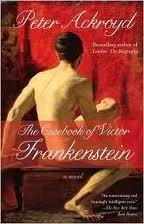
Books I'm Reading: The Casebook of Victor Frankenstein

Not long ago the subject of Frankenstein came up at a family gathering. I don't remember what got us started, but it occurred to me that my son had seen Young Frankenstein (1974, Directed by Mel Brooks, starring Gene Wilder, Peter Boyle, Madeline Kahn, Marty Feldman, Terri Garr, Cloris Leachman, and Kenneth Mars) and thought it funny, but never seen the original films that Young Frankenstein spoofed. Turns out my mother had never seen them either. So, we rented Frankenstein (1931, Directed by James Whale, starring Boris Karloff, Colin Clive, Mae Clark, and Edward Van Sloan) and The Bride of Frankenstein (1935, Directed by James Whale, starring Boris Karloff, Colin Clive, Valery Hobson, Ernest Thesiger, and Elsa Lanchester) and then watched Young Frankenstein again, having something of a Frankenstein Fest in the course of a few nights.

It had been a long time since I'd seen either of the original films.  It's funny how memory works: I see now that much of what Young Frankenstein makes fun of (and what I remember about the original films) is in The Bride of Frankenstein, rather than the first film. I've always thought (and would still say) the later film is the better of the two (partly because sound technology advanced a great deal in the four years from 1931 to 1935), but both have held up rather well. Director Whale and Karloff succeed in making the monster a sympathetic character--as I'm surely not the first to note. It's no excuse to lament being brought into the world against one's will--each one of us is born into the world without a say in the matter--but the misunderstood creature is mercilessly goaded; it's easy to see both that he is done in by his own character faults and that he's not really to blame for what he does. Is it going too far to call the story Shakespearean? I've never read the original story by Mary Shelley. I think the time has come. Clearly, she captured something elemental, something that continues to fascinate after nearly 200 years (the story was first published in 1818).

Peter Ackroyd's entertaining retelling comes at events from a new perspective--that of Victor Frankenstein himself--and ends with a sharp twist on the final page of the book, a twist I won't spoil. In this retelling (The Casebook of Victor Frankenstein, by Peter Ackroyd, 2008, Anchor Books), Frankenstein forms a friendship with Percy Bysshe Shelley at Oxford that serves to spur his experiments in the reanimation of dead tissue, experiments that inevitably escalate into an obsession. We witness at first hand the birth of the creature, its escape, and the revenge it takes upon its creator and the people he cares for--all narrated in what seems a period-perfect voice, as if Frankenstein is reading from his casebook. The matter-of-fact report that takes us through the process of the creation is deliciously ghoulish and in places truly horrifying in a way that the films never capture. A fast-paced, page-turner with depth. This one's very likely to get your electrical fluids going. Recommended.

We watched the films not long before my last birthday. My mother kindly thought to get me this book as a birthday gift. The timing was perfect.

Thursday, April 22, 2010

Movies I'm Watching: The Best Movies I've Never Seen (April 22, 2010)

In the past few days, I've seen more of the films recommended in Leonard Maltin's 151 Best Movies You've Never Seen. As noted in my previous post on the subject. I didn't think that much of any of them. So far, I remain generally unimpressed by the recommendations in the book. This post looks at Aurora Borealis and Better Than Sex.

Aurora Borealis (2005, written by Brent Boyd, directed by James C. E. Burke, starring Joshua Jackson, Steven Pasquale, Donald Sutherland, Louise Fletcher, Juliette Lewis, and others) has been much praised, I see, but it struck me as being on the level of a decent made-for-TV movie, no better. Despite some good performances, particularly by Juliette Lewis, the whole was unpersuasive. Much as I like Donald Sutherland, and despite a very convincing Parkinson's disease tremor, I found his performance uneven. 

But the script is the real problem here: Would Duncan (Joshua Jackson), a man unable to shoot a deer, really give his aging grandfather a loaded shotgun to commit suicide with? I found myself unable to accept the incongruity. Duncan's brother is a cliché. The ending of the film is more than a little too pat--how nice that the Donald Sutherland character dies on cue so that his grandson can fly off to San Diego to get back together with Kate (Juliette Lewis). If only life were so neat.  

Better Than Sex (2000, written and directed by Jonathan Teplitzky, starring David Wenham, Susie Porter, and others) is at least a little bit different. It approaches falling in love from the perspective of two people trying not to fall in love--two people surprised they have fallen in love. 

Josh (David Wenham) and Cin (Susie Porter) meet at a party, they aren't especially attracted to one another at first, but they talk some and end up sharing a taxi home. He's staying in town for only three days. During the taxi ride, both Josh and Cin begin to think about a quick fling--knowing there'd be no strings attached. Inevitably, she asks him in when they arrive at her door, and one thing leads to another. The rest of the film is a chronicle of a one-night stand that ends up lasting three days (and then some). What was supposed to have been no-hassle sex turns into emotional attachment on both sides.

We can't help our feelings. Sometimes we fall in love in spite of ourselves, in spite of everything.  

The story is told through straight narrative intercut with documentary-like interview segments, portions of phone calls between secondary characters, musings we understand to be the thoughts of the main characters (sometimes during the action, like theatrical asides; sometimes with the character sitting against a studio backdrop as if being interviewed), and through wry comments from the taxi driver. The taxi driver keeps showing up in the right place at the right time, always encouraging love, like Cupid on wheels. The creative editing keeps things moving, keeps the sex (essential to the story) from playing too dominant a role or becoming gratuitous, and it keeps the audience at a distance. We are voyeurs, but voyeurs invited to see the show and the players know they are being watched and we know they know. Despite the somewhat obtrusive devices (especially the taxi driver) and a falling back on cliché in some scenes (notably the girl-takes-forever-to-get-ready-to-go-out-and-doesn't-have-anything-to-wear scene, which is quite long, and the guy-never-bothers-to-flush-the-toilet scene), Better Than Sex was mostly intelligent and entertaining. 

Wednesday, April 21, 2010

Movies I'm Watching: The Best Movies I've Never Seen (April 21, 2010)

In the past few days, I've seen three more of the films recommended in Leonard Maltin's 151 Best Movies You've Never Seen. I didn't think that much of any of them, to tell the truth. I wouldn't say they were a waste of time, but--so far, anyway--I have been disappointed by the recommendations in the book more often than not. I saw: Baadasssss! (2004, written and directed by Mario Van Peebles--based on a book by his father, Melvin Van Peebles--starring Mario Van Peebles, Joy Bryant, T. K. Carter, Terry Crews, Ossie Davis, David Alan Grier, and others); Better Than Sex (2000); and Aurora Borealis (2005). This post looks at Baadasssss! More about Better Than Sex and Aurora Borealis in a post tomorrow.

While Baadassss! was interesting on a number of levels, it left me wishing the film had been a straight documentary rather than a hybrid documentary/biopic. Baadasssss!, tells the story of the making of Melvin Van Peebles' groundbreaking 1971 film Sweet Sweetback's Baadasssss Song, generally considered the first film made for a black audience by a black director that wasn't forced to toady to a white-controlled studio. Baadasssss! was interesting because it tells an interesting story: The elder Van Peebles, set out to make a feature film with almost no resources and entirely outside the Hollywood system--engaging in what some have referred to as "guerilla film-making." Van Peebles worked with whatever he could scrounge. The actors were friends and family. The sets were makeshift. Money was perpetually running out (he finally finished the film with a $50,000 loan from Bill Cosby). Surprisingly, Van Peebles succeeded.

The elder Van Peebles was angry and it was an angry period in US history. The Black Panthers were agitating for change (and later championed the 1971 film), the Vietnam War was raging. Hoping to direct full-length films after making several shorts, mostly on his own, Columbia offered Van Peebles Watermelon Man, a comedy about a white man that wakes up black. Watermelon Man was a commercial success, but it was mostly his contempt for the studios born of that experience that drove Van Peebles to set out on his own. It's a testament to his determination and persistence that Sweet Sweetback's Baadasssss Song was completed and released (although rated X and initially in only two theaters nationwide). It went on to become the highest-grossing independent film made up until that time. Van Peebles paved the way for other independent black filmmakers, indirectly spawning the blackxploitation genre as well.

Baadasssss! switches back and forth between a straight retelling of the story of the original film production and documentary-like interviews with the people involved (both the actual people and the actors portraying them). Baadasssss! also attempts to say something about the relationship between the younger filmmaker and his obsessed father, but somehow that relationship never comes across as genuine, and Baadasssss! ultimately seems a fairly bland retelling of the facts. Still, Mario Van Peebles delivers an interesting performance as his father, the story is a good one, and the film gives us a glimpse of what it meant to make a film independently in the early 1970s--more interestingly, what it meant for a black man with a message the establishment didn't want to hear to make a film independently in the early 1970s. Having said that, I get the impression from reading about Sweet Sweetback's Baadasssss Song that Baadasssss! downplays that film's violence and sexuality, and, in that sense, Baadasssss! is not entirely honest. Not a great film, by any means, but probably worth seeing once. I imagine Sweet Sweetback's Baadasssss Song is available on DVD as well. Now I'm curious.

Thursday, April 15, 2010

Movies I'm Watching: Kinky Boots

I've just seen Kinky Boots (2005, directed by Julian Jarrold, starring Joel Edgerton, Chiwetel Ejiofor, Sarah-Jane Potts, and others), an entertaining bit of fluff, purportedly based on a true story but giving the impression that the writers have found it necessary (as they so often do) to embellish and add for "dramatic effect." It would be nice if moviemakers once in a while gave their audiences credit for having a little more intelligence. One wonders what the real story was.

Still, this was fun to watch and there are one or two truly funny moments. The highlights of the film are the performance of Ejiofor as drag queen "Lola" and the final runway show in Milan with Charlie (Edgerton) left on his own to model the family factory's new line of "boots for women who are men."

Saturday, April 10, 2010

Movies I'm Watching: The Lives of Others

How long has it been now? Almost three years? Yes, going on three years since someone recommended The Lives of Others to me. It's taken me this long to see it. I finished watching it a few minutes ago. I feel drained.

Das Leben den Anderen [The Lives of Others] (German, 2006, written and directed by Florian Henckel von Donnersmarck, starring Martina Gedeck, Ulrich Mühe, Sebastian Koch, Ulrich Tukur, Thomas Thieme, and others) is not a perfect film, but it is a multi-layered tour de force nevertheless. It subtly conveys the brutish oppressiveness of the East German security system (although I suspect the reality was blacker than it's painted here) and it's emotionally gripping from start to carefully orchestrated finish, taking us through layer after layer of surveillance and betrayal. 

The end of the film seems hopeful, but is it really? Stasi (Ministry for State Security) Hauptmann Wiesler selflessly defies the system to cover up for the "crimes" and personal betrayals of the people he's supposed to be watching; his is an act of love almost. But the final release of the captives that people the frames of The Lives of Others (an entire nation of people) is ultimately effected by Gorbachev and glasnost in the Soviet Union, by what feels like an external accident--the consequence of a personnel change in a land far away. The fall of the Berlin Wall seems as arbitrary as the system that created it, which is a reminder of how frighteningly and pointlessly cruel human beings can be to one another. After some 45 years of oppression, with what did state security provide anyone? Little more than perks for the elite, the kind of perks that no system of government seems able to do away with.

Director Donnersmarck quickly creates a dark mood. In the opening scene, a prisoner brought in for interrogation is made to sit in a stiff chair and told to sit with his hands under his thighs, palms down--tyranny is always petty--and throughout the film, the control exerted by the state is underscored more effectively by these little details than by speeches in the mouths of the main characters. The opening interrogation, we learn, has been taped. In the following scene, Wiesler uses it in the training of new recruits being taught interrogation techniques. The state is patient. It doesn't care about the lives it destroys. It works in shifts. It has all the time in the world. It strikes at love, at loyalty, at everything human in us. Wiesler reminds his students at the Stasi school never to forget to get a scent sample from each interrogation (using a piece of cloth hidden under the seat of the chair the subject sits in). "For the dogs," Wiesler says. Even our own bodies are made to betray us.

Ulrich Mühe is superb throughout. Taut, calculating, ever-observant as Wiesler the faithful Stasi man; fragile, alone, and desperate to feel something--and, ultimately, to do something good--as Wiesler the rebel. The difference in his demeanor is subtle but powerfully evident even in scenes that show him doing almost nothing--just sitting, listening. Or just sitting, interrogating. Even with virtually no expression on his face, we know which Wiesler we're looking at.


I was immediately reminded of Ray Bradbury's Farhrenheit 451. Fireman Guy Montag (played by Oskar Werner in Truffaut's 1966 movie version of the story) finds himself in much the same position as Wiesler. He is the unquestioning enforcer working in the interest of state security, but slowly he finds himself drawn to the people and the ideas he is charged with monitoring and suppressing. The pacing and the crescendo of pursuit at the end of The Lives of Others are reminiscent of The Day of the Jackal (1973, Directed by Fred Zinneman). Emotionally wrenching. Ultimately ambiguous, but hard to forget. Recommended.


Tuesday, April 6, 2010

Movies I'm Watching: Hedwig and The Angry Inch

Today I watched Hedwig and the Angry Inch (2001, Directed by John Cameron Mitchell, starring Mitchell, Miriam Shor, Michael Pitt, Andrea Martin, Maurice Dean Wint, Ben Mayer-Goodman, and others). I chose this film from three lists of  little-known gems of the cinema I'm going through at the moment. (For more on this topic, see my initial post on the subject, or use the "Movies I'm Watching" tab to the right.)

Hedwig and the Angry Inch might be called a philosophical rock opera--philosophical not in the sense of calm, thoughtful, and accepting in the face of adversity (although, come to think of it, there is indeed an element of the philosophical in that sense in the character of Hedwig), but philosophical in that the story draws on ideas from the history of philosophy in presenting its core theme of the duality of the human soul. According to the DVD box and what I've been able to find elsewhere, this was originally a theatrical production that evolved out of a long series of musical performances by director John Cameron Mitchell in the role of Hedwig, an East Berlin-born transexual glam rocker (Hedwig, not Mitchell) who has suffered a botched sex-change operation that leaves him without a penis or a working vagina--with an "angry inch" instead ("The Angry Inch" is also the name of his back-up band). He hilariously describes himself as having a "Barbie Doll crotch." Much of the story is propelled by the music of Mitchell's collaborator, composer Stephen Trask, and by animated sequences. These are interspersed with soliloquies spoken or half sung by Hedwig who is telling us his/her life story.

A version of the show eventually had a two-year Off-Broadway run. Having now seen the movie, I'm trying to imagine how the theater version might have been staged. The film has nothing of the feel of a filmed stage production. It's thoroughly cinematic.

There is some memorable imagery--notably the bemused spectators at the Bilgewater chain of restaurants that Hedwig's manager keeps booking the band into on the American portion of its "World Tour." The (very few) customers watching the androgynous Hedwig prance in flamboyant Farrah Fawcett-style blonde wigs don't know what to make of him. There is also quite a bit of good music in Hedwig. The score is interesting throughout, and Mitchell can sing. He can act as well. Mitchell's performance is witty and nuanced. Maurice Dean Wint has a small role, but he's wonderful as the salacious Sgt. Luther Robinson. Ben Mayer-Goodman, in the role of Hedwig as a young boy, is excellent as well--not to mention Miriam Shor, a woman, in the role of band member Yitzhak, a man. 

Hedwig and the Angry Inch seems to want to make a statement. Hedwig starts life in Berlin, a divided city. Later, he reluctantly agrees to a sex-change operation so he can marry a GI who will take him to freedom in America (Hedwig wonders if his other half, his better half, is "on the other side"), but the operation goes awry and leaves him split like the city he lives in; he is neither man nor woman. Hedwig (having been abandoned by his GI husband in America) becomes obsessed with following the singing tour of  devoutly Christian "Tommy Gnossis," (originally one of Hedwig's own fans who becomes his protégé and lover; they write songs together) after Tommy has run away from their relationship, appalled to learn that Hedwig has a stub of a penis when finally their kisses and caresses progress to something more sexual. Tommy becomes a rock star, his fame based mostly on songs he stole from Hedwig--and his departure creates another pair of separated halves, for the implication is that Tommy and Hedwig are actually two faces of the same being. The entire film is permeated with a longing for achieving wholeness, a longing for the reconciliation of separated halves.

The opening song and animation recount Aristophanes' story about the original human form told in Plato's Symposium: Man, Aristophanes tells us, originally had four arms and four legs and a head with two faces--one facing front, the other facing back--and two sets of genitals similarly positioned. Primeval humans were the children of the Sun, the Earth, and the Moon. The children of the Sun were doubled men, the children of the Earth were doubled women, the children of the Moon were androgynes. Humans could look and walk forwards or backwards as they pleased and roll sideways at furious speeds when in a hurry or on the offensive. When some of these hot-headed creatures one day decided to attack the gods on Mt. Olympus, it became clear that something would have to be done. Some of the gods advocated annihilation, but others balked at losing tribute from humankind--particularly Zeus. Zeus's solution was to cut people in half with flung thunderbolts, which doubled our numbers but halved our powers and put us in our place. This rending of us into two, we are told, has left each of us eternally seeking our lost half, our soulmate. Incidentally, Aristophanes neatly explains heterosexuality and homosexuality along the way: The human androgynes naturally seek the opposite sex in looking for their lost soul mates. The men look for other men, the women for other women. Hedwig seems to believe that Tommy is his soul mate, and at the end of the movie they appear to merge into a whole again.
   
While I enjoyed Hedwig and the Angry Inch, I'm not sure what the  film ultimately says about what it seems to be thinking most seriously about--the nature of our souls; the ending of the film is ambiguous. But perhaps that doesn't matter. The music, the compelling performance of the lead actor, and dynamic visuals keep the film entertaining--although Hedwig and the Angry Inch certainly does makes you think. Recommended. 

Sunday, March 28, 2010

Movies I'm Watching: Delicatessen

Last night I watched Delicatessen, the next film on the three lists of little-known cinematic gems I'm going through. (For more on this topic, see my initial post on the subject, or use the "Movies I'm Watching" tab to the right.)

This one certainly fits the bill. I'd never heard of it, but it's wonderful. I'm virtually at a loss to describe it (I'll think of something, no doubt), so let me start with the conclusion: This is strange and wonderful and highly recommended. It's one of those films that seems both perfect and to make no sense at the same time--the sort of film that you keep going through over and over in your head for a long time after seeing it. It's a high-speed drive down the Autoroute strapped into a car that seems on the verge of losing control. There's nothing to do but sit back, watch the scenery whizzing past and hope to survive.

Delicatessen (French; 1991; Directed by Marc Caro and Jean-Pierre Jeunet, Starring Pascal Benezech, Dominique Pinon, Marie-Laure Dougnac, Jean-Claude Dreyfus, and Karin Viard) is like an underground comic come alive. The entire film plays out in, on, or immediately around a single crumbling building in a city of the future (Paris?) after some cataclysm has reduced the world mostly to rubble--or in the underground sewer tunnels controlled by what might be described as a group of vegetarian commandos. Food is scarce. People above ground do whatever they can to feed themselves. People are quietly hunted for meat like rats.

But there is some semblance of society still functioning. There are taxis. There is a mailman who delivers mail. There are newspapers. The butcher, owner of the delicatessen at street level in the building, keeps an ad running that seeks a handyman to help with chores. The people that answer these ads keep disappearing....

The film starts with the arrival of the latest handyman, one Louison (Dominique Pinon), a former circus performer who proves more resourceful than the butcher bargains for. Delicatessen is a small war in progress and the viewer has a seat at the front lines--obscured as the view is by heavy mists and the frightening, unfamiliar rules of this post-apocalyptic world. A general sense of disorientation is heightened by effective use of montages and distorted dream sequences.

The sound of Delicatessen is wonderful. Some of the funniest scenes in the movie (and this is a comedy) involve orchestrated sound samples. Patching together the sounds of everyday actions to produce music is now a staple of TV advertising, but once it was a novel idea. I don't pretend to know who thought of it. I first heard something like this listening to Pink Floyd's 1973 Dark Side of the Moon--remember the opening of Money, where the cash register sounds "play" the introduction? Delicatessen uses this device to wonderful effect. Everyone in the building is subordinate to the Butcher and dependent on him for food. The point is hilariously driven home when the squeaking springs of the amorous Butcher's bed momentarily take over control of everything going on in the building; every sound begins to fall in with the gradually quickening rhythm of the Butcher's love-making. Later, handyman, Louison, looking for the noisy coil to oil is just as funny when he tests the springs of the squeaky bed with the Butcher's lover (she has asked him to silence the squeak--and he does).

To say too much would be to spoil the fun. (For the squeamish among you, there is very little blood, despite the gruesome premises behind the story.) Strange and wonderful and highly recommended.

[Update: I was just reading about the film and I see that the writer of the screenplay is normally a writer of comic books--which explains a lot.]

Wednesday, March 24, 2010

Movies I'm Watching: Jump Tomorrow

One of the better video rental shops in my area, Rincon Video, in Santa Rosa, has a staff that knows movies (you'd expect that at a video shop, but it's not always the case). I'm grateful for their recommendation of Jump Tomorrow (2001; written and directed by Joel Hopkins; starring Tunde Adebimpe, Hippolyte Girardot, Natalia Verbeke, and James Wilby). I was renting Bubba Ho-tep and Delicatessen (next on my list), and was able to rent a third title free. This is what I got.

So many films described as laugh-out-loud funny simply aren't, but this had my sides aching, and it manages to incorporate a love story within the often hilarious tale of bumbling, uptight, clueless-yet-sincere George (Tunde Adebimpe) a young man who gets hopelessly sidetracked on the way to his own wedding, which is to take place in a few days (to a childhood friend he hasn't seen in years--a wedding arranged long ago in his home country of Nigeria by his relatives and hers).

He's somewhat dazed and confused from the outset; he's a day late for his appointment to pick up his fiancé arriving from Nigeria at the airport, where two chance encounters send him caroming in new directions. He bumps into Alicia (Natalia Verbeke), a sexy, vivacious Spanish beauty and falls in love at first sight. We get the impression he's never been in love before. He then bumps into Gerard (Hippolyte Girardot), a Frenchman who's just been jilted and left holding the flowers after proposing marriage to his girlfriend at one of the airport gates. We get the impression he's been in love far too often. The rest of the film is fueled by George's quest for Alicia, aided and abetted by the semi-suicidal Gerard who thinks he knows a thing or two about love, while George's wedding looms ever closer.

Jump Tomorrow's themes are familiar. There is much that's predictable here. At its core, this movie is about the struggle between the imperatives of love and lust on the one hand and the shackles of responsibility on the other--two conflicting forces that can and do scar lives when they clash. It draws shamelessly on our desire to see unfettered love triumph--to hell with responsibility--but it allows us to do so with a good conscience: Alicia's boyfriend is hardly a sympathetic character, George finds a path in life that appears to make sense, and Gerard comes to accept his situation. Yes, on one level there's nothing new here--the human struggle between love and duty is an old story, but it's a story we love to see play out.

The editing and visual presentation were striking. Particularly interesting was the use of plain backgrounds of a single (often primary) color with just a head shot or a single prop in a contrasting color that was common in the early part of the film. There is a quality about the design choices that brings Mondrian to mind. The starkness and plainness are perhaps intended to suggest the uncomplicated life that George has led so far. As the film progresses and George's life starts to go haywire, the device is used less frequently. Whatever the intent, it was visually arresting. While Jump Tomorrow is visually modern, the film's almost irresistible appeal to our desire to see George break free and follow his heart and the movie's ultimately hopeful, life-affirming message are reminiscent of films by Frank Capra like It's a Wonderful Lif and Mr. Smith Goes to Washington. Recommended.

Sunday, March 21, 2010

Movies I'm Watching: Bubba Ho-tep

I recently embarked on a project to watch films I've never seen on lists of little-known films that, according to the list makers, are neglected gems well worth seeing. I compared three of these lists (one by critic Leonard Maltin and two others) and decided to start by watching the films that overlap (the films on more than one list--although there were only a few). Bubba Ho-tep (2003; directed by Don Coscarelli; starring Bruce Campbell and Ossie Davis) kicks off the project. For details, see my initial post on the subject.

I sincerely hope this is not indicative of the overall caliber of the films recommended. Surely we can do better than this, can't we? Bubba Ho-tep seems over-praised. It has one or two witty lines, but the humor is mostly vulgar and sophomoric.

The bare bones of the absurd story piqued my interest before watching the film: Elvis (or his soul trapped in the body of an Elvis impersonator, or just an Elvis impersonator that thinks he's Elvis, or maybe doesn't think he's Elvis--it's not quite clear) and a black man that insists he's actually John F. Kennedy discover that recent deaths at their depressing home for the elderly in East Texas have been caused by a re-animated Egyptian mummy that was lost years ago in a creek near the home. It seems the mummy now survives by sucking the souls out of debilitated patients (through the anus). For some reason, the mummy wears cowboy boots and other cowboy garb; he is Bubba Ho-tep--but none of this really makes sense. Ultimately, a superficially interesting story idea, a vague attempt to say something meaningful about how we treat our old folks, and one or two good jokes aren't enough to make up for the confusing plot, shoddy production standards, and mediocre acting. In the end, the most interesting thing about this movie has been trying to explain to people what it's about--and that's not much of a recommendation. I think I'm beginning to remember why I've never used Leonard Maltin's movie reviews. I will say one thing for Bubba Ho-tep. It's unique. I suspect, however, that it would have been best left in its original form, a short story by Joe R. Lansdale. Maybe I'll read the story. On second thought, maybe I won't.

Friday, March 19, 2010

Movies I'm Watching: Sunrise

Yesterday, I finally got around to watching the silent classic Sunrise: A Song of Two Humans (it's usually shorn of the subtitle) in its entirety and without interruption (1927, directed by F. W. Murnau). This was the Hollywood debut of director Murnau who is probably best known today for Nosferatu (1922). Sunrise won three Academy Awards at the first Academy Awards ceremony, in 1929, for films made in 1927/28. (Best Actress for Janet Gaynor, Cinematography, and Most Unique, Worthy, and Artistic Production, a category that later disappeared.

My interest in the film stems from a connection with the cinematographer, Karl Struss, who I came to know of by a circuitous route: I have a philatelic cover flown on one of the first Pan Am flights across the Pacific in the 1930s that was made by Struss and signed by him with a fountain pen in a bold, black hand. I picked it up years ago in a Tokyo junk shop. I noticed the same signature on a reproduction of one of his early photographs one day browsing the Internet. It wasn't until I did a little research that I made some connections and realized that my Karl Struss, the photographer by that name, and the Academy Award-winning cinematographer were one and the same person. It seems Struss was a stamp collector.

He was considered among the best cinematographers of the late silent and early talky period, although Struss worked through the end of the 1950s. He was nominated for the Academy Award for cinematography three more times: in 1931/32 (Dr. Jekyll and Mr. Hyde), in 1932/33 (Sign of the Cross), and in 1941 (Aloma of the South Seas). Later he filmed Limelight and The Great Dictator for Charlie Chaplin, several of the Tarzan movies, and the original (1958) version of The Fly.

The Man in Sunrise (the character is simply called The Man) is played by George O' Brien (who happens to look like a cross between Dustin Hoffman and Jon Hamm). He is strongly attracted to and tempted by a pretty, dynamic woman visiting the countryside (The Woman from the City). He contemplates drowning his wife, selling his farm, and absconding with this temptress, but it's a plan hatched by the city woman, and, despite The Man's attraction to her, he seems to have no heart for the idea from the outset; we understand that he loves his wife. Still, he attempts to go through with the murder, rowing his wife out to the deep part of a lake, only to find himself incapable. The Wife, naturally, is horrified when she guesses his intent.

The remainder of the film centers on the events of a day and evening in the city after The Wife runs in horror from her husband--bolting from the boat the moment he's rowed it back to dry land--and hops a tramcar into town to escape him, having well understood what he contemplated. He follows, catches up with her, and eventually convinces her his actions were the result of a brief spell of insanity caused by the guiles of the city woman. They reconcile and end up enjoying a date in town lasting late into the night, like young lovers again. To get home, they decide to sail back over the lake in which The Man had intended to commit the murder. A storm suddenly comes up as they cross the water, and their small vessel capsizes. Believing his wife is lost, The Man drags himself on shore, crazed with anger at The Woman from the City whom he believes ultimately responsible. He has nearly strangled the woman when we learn The Wife has, in fact, survived and been pulled from the water by a search party. At sunrise, as a new day dawns, we see the man and his wife together again and the shamed Woman from the City leaving the countryside in a cart. The characters are generic--called simply "The Man," "The Wife," "The Woman from the City." The emphasis is on the universal rather than on character development, the plot is stark--good and evil drawn in black and white, and the acting is overwrought by today's standards, but Sunrise remains interesting.

It is easy to see why Sunrise got the awards it did. It pushes the technological barriers of its day, making excellent use of crane shots; long, slow dolly shots; and montages and superimposed images, frequently in scenes of reverie, rapture, or emotional stress. These last are extraordinary given that they had to be done manually, in-camera. I was impressed also by the lighting and the exposure that gives the entire picture a quality very evocative of still photography of the period--somewhat dark by today's standards but with beautiful, creamy, soft highlights almost never allowed to blow out, and with an extraordinary tonal range. We get glimpses of the German expressionist style in the sparsely decorated and sometimes oddly distorted interior sets that seem in keeping with the simplicity of the plot and the characters, and in swirling, misty night scenes, but not all is gloomy and there are some very funny scenes--the pig chase, the photographer's studio, and, perhaps most memorably, the sequence with the obliging man trying to help a lady with a dress strap that keeps falling down. Considering the time that has passed, Sunrise has held up rather well.

Wednesday, March 10, 2010

Movies I'm Watching: The Best Movies I've Never Seen

I've been thinking further about the idea of little-known and forgotten cinematic gems (see my recent post on the subject). A few come to mind immediately: Here are 20 of my favorite movies that people I talk with don't seem to know very well (in no particular order). These, of course, are movies I have seen:

Badlands (1973)
Tom Jones (1963)
Tiger Bay (1959)
Walkabout (1970)
Doro no Kawa (1981)--also known as Muddy River
The Conversation (1974)
Hobson's Choice (1953)
The Dresser (1983)
Odd Man Out (1947)
Five Fingers (1952)--also known as Operation Cicero
The Duellists (1977)
The Marriage of Maria Braun (1978)
Fail Safe (1964)
The 49th Parallel (1941)
The League of Gentleman (1960)
Orphée (1949)
The Train (1965)
Topsy Turvy (1999)
I'm All Right Jack (1959)
Room at the Top (1958)

Some of these will be well known to cinephiles, but none seems to be part of mainstream consciousness--at least not in the US. Some of these have a higher profile in Britain. Among them, Tiger Bay, Walkabout, Hobson's Choice, and Five Fingers, are special favorites of mine. All highly recommended. For trivia buffs, Hobson's Choice includes one of the first film performances of Prunella Scales, later better known as Sybil Fawlty, wife of Basil Fawlty, John Cleese's character in Fawlty Towers.

Not to mention the incomplete 1937 I, Claudius, with Charles Laughton and Merle Oberon.... The surviving footage, unfinished as it is, will send shivers down your spine. Few people I know have ever heard of it.

I wonder what your favorite little-known films are? Send me your list. Don't exclude films because they are on this or other similar lists. I'm interested to see where the overlap is.

Back to movie reviews

Friday, March 5, 2010

Movies I'm Watching: The Best Movies I've Never Seen

I recently came across a reference to Leonard Maltin's 151 Best Movies You've Never Seen (Harper Studio, 2010). The title is designed to be provocative, to make you say to yourself "I bet I've seen a lot of them." And that's what I said to myself. I see a lot of movies, including fairly obscure ones, and I watch a lot of older films.

I looked the book up on Amazon and found myself humbled by the table of contents: I had seen only one of the 151 films on the list. Oh dear. I did a little searching, and found two similar books. One was Richard Crouse's The 100 Best Movies You've Never Seen (ECW Press, 2003). I have seen six of the films recommended in that book--somewhat better. The other was The 100 Best Films to Rent You've Never Heard Of (St. Martin's Griffin, 1997). I have seen 13 of the 100 recommended there--even better. Still, I have to admit that I'm surprised there are so many purportedly worthwhile films in these three books that I have yet to see--and there is very little overlap on the lists.

I feel a project coming on.

What sort of project? First, I clearly need to see some of these selections. Second, recommending obscure favorites is a game that anyone can play. I could recommend a few of my own. This is beginning to feel like a dual-layer project....

No film is on all three lists. Eight films are on two of the lists: Beyond the Valley of the DollsBubba Ho-TepThe Devil's BackboneDelicatessenHedwig and the Angry InchKind Hearts and CoronetsPeeping Tom, and Two-Family House. As I have seen two of these (Beyond the Valley of the Dolls and Kind Hearts and Coronets, I think I know where to begin.

For a list of some of my personal favorites that few people seem to know, see my following post on the subject of movies.


Tuesday, February 23, 2010

Movies I'm Watching: Fargo and Selective Memory

I recently saw Fargo (1996, written and directed by Joel and Ethan Coen) again for the first time in many years. The DVD was on sale for a modest $5, which seemed a bargain, and, having recently cancelled my TV service, movies on DVD have acquired a stronger appeal. I can't remember when I first saw Fargo. I was living in Tokyo when it was released, and I know I didn't see it in a theater there, but I clearly remember the first time I heard about it.

I was driving a rented car. I must have been on a business trip in the US or visiting family, or doing both. I was listening to NPR on the radio--All Things Considered, no doubt. I think I was driving from Dayton, Ohio, to Nashville, to visit the Bridgestone headquarters in the US. At the time, I was a securities analyst covering companies making tire and rubber products.

Someone was interviewing Frances McDormand--an actress I had never heard of at the time. The topic was her new film, Fargo. The interviewer played a clip of the officers investigating the first murders, at the start of the story. I had no images to work with, only sounds, voices (this was radio). The contrast between the horror of the scene (as I imagined it) and the matter-of-fact assessment by McDormand's character, Margy, pregnant Chief of Police in Brainerd, Minnesota, was comical in a black sort of way (as intended), and even more so because of the silly accent the characters use throughout the film.

Seeing it again last week, I was shocked. I should say I was shocked because my 10-year-old son watched it with me, which was not at all appropriate (although he had parental guidance and doesn't seem to have been much affected by the violence). I hadn't intended to show him such a violent film. The experience reminded me of my childhood discomfort watching films at the theater with my parents that I probably shouldn't have been watching. The traumatic big three were Zulu (1964, directed by Cy Endfield, today a favorite film), Bullitt (1968, directed by Peter Yates), and Bonnie and Clyde (1967, directed by Arthur Penn). I don't blame my parents. Film ratings then (and awareness of them) were not what they are today, and my father was (and remains) obsessed with films. We saw most everything released that seemed worthwhile to him, regardless of whether it was appropriate for children. (Having said that, I would have been only four years old when Zulu was new; we must have seen that one at a second-run theater at a somewhat later date.) As my son and I watched, I wondered if Fargo would become my son's Zulu.

Fargo is a very violent film. So, why did I choose to watch it with my son? Because, I realize now, that I had completely forgotten about the violence. It's not that I didn't remember the murders. I had blocked out their graphic depiction. The patrolman shot in the head early in the movie (the first murder) reminded me of one of the most memorable (and horrible) images from the Vietnam War--Saigon Execution (1968), by Eddie Adams. You know the photo: the man shot through the head as he stands in the street. The other murders in Fargo are no less bloody, no less realistically depicted. Only the final gruesomeness--the stubborn leg and foot of the murdered kidnapper sticking out of the wood chipper--is somewhat less horrible, simply because it is so absurd that it's hard not to laugh.

I don't object to the violence. It's integral to the story. The point of this short essay is very simple. It's that the humanity of the main "good" characters, and especially Margy, is profound--so profound that, with time, Fargo can become distilled in memory into an essence that retains only the goodness of the film's strongest characters. What did I remember about Fargo? Mostly the solid uprightness of Margy and her husband in the face of bleakness--both bleakness of the soul and bleakness of landscape (although that landscape is beautifully filmed here). Not blood gushing from the head of a brutally murdered patrolman, but Margy's husband making eggs for her after she's called out in the middle of the night to investigate the first homicides. Not the vast stupidity, vulgarity, and violence of the criminals, but Margy telling her husband to be proud that his painting has been chosen for the design of a new postage stamp, even if it's a stamp of low denomination--"one of the little ones." She reminds him that people need the little ones when the postal service changes rates. His contented smile at the end of the film is one of its quietest moments, but one of its most powerful. The large gap between the way I remembered the film and its actual violence is perhaps a testament to its greatness. Fargo remains one of my favorite films. I wonder how long it will be before I forget the violence again?

Sunday, January 3, 2010

Movies I'm Watching: Biopics--Julie and Julia and Me and Orson Welles


In the last couple of weeks I've seen two (or should I say three?) entertaining films based on biographies, Me and Orson Welles and Julie & Julia, although the latter was something of a disappointment.

Me and Orson Welles (2009, directed by Richard Linklater) is based loosely on fact, going behind the scenes at the Mercury Theater, newly established in New York in 1937 by Orson Welles and John Houseman, and telling an embellished version of the story of its famous production of Shakespeare's Julius Caesar in that year, which Welles chose to set in fascist Italy. (If what we see is accurate, the film gives us a fascinating glimpse of what the original production might have looked like). How much is true to life is immaterial, however. The story is mostly a vehicle for a portrait of the young Orson Welles that becomes intertwined with a coming-of-age story centered on the Zac Efron character, a dreamy high school student that bluffs his way into the production, falls in love with Sonja Jones, Welles's assistant (played engagingly by Claire Danes), and then suffers a grand disillusionment. Although this is the New York theater, I was reminded of the silly lyrics to Hooray for Hollywood (Richard Whiting/Johnny Mercer) from the 1937 film Hollywood Hotel "Where any shop girl can be a top girl...." "Where any office boy or young mechanic can be a panic...." Oddly, that satirical song, making fun of Hollywood, has become its anthem. Whether that makes sense or not, I've always liked the original version sung by Johnnie Davis and Frances Langford backed by Benny Goodman and his orchestra (click the link above). But I digress.

Back to Me and Orson Welles. Christian McKay, in the role of Welles, is utterly convincing. The movie was worth seeing just for his performance. It is rare to be able to watch an historical character come to life on screen without constantly having to tell oneself that the actor is the person he's supposed to be. One wonders if the Mercury Theater was as chaotic as the film suggests, and I can't say whether the film really tells us anything new about Welles (is it simply rehashing a stale view of the man?), but there is no need to take things too seriously. Me and Orson Welles is good, light entertainment.

Julie & Julia (2009, directed by Nora Ephron) was fun to watch. That said, it left me full but unsatisfied. To paraphrase Mark Twain, Julie & Julia is a film about Julie Powell (played by Amy Adams) and her now-famous cooking blog with a film about Julia Child (Meryl Streep) and her long-famous cookbook struggling to get out. I couldn't help feeling that this would have been better as two films--although it's easy to understand the attempt to draw parallels between the efforts of the two women to master the art of French cooking, each in her own way, each in her own period of history--Julia Child by spending years in France cooking and researching recipes, Julie Powell by attempting to make all 524 recipes in Julia Child's classic cookbook Mastering the Art of French Cooking (Knopf, originally published 1961) in the course of a year.

Meryl Streep is delightful as Julia Child. Some of the funniest scenes in the movie draw on the sheer force of Child's indomitable personality (we see her tackle dozens of onions in an effort to get her chopping skills up to snuff; her flustered apprehension ahead of the appearance of her sister at the train station is hilarious). During the contemporary scenes (the Julie storyline), however, I found myself longing to see more of Julia, less of Julie and friends. Paul Child, Julia's husband, was an interesting man in his own right. It was frustrating to see him appear only in brief supporting scenes. The film barely suggests his career as an artist and photographer and it fails to make clear his role in producing illustrations and photos for his wife's book. (His life is tangential, I suppose, but had this been a film about Julia (without Julie), there would have been some room to flesh things out.) That said, the Julia story is the best part of the movie.

Even so, Julie Powell's project deserved a fuller treatment. I was left with the impression that all the good stuff was in the blog and that we never got to read it. There was something unconvincing about the supporting cast, too. I never got the impression that these people were much interested in food or that Julie's cooking (and by extension Julia's) really moved them much. I would have liked to have seen this as a true foodie movie, conveying a sense of reverence for great food. We know that Julia Child had such a reverence. We don't know from the movie really what Julie felt about the food she was making. She comes across as shallow. Julia Child's reported remark at the end of the movie to the effect that Julie's attempt is frivolous is therefore hard to dismiss.

Having never seen the original blog, I can't say whether the impression given of Julie Powell is fair or not, but it doesn't help to hear Julie's husband simply tell her that Julia Child has misunderstood her. If that were really true (and it may be), shouldn't I (the audience) already know that by that stage of the film? I wanted to believe that cooking the classic cookbook cover to cover was more than a stunt to Julie, but the movie makes it hard to know. That seems a shame, because blogging with a purpose is an attractive idea and Julia Child's original dream of making Americans better cooks is as relevant today as it was then. Perhaps the only real value of Powell's cooking and blogging was personal--that it kept her sane (setting aside the effects of the fame it has brought her); perhaps Julie Powell finished her year feeling little different about cooking than when she began; perhaps getting through a truly important cookbook and absorbing such a cookbook are two different things. It's a shame that at the end of the movie we don't really know what Julie Powell accomplished. Maybe I'll read her book. Maybe I'll blog about it. Maybe I'll blog about reading every page of her book in 24 hours, maybe I'll...oh, never mind.

Monday, June 22, 2009

Movies I'm Watching: Easy Virtue


I just got back from the Rialto on Summerfield Ave., in Santa Rosa, our local movie house. I saw Easy Virtue (2009), starring Jessica Biel, Kristin Scott Thomas, Colin Firth, Ben Barnes, Kris Marshall, and others, directed by Stephan Elliott, an adaptation of an early Noel Coward play. I enjoyed this. Good acting by all the principals, and a very strong supporting cast. It was both poignant and hilarious--mostly funny--with the humor given its edge in large part by contrast with underlying darker currents. Beautifully filmed and wittily edited. Visually, this was exciting to watch. Both the humor and the drama rely on subtle (and sometimes not so subtle) juxtapositions, often of fierce-looking stuffed trophy animals in the big house, against elements of the story line. These (almost like an inanimate Greek chorus) are mostly used to highlight and comment upon the sparring between the Whittaker family and Larita Whittaker (the Jessica Biel character), a breath of fresh air blowing through the place with rather too much force--although she turns out to be far deeper than her antagonists would ever have thought possible. Wonderful use of reflected images--notably Mrs. Whittaker ominously in the black billiard ball; Mr. Whittaker (both right side up and upside down) in a spoon; the whole family in a serving dish; in window panes--most memorably Larita and her husband in two panes of the same window, but symbolically in the very different worlds they rapidly come to understand they live in (love and lust have blinded them temporarily)--the panes they inhabit separated by a stone column. Kris Marshall is a stand-out among the supporting players as the butler. Recommended.

Monday, April 6, 2009

Movies I'm Watching: The Wild One

I was idly watching The Wild One (1953, directed by Laslo Benedek) this afternoon, taking a break from working in the garden. I had to laugh. I'd never before looked at the biker crowd in the early scenes very carefully. I hadn't realized that Jerry Paris, Gil Stratton, and Alvy Moore were among the gang members. Jerry Paris is probably best know as Jerry, Dick and Laura's dentist neighbor on The Dick Van Dyke Show, and for directing many of the episodes of that show. Gil Stratton I recognized as William Holden's sidekick in Stalag 17, and Alvy Moore is the man who played Mr. Kimball, the county agent on Green Acres--who has always been my favorite character on that rather silly show.
Related Posts with Thumbnails