Showing posts with label Pinot Noir. Show all posts

Friday, March 1, 2013

Wines I'm Drinking: 2010 Windsor Oaks Vineyards Russian River Valley Rosé of Pinot Noir

I opened a bottle of the 2010 Windsor Oaks Vineyards Russian River Valley Rosé of Pinot Noir tonight and was pleasantly surprised--not that I had any reason to expect this wine wouldn't be good. I was surprised simply because I like rosé and I'm always happy to find interesting ones, and many are dull. Brief tasting notes follow.

A very pretty wine--as a rosé should be. A beautiful brandy-tinged pink. Very attractive in the glass. Scents of strawberries and watermelon with a hint of caramel in the background. On the palate, very much as suggested by the nose--a sweet, fruity impression at first, suggestive of watermelon and strawberries, but also with a slightly caramelized or brandied flavor as well. Hints of cherries and almonds on a fairly extended finish. Good balancing acidity. The label calls this wine "refreshing, but NOT SWEET" (emphasis theirs), but this seems quite sweet to me. Although the label says the winemaker has modeled the wine after the very dry rosés of Europe, I would call this an off-dry rosé, not a rosé that's been fermented completely dry. Despite that, I enjoyed it. It has character--although my taste in rosé is for significantly drier wines. Retail price about $16.

(I have no financial connection with any producer or retailer of wine.)

Thursday, November 22, 2012

Wines I'm Drinking: Coq au Vin and Pinot Noir (November 21, 2012)

Tomorrow is Thanksgiving. I plan to make coq au vin--that venerable French chicken stew that always puts me immediately in mind of a Hugh Johnson remark about the dish. In the 1997 edition of his Pocket Encyclopedia of Wine, he said "Coq au vin: In an ideal world, one bottle of Chambertin in the dish, two on the table." This is not quite an ideal world. While I do have at least one bottle of old Gevrey Chambertin to serve tomorrow night (if not Chambertin proper), I don't think I have two--and, frankly, the mature wines I have tucked away would do less well in a coq au vin, I suspect, than something younger and more vibrant. I picked up two bottles for use in the pot tomorrow. I went looking for inexpensive Pinot Noir (relatively speaking) that would still be good enough to add some worthwhile flavor to the cooking. I sampled them this evening--not one to miss a chance to taste a couple of new wines. Brief tasting notes follow.

2011 McManis Family Vineyards California Pinot Noir
A fairly deep carmine hue. Light raspberry scent on the nose. Fairly simple, clean fruit scents but with a suggestion of vanilla. Doesn't jump out of the glass. Later develops some citrus hints. Quite tart. Has an underlying core of fruit tending toward cherries, but the fruit is masked by the rather bright acidity--at least at first. Not especially long, but has some interesting, lingering bitter almond flavors on the finish that mingle with the tartness. I decided to leave this open for while to see if it might evolve into something a little softer and more approachable. Coming back to the wine after an hour or so, the mid-palate cherries seemed laced with vanilla, but the wine still seemed mostly distinguished by its tartness. Not in any way unpleasant, but seems in no way special either. Suitable for everyday drinking, but there are other wines I'd rather spend $11 on. I'll cook with this tomorrow, but I'm not likely to buy it again for drinking. Still, this is a decent wine given the price. $10.99 at Santa Rosa Whole Foods.

2010 A to Z Oregon Pinot Noir
A medium-pale garnet color. Oak and smoky scents on the nose rather than fruit. Hints of something tropical that put me momentarily in mind of gardenia--not a scent I usually associate with Pinot Noir. Orange rind in the background and also something bitter--like Campari. Musky hints too, but not classic Burgundy barnyard either. A moderately complex, if unorthodox nose. First impression on the palate is one of tartness and little else, but quite fruity and momentarily sweet on the mid-palate before developing slightly woody, herbal flavors on the finish, which is of moderate length. The finish is marked also by a fairly strong dose of oaky vanillin. Like the McManis wine, solid but not exciting. I probably won't buy more of this one either, although it was ultimately the more interesting of the two wines. I will mostly use it in tomorrow's coq au vin. $19.99 at Santa Rosa Whole Foods.

For the record: Yes, I know it's NOT true that cooking wine can be any old wine. As many have pointed out before me, when you cook with wine, you boil off the water and the alcohol for the most part, and what you're left with is precisely what makes the difference between a good wine and an ordinary one. Thus, it makes sense to cook with the best wine you can afford to use. That said, I can't bring myself to pour an entire bottle of Gevrey Chambertin into the pot. We'll be opening old Burgundy tomorrow to drink.

(I have no financial connection with any producer or retailer of wine.) 

Sunday, September 11, 2011

Wines I'm Drinking: Three Inexpensive Pinot Noirs

They say you get what you pay for. While that's certainly not always true in the case of wine, it seems to be most nearly true when it comes to Pinot Noir. It really is hard to find good, inexpensive Pinot Noir, but that doesn't keep me from trying. Yesterday I sampled three inexpensive Pinots from my local Grocery Outlet, two from New Zealand and one from Germany. I was especially interested in the German wine as Pinot Noir is not much grown there.

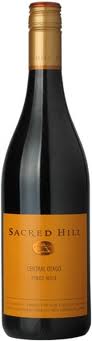
I tasted the 2008 New Harbor Vineyards Marlborough Pinot Noir, the 2008 Sacred Hill Central Otago Pinot Noir, and the F. W. Langguth "Black Slate" Pinot Noir. I couldn't find a vintage on the German wine, which may mean that it involves a blend of grapes from different years or simply that it's poorly labeled. The wine is from the Rheinhessen and only 90% Pinot Noir (something I failed to notice when I bought the wine). It is 10% Regent--a grape variety I had never heard of, and one that goes without mention in Jancis Robinson's Vines, Grapes and Wines (Mitchell Beazley, 1986)--the first time I've not been able to find grape information in that book--but Regent appears to be a newcomer. According to the Wikipedia article on the variety, Regent is a hybrid created in the late 1960s at the Geilweilerhof Institute for Grape Breeding. According to the Institute's website, Regent is a cross between Diana (itself Silvaner x Müller-Thurgau) and Chambourcin). Appreciated in large part for its resistance to fungal diseases, it appears to have entered general cultivation in the mid-1990s. Regent is planted mostly in Germany and the UK. It seems to make decent single-variety wine in some parts of Germany, but I don't understand exactly what it was intended to add to this blend--perhaps color, as several German web pages I looked at emphasize the good color Regent achieves, and many winemakers seem to think their Pinot Noir won't sell if it's too pale in color. In California, a little Syrah is often added to Pinot Noir to boost the color--and often to the detriment of the distinctive Pinot Noir flavor. Brief tasting notes follow.

2008 New Harbor Vineyards Marlborough Pinot Noir
A fairly typical, pale, Pinot Noir sort of color. Closed nose, but hints of leather, orange water, and red raspberries. There was a suggestion of cloves as well. Moderate acid on the palate. Light tannins. Not badly balanced, but rather simple. Moderate to good length. Doesn't really evolve in any way on the palate. Perfectly acceptable everyday wine--I've had much, much worse cheap Pinot Noir--but this offers no special attraction either. Reasonably priced at $4.99, but I won't be going back for more. That said, this was the best of the three wines I tasted.

2008 Sacred Hill Central Otago Pinot Noir
Pale, slightly garnet-tinged, typical Pinot Noir color. Slightly deeper in color than the above wine. Citrus and leather on the nose. Initially appealing on the palate but quickly begins to seem too sweet. Smooth--rather too smooth. There is little acid to balance the sweetness and very little tannin either. Very long finish, but a finish without nuance--just a lingering nondescript fruity sweetness. Flavors tend toward cherries. Not unpleasant. Essentially, just boring. Priced at $5.99 a bottle.

F. W. Langguth "Black Slate" Rheinhessen Pinot Noir
A pale tea color--red tending toward brown. Some floral notes on the nose. Marmalade. Bubble gum. On the palate gives an initial impression of sweetness with fairly low acid. Shortish on the finish but with some lingering sweetness with vaguely port-like flavors. Not really recognizable as Pinot Noir. Has some odd flavors that suggest plastic--although the wine is not as bad as that may make it sound. Drinkable, but not very attractive or interesting--beyond the interest provided by an opportunity to experience Regent (see above). That said, I'd prefer to try a 100% Regent wine for that purpose. Priced at $3.99 a bottle.


I have no financial connection with any producer or retailer of wine. 

For more wine reviews, use the Wines I'm Drinking label.
Related Posts with Thumbnails