Showing posts with label Francesco Lecce-Chongh. Show all posts

Sunday, October 9, 2022

Music I'm istening To: Awadagin Pratt with the Santa Rosa Symphony

The Santa Rosa Symphony kicked off its 2022-2023 season with a program of Beethoven (The Creatures of Prometheus), Mozart (Piano Concerto No. 23), a newer work by composer-in-residence Angélica Négron, and the Symphonie Fantastique, by Berlioz. Awadagin Pratt was the soloist in the Mozart.

I'm doing the backstage photography for the Symphony again this year, so, as usual, I didn't get to hear everything from the perspective of the audience, but I enjoyed what I did hear and I very much enjoy recording what's going on behind the scenes, so it's a compromise I can live with. 

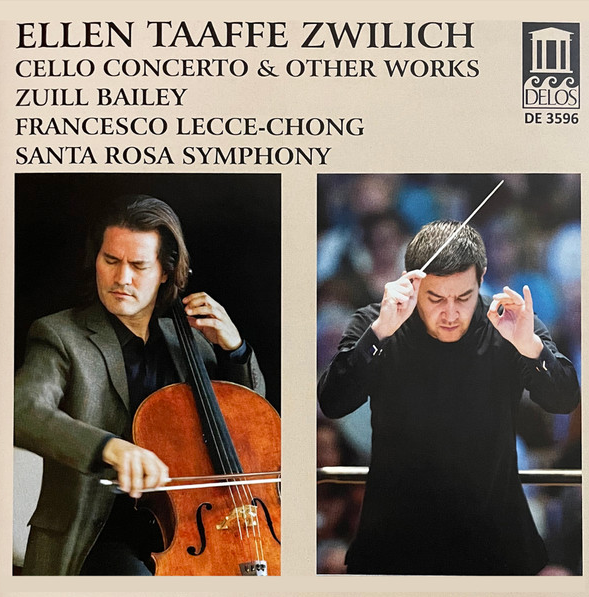
In other news, the Symphony has just released its first CD on a major label (Delos), a collection of works by Ellen Taaffe Zwillich, including the world premiere recording of her Cello Concerto, with Zuill Bailey as the soloist. It's a wonderful disc – interesting music, nicely performed, nicely recorded. Recommended. It's "Ellen Taafe Zwilich: Cello Concerto and Other Works" Delos  DE 3596. I had a small part in its creation. In the booklet, they used a photograph of soloist Joseph Edelberg by me.

Sunday, February 23, 2020

Music I'm Listening To: Recent Concerts (January-February 2020)

I recently (January 24) heard Armenian violinist Sergey Khachatryan perform the Sibelius Violin Concerto on a program that included Con brio, by Jörg Widmann, and Beethoven's Symphony No. 7. On the podium was guest conductor Dima Slobodeniouk at Davies Symphony Hall in San Francisco. The Widmann piece was unfamiliar, as were the conductor and the soloist in the concerto. At this remove, nearly a month ago now (I've been busy), I find it hard to remember the Widmann piece, so I'll not comment, but Khachatryan's performance of the Sibelius was memorable. It was memorable not for any idiosyncratic approach but for the sense of sincerity and deep engagement Khachatryan projected. Watching him and listening, I couldn't help feeling he was lost in the piece—in a good way.  I don't mean to suggest it was an overly romanticized interpretation, only that he seemed profoundly connected to the music. As an encore, Khachatryan played an Armenian folk tune.

I thought that I had never heard of him, but, on looking through my CD collection after returning home, I see that I own one recording him, recordings of the Shostakovich violin concertos with Kurt Masur conducting the Orchestre National de France (Naive V 5025). So, clearly I had heard of him, but didn't remember him.

On February 8, pianist Natasha Paremski joined the Santa Rosa Symphony for a performance of Rachmaninoff's Piano Concerto No. 3. That was preceded by Beethoven's Leonore Overture III and the world premiere of Matt Browne's first symphony, The Course of Empire, a piece commissioned by the Santa Rosa Symphony and the first in a series of concerts that will premiere commissioned first symphonies by a number of young composers in the next couple of years. As I do the backstage photography for the Santa Rosa Symphony, I don't always get to hear the music in a way that allows me to really concentrate on what I'm hearing; I'm moving around looking for opportunities to take interesting photographs, but I enjoyed Paremski's performance and heard enough of Matt Browne's piece to think that I'd like to hear it again, to give it its due. My impression of it is a bit fragmentary.




Tuesday, December 31, 2019

Music I'm Listening To: The Santa Rosa Symphony plays the Mozart Requiem

Some (belatedly posted) photos from the SRS Symphony concert December 11. Conductor Francesco Lecce-Chong led the orchestra in Haydn's Symphony No. 39, Records from a Vanishing City, by Jessie Montgomery, and Mozart's Requiem. The maestro conducted from the keyboard, playing a replica of a period-correct pianoforte.

Lecce-Chong chose a more recent version of the Requiem, edited by Robert D. Levin, rather than the familiar one completed shortly after Mozart's death y Süssmeyer. In particular, the replacement of the simple two-chord Amen with a short fugue was interesting.

Thursday, November 8, 2018

Music I'm Listening To: Sharon Isbin and Hilary Hahn

Last week was a busy week on many fronts. Musically speaking, I attended one of the November Santa Rosa Symphony concerts featuring guitarist Sharon Isbin. The following day, I had the privilege of hearing Hilary Hahn in recital at Davies Symphony Hall, in San Francisco. Isbin played the Concerto for Guitar and Orchestra, by Heitor Villa-Lobos. Also on the program were Dances of Galánta, by Kodály, Liszt's Mephisto Waltz No. 1, and Bernstein's Symphonic Dances from Westside Story.

The Santa Rosa Symphony Youth Orchestra joined the main symphony musicians at the end of the concert to play Bernstein's Overture to Candide in an unexpected encore--a piece that was on their tour program in Europe earlier in the season. Isbin, too, played an encore--one of those extremely familiar Spanish guitar pieces that I can't immediately put a name to.

I did backstage photography for the Santa Rosa Symphony again. Isbin tuned before going on stage using an electronic tuner. Just before it was time to go on stage, she turned to conductor Francesco Lecce-Chong and said "I'll take an A from the oboe so I can pretend to tune," which struck me as rather funny.

I have almost no words for the Hilary Hahn performance. She was superb, as always. She played one of the Bach solo sonatas for violin and two of the solo partitas, including Partita No. 2, with the famous extended chaconne. As an encore, she played a movement from another of the sonatas. It was strange to see the Davies Symphony Hall stage entirely empty of chairs, music stands, and instruments except for the lone figure of Hahn who nevertheless commanded the attention of perhaps the biggest crowd I've ever seen there. I counted six empty seats. During the encore, having already left my seat, I was able to watch and listen looking back from one of the doorways into the hall and to see the rapt audience all focused on Hahn, her violin, and the music she was making with it.

Friday, November 10, 2017

Music I'm Listening To: Santa Rosa and San Francisco

Guest conductor Mei-Ann Chen
I've had the fun of going backstage to do photography as a volunteer for the Santa Rosa Symphony this season. I had intended to write in some detail about each of the five concerts serving as auditions for the Symphony's new conductor following the upcoming retirement of Bruno Ferrandis, but, with the fires, I've been unable to write much and many of my impressions are no longer fresh or they have been lost altogether. Two concerts have already finished. Candidates Francesco Lecce-Chong, and Mei-Ann Chen have both led the Santa Rosa Symphony in concerts designed to give audiences a sense of who they'd be if chosen to replace Ferrandis. Both Lecce-Chong and Chen seem enthusiastic and competent, but I thought Lecce-Chong a trifle nervous in his interpretation, a little rushed, a little in need of rubato to vary tempi. Chen seemed more in control of things, more self-assured, and I liked the way she seemed very cognizant of the mid-range instruments like the violas. The next audition concert will feature Andrew Grams as guest conductor with performances at the Green Music Center on December 2, 3, and 4.

Guest conductor Lecce-Chong
The first San Francisco Symphony concert I attended this season featured violin soloist Augustin Hadelich, who gave a very good performance of the Mendelssohn Violin Concerto notable, I thought, for the articulation and the way Hadelich let the inherent romanticism of the piece shine through without exaggeration. So many performances of the piece are a bit over the top and often marred by laziness in the slurred passages. Hadelich's was a model of clarity throughout. I never got around to writing anything about the final SF Symphony performance I attended last season either, which included Joshua Bell playing Lalo's Symphony Espagnole. Bell is not among my favorite violinists. He likes very romantic music and tends to give it more romantic passion than it needs (very much unlike the Hadelich performance noted above). However, he played the piece nicely, I thought, despite a minor mishap; Bell at one point got the tip of his bow momentarily caught in his strings. Guest conductor Vasily Petrenko took the music at a rather faster pace than is usual and perhaps that kept Bell from getting carried away.
Related Posts with Thumbnails