Showing posts with label Santa Rosa Symphony. Show all posts

Sunday, March 22, 2026

Music I'm Listening to: Santa Rosa Symphony premieres Shuying Li's Coping Cadences

I attended the March 21 Santa Rosa Symphony concert (last night). The main feature was the world Premiere of Shuying Li's Coping Cadences, a kind of concerto grosso with six featured soloists playing against the full orchestra. 

Before the concert, a performance of Nimrod, from Elgar's Enigma Variations, was added to the program in remembrance of Corrick Brown, long-time conductor of the Santa Rosa Symphony, who died this past week at the age of 94. Nimrod is believed to have been the last piece he conducted with the orchestra. 

Here are some photos from both backstage and from the audience. Performances again today (matinee) and Monday night.


Sunday, March 1, 2026

Music I'm Listening to: Santa Rosa and San Francisco

Some odd and ends. I've been lazy about posting comments on recent concerts I've attended – which I do mostly so that I can look back and remember what performers I heard and where. So, just for the record, The Santa Rosa Symphony just finished three performances of Mahler's Symphony No. 3, which is one of my favorites. I applaud the music director for attempting such a long and challenging piece. I attended the February 23 performance. The orchestra is huge for the Mahler. There were nine French horns!

In January, at Davies Symphony Hall in San Francisco, I heard Emanuel Ax with the San Francisco Symphony, Jaap van Sweden conducting.  Ax played Mozart's Piano Concerto No. 25 and afterward played an encore, something familiar by Schubert, but I can't remember now what it was. Jaap van Zweden is a fierce-looking man on the podium. Ax gives the impression of being a gentle, kind man, but these are just impressions from the gallery. I attended the January 30 performance. Also on the program was Bruckner's Symphony No. 7

On February 27, at Davies Symphony Hall again, the Symphony, conducted by Manfred Honeck, performed Beethoven's Coriolan Overture – one of those Beethoven overtures I used to use in college as a musical pep talk. I'd play one, loud, before heading out for final exams. Somehow, the music ringing in my head convinced me I'd do well. Haydn's Symphony No. 93 followed. After intermission, Honeck led an unusual performance of Mozarts Requiem with additions and subtractions from the versions we usually hear – those filled out after Mozart died leaving the piece unfinished. Honeck played only the portions actually written by Mozart but interspersed with Gregorian chant and readings by an onstage performer of portions of a letter by Mozart to his father, by Bible excerpts, and some modern poetry. The performances were dedicated to the late Joshua Robinson, MTT's partner, who died a few days before concert I heard. 


Friday, December 12, 2025

Music I'm Listening To: Geneva Lewis with the Santa Rosa Symphony

I attended the Santa Rosa Symphony concert at the Green Music Center in Rohnert Park on December 6 –  as usual, doing volunteer photography for the Symphony during the Saturday evening performances. The program started off with Intermezzo from Pagliacci by Ruggero Leoncavallo followed by the Brahms violin concerto. Geneva Lewis was the soloist in the Brahms. After intermission, the orchestra gave the West Coast premiere of Aino, by Jimmy López, which I thought a rather interesting piece. The concert ended with a suite from Strauss's Der Rosenkavalier. I've been very impressed by the SRS lately. They seem to get better with every performance. 


Sunday, November 9, 2025

Music I'm Listening To: The San Francisco and Santa Rosa Symphonies

I attended the Santa Rosa Symphony concert last night (November 8 2025) at the Green Music Center. On the program was Clarice Assad's Baião ‘N’ Blues, Joaquin Rodrigo's Concierto de Aranjuez for Guitar and Orchestra, and Manuel de Falla's El Sombrero de Tres Picos [The Three-Cornered Hat]. The soloist in the Concerto was Raphaël Feuillâtre (Guitar). The vocalist in the Three-cornered Hat was mezzo-soprano Leah Finn.

It was a very impressive performance by the symphony, I thought – among the best I've seen. Feuillâtre was impressive in the concerto as well and he wowed the crowd with an exciting encore. Tickets are probably still available for the Monday night performance. 

In San Francisco, the night before, I heard the San Francisco Symphony at Davies Symphony Hall. French pianist Alexandre Kantorow made his debut with the Symphony (in concerts on November 7, 8, and 9) playing Prokofiev’s Third Piano Concerto. Karina Canellakis conducted.


Sunday, May 19, 2024

Music I'm Listening to: Recent concerts

I attended the Friday, May 10 performance of the San Francisco Symphony at Davies Symphony Hall. Guest conductor Marta Gardlolinska had to cancel at the last minute. She was replaced by Gemma New (currently music director of the Hamilton Philharmonic Orchestra and principal conductor of the New Zealand Symphony Orchestra). I had heard of neither conductor, but I rather liked New. She was interesting to watch on the podium, her movements short and sharp, and slightly stiff, but she made the music flow. The concert opened with a piece called Overture, written in 1943 by Grazyna Bacewicz. It was not particularly memorable, but it was interesting to hear as I'm a fan of Bacewicz's chamber music. I have several recordings of her string quartets and other pieces for small ensembles. I was under the impression that she was a contemporary composer. I had no idea that the she was born in 1909 and died in 1969. Her music sounds more modern than her birth and death years might suggest. 

That was followed by Elgar's Cello Concerto in E Minor. The soloist was a Spanish cellist, Pablo Ferrandez. I had never heard of him either, but the San Francisco Symphony always brings in good guest conductors and soloists, and it was an excellent performance, although taken rather more slowly than I'm used to, particularly in the opening of the first movement. The Elgar was followed after intermission by Mendelssohn's Symphony No. 3, also nicely done. Just as impressive as the conducting was the way Ms. New acknowledged various members of the orchestra during the applause at the close of the concert. Often orchestra members hesitate to stand up and take a bow when pointed at by the conductor after a performance, but usually it's not out of modesty but because they aren't always sure who the conductor is indicating for recognition. New, with precise hand gestures, had them standing and taking the applause quickly and efficiently in what amounted to an entirely independent conducting performance. I was quite impressed. 

Dinner at Monsieur Benjamin after the concert. I've abandoned Absinthe, which for more than a decade was my go-to after-concert restaurant. Absinthe has raised its wine-by-the-glass prices to absurd levels. It just ruins the whole experience. Monsieur Benjamin is not cheap, but it now seems a better value. New and Ferrandez came into the restaurant shortly after we settled in and they happened to be seated at the table next to us. I resisted the temptation to do anything more than to quickly say that I'd enjoyed the concert – until shortly before we were leaving. I leaned over  to ask the conductor about the tempo of the Elgar and she agreed that they had taken some parts comparatively slowly but pointed out that she had taken other parts quite quickly, which was true. "Rubato," I said. "Exactly" she answered. She's one I'll look out for in the future. 

The following day, I attended the Santa Rosa Symphony concert at the Green Music Center. The jazz-focused program comprised four pieces: George Gershwin's Catfish Row: Symphonic Suite from Porgy and Bess, Gershwin's well known Rhapsody in Blue for Piano and Orchestra (but in the original jazz band version), Conrad Tao's Flung Out for Piano and Orchestra (a world premiere) and Edward "Duke" Ellington's Black, Brown and Beige – Suite for Orchestra. Conrad Tao was the piano soloist in both the performance of Rhapsody in Blue (played from memory) and Flung Out (during which he used a score on an iPad), conceived as a companion piece to the Gershwin but it was rather more abstract. Rhapsody in Blue was the highlight of the evening. Tao was exciting to listen to – fast, precise, and expressive all at the same time.  


Sunday, October 9, 2022

Music I'm istening To: Awadagin Pratt with the Santa Rosa Symphony

The Santa Rosa Symphony kicked off its 2022-2023 season with a program of Beethoven (The Creatures of Prometheus), Mozart (Piano Concerto No. 23), a newer work by composer-in-residence Angélica Négron, and the Symphonie Fantastique, by Berlioz. Awadagin Pratt was the soloist in the Mozart.

I'm doing the backstage photography for the Symphony again this year, so, as usual, I didn't get to hear everything from the perspective of the audience, but I enjoyed what I did hear and I very much enjoy recording what's going on behind the scenes, so it's a compromise I can live with. 

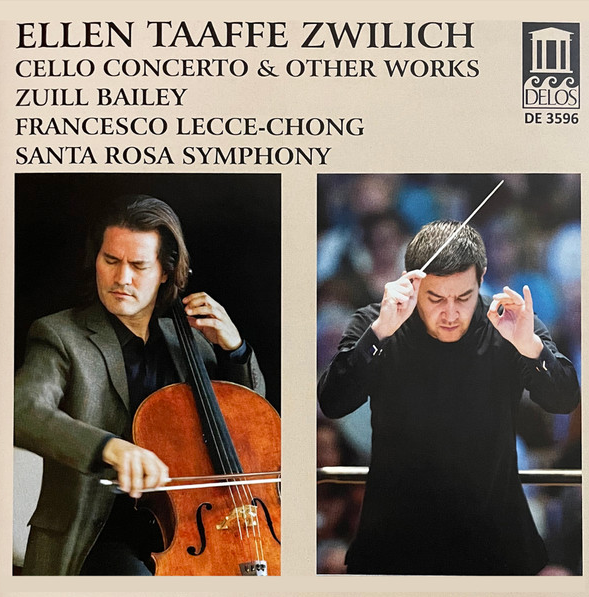
In other news, the Symphony has just released its first CD on a major label (Delos), a collection of works by Ellen Taaffe Zwillich, including the world premiere recording of her Cello Concerto, with Zuill Bailey as the soloist. It's a wonderful disc – interesting music, nicely performed, nicely recorded. Recommended. It's "Ellen Taafe Zwilich: Cello Concerto and Other Works" Delos  DE 3596. I had a small part in its creation. In the booklet, they used a photograph of soloist Joseph Edelberg by me.

Tuesday, December 31, 2019

Music I'm Listening To: The Santa Rosa Symphony plays the Mozart Requiem

Some (belatedly posted) photos from the SRS Symphony concert December 11. Conductor Francesco Lecce-Chong led the orchestra in Haydn's Symphony No. 39, Records from a Vanishing City, by Jessie Montgomery, and Mozart's Requiem. The maestro conducted from the keyboard, playing a replica of a period-correct pianoforte.

Lecce-Chong chose a more recent version of the Requiem, edited by Robert D. Levin, rather than the familiar one completed shortly after Mozart's death y Süssmeyer. In particular, the replacement of the simple two-chord Amen with a short fugue was interesting.

Monday, January 21, 2019

Music I'm Listening To: So Many Concerts

Musician's case backstage at The Green Music Center
The last couple of months of 2018 were unusually busy months for me. I had art work in multiple shows. I was curating a new show on The Art Wall at Shige Sushi. I was more than usually busy with other work. I did three Audubon Christmas bird counts this year, leading a section of one of them. I attended a larger number of concerts than usual, concerts of both the San Francisco Symphony and the Santa Rosa Sympony. I've fallen far behind in mentioning them. That bothers me not so much because I think anyone will have missed my comments or photographs but because, by posting here, I keep a record that I can return to when trying to remember who I heard where and when.

Concerts I've failed to mention include an extraordinary performance of Ravel's Bolero, Friday October 19, 2018 in San Francisco with Pablo Heras-Casado conducting the San Francisco Symphony (I can't remember what else was on the program). Bolero is extremely familiar, but I'd never heard it live before, never seen it before. Visually, what was striking was the way the snare drum was positioned not at the back of the stage in the percussion section but right in the middle—in front of the woodwinds and just behind the violas. The snare drum sounds from beginning to end, without a break, establishing and maintaining the beat throughout. It is central to the piece in more than one sense. How hard it must be to keep it going flawlessly for the 15 minutes or so that Bolero lasts. It was an extraordinary performance—in its entirety, not just the percussion, although the snare drummer enjoyed a long and enthusiastic spell of applause.

Jean-Yves Thibaudet and Gauthier Capucon take a bow
And then there was Gauthier Capuçon and Jean-Yves Thibaudet in recital, also in San Francisco, on Sunday December 2, 2018. They played Debussy's Sonata No. 1 in D minor for Cello and Piano; Brahms' Sonata No. 1 in E minor for Cello and Piano; and Rachmaninoff's Cello Sonata in G minor, along with a number of encores, which, at this remove, I can't recall. Capuçon, as always, exuded confidence and a kind of strong but contained joy in playing. A joy to hear and to watch. Thibaudet was mostly hidden by the piano from my vantage point, but you could feel a presence nonetheless equal to that of Capuçon. Grabbing a bite to eat after the concert, my mother and I were surprised to see Capuçon, Thibaudet and their entourage come into the same restaurant about half an hour after we had arrived. Usually we eat at Absinthe after concerts, but the place closes early on Sundays. The only restaurant I could find a space at was Monsieur Benjamin, where the food was very tasty but boldly overpriced--particularly the wines by the glass. I resisted the temptation to intrude on the musicians, to say something, but it was fun to see them offstage.

Nokuthula Ngwenyama and Jayce Ogren coming offstage after Harold in Italy
Francesco Lecce-Chong conducting the Santa Rosa Symphony
The day before, December 1, I was backstage in Santa Rosa taking pictures for the symphony during a concert at The Green Music Center. On the program were the William Tell Overture (Rossini), Berlioz's Harold in Italy, and Vivaldi's Gloria. The concert was led by guest conductor Jayce Ogren. Nokuthula Ngwenyama was the viola soloist in Harold in Italy. 

On January 12, in the new year, I was backstage again for a concert conducted by new music director Francesco Lecce-Chong. He led the Santa Rosa Symphony in a couple of short brass fanfares by Takemitsu, Mozart's Symphony No. 40 and Mahler's Symphony No. 4. Soprano Marie Plette was soloist in the Mahler.

Not to mention the Santa Rosa Symphony concert with Sharon Isbin on November 8, 2018 and also seeing Hilary Hahn in recital in San Francisco on the following day—two concerts I wrote about briefly here—or to mention the several art shows I saw in those months that I never got a chance to write about, notably the Muslim Fashions show, the René Magritte show, and the Pre-Raphaelites show, all in San Francisco.
Soprano Marie Plette and Francesco Lecce-Chong
coming offstage after the Mahler
 

Thursday, November 8, 2018

Music I'm Listening To: Sharon Isbin and Hilary Hahn

Last week was a busy week on many fronts. Musically speaking, I attended one of the November Santa Rosa Symphony concerts featuring guitarist Sharon Isbin. The following day, I had the privilege of hearing Hilary Hahn in recital at Davies Symphony Hall, in San Francisco. Isbin played the Concerto for Guitar and Orchestra, by Heitor Villa-Lobos. Also on the program were Dances of Galánta, by Kodály, Liszt's Mephisto Waltz No. 1, and Bernstein's Symphonic Dances from Westside Story.

The Santa Rosa Symphony Youth Orchestra joined the main symphony musicians at the end of the concert to play Bernstein's Overture to Candide in an unexpected encore--a piece that was on their tour program in Europe earlier in the season. Isbin, too, played an encore--one of those extremely familiar Spanish guitar pieces that I can't immediately put a name to.

I did backstage photography for the Santa Rosa Symphony again. Isbin tuned before going on stage using an electronic tuner. Just before it was time to go on stage, she turned to conductor Francesco Lecce-Chong and said "I'll take an A from the oboe so I can pretend to tune," which struck me as rather funny.

I have almost no words for the Hilary Hahn performance. She was superb, as always. She played one of the Bach solo sonatas for violin and two of the solo partitas, including Partita No. 2, with the famous extended chaconne. As an encore, she played a movement from another of the sonatas. It was strange to see the Davies Symphony Hall stage entirely empty of chairs, music stands, and instruments except for the lone figure of Hahn who nevertheless commanded the attention of perhaps the biggest crowd I've ever seen there. I counted six empty seats. During the encore, having already left my seat, I was able to watch and listen looking back from one of the doorways into the hall and to see the rapt audience all focused on Hahn, her violin, and the music she was making with it.

Sunday, April 8, 2018

Music I'm Listening to: Tracy Silverstein (and my son) with the Santa Rosa Symphony

Some photos from last night's Santa Rosa Symphony concert. Maestro Bruno Ferrandis conducted Prelude and Liebestad from Wagner's Tristan und Isolde, The Dharma at Big Sur for Electric Violin, by John Adams, and Prokofiev's Alexander Nevsky. Tracy Silverstein was the soloist on electric violin, Jacalyn Kreitzer (mezzo-soprano) was soloist in the Prokofiev, which also featured the Sonoma State University Symphonic Chorus. My son, Warren, played a solo piece before the concert Rhapsodie for Solo Clarinet, by Giacomo Miluccio (1928-1999) as part of an appeal for donations to support the Santa Rosa Symphony Youth Orchestra's upcoming European Tour, in June, which will take them to Salzburg, Vienna, and Budapest. The photo above shows Warren, Principal Clarinet of the Santa Rosa Symphony Youth Orchestra with his teacher, Roy Zajac, Principal Clarinet of the Santa Rosa Symphony. Below is Tracy Silverstein with his six-stringed electric violin.


Wednesday, February 14, 2018

Michael Christie and Anna Fedorova with the Santa Rosa Symphony

I had the privilege of being the backstage photographer at the Santa Rosa Symphony again on February 13 at the Green Music Center. Santa Rosa Symphony director candidate Michael Christie led the Symphony in Bernstein's music from On the Waterfront, Prokofieff's Piano Concerto No. 3, and Dvorak's Symphony No. 9. Anna Fedorova was soloist in the concerto.

Monday, December 4, 2017

Music I'm Listening to: Grams Conducts the Santa Rosa Symphony, Stewart Goodyear Piano


Conductor candidate Andrew Grams, before going onstage
I attended the Sunday, December 3 performance of the Santa Rosa Symphony at the Green Music Center. Conductor candidate Andrew Grams led the Symphony in a program of Overture to King Lear by Berlioz, Ravel's Piano Concerto in G Major, Rachmaninoff's Symphonic Dances, and Debussy's Clair de Lune. Stewart Goodyear was the piano soloist. I didn't get to hear that much of the concert as I was backstage the whole time and the soundproofing is surprisingly good, but it's interesting to watch the backstage goings on with musicians arriving and warming up, with the administrative and other staff handling announcements, lighting, and changes in stage configuration, and watching the conductor and soloist going on stage and coming off again and their rituals before stepping into the lights and applause. Grams is the third of the five conductor candidates being considered to become the new music director of the Santa Rosa Symphony when Bruno Ferrandis leaves the post.

Conductor Grams and soloist Stewart Goodyear backstage

Friday, November 28, 2014

Music I'm Listening To: Santa Rosa Symphony Youth Orchestra and Young People's Chamber Orchestra

I attended the November 22 Fall Concert of the Santa Rosa Symphony's Youth Orchestra and Young People's Chamber Orchestra (YPCO). The two groups played with guest artist Lyndsay Deutsch here doing a residency sponsored by the Classics Alive Foundation. The Youth Orchestra is conducted by Richard Loheyde, the YPCO is directed by Aaron Westman. The concert, at the main hall of the Green Music Center, began with performances by the YPCO followed by the Youth Orchestra after intermission. Both programs were ambitious. The Youth Orchestra played the Hoe-down from Aaron Copeland's Rodeo, Beethoven's Egmont Overture, an arrangement of Gershwin's Rhapsody in Blue, "Mars" and "Jupiter" from Holst's The Planets, and "The Russian Sailor's Dance" from The Red Poppy, by Gliere.

The Gershwin was an interesting arrangement by Cristian Macelaru and Howard Cable, commissioned by Lyndsay Deutsch, that makes a violin the main soloist--although the famous opening clarinet solo is left to the clarinet. My son played the opening solo and acquitted himself quite well, I thought. After the concert, Ms. Deutsch told me she's played the piece with several professional orchestras and that my son handled the solo better than some of the professionals she's worked with--which was gratifying to hear--but the entire orchestra played wonderfully. It includes some very talented young musicians.

I had never seen or heard Ms. Deutsch play before, but I was very impressed by her focus and energy on stage, not to mention her gracious and friendly manner off stage. She has real charisma. I expect we'll be hearing more about this young violinist in the future. I took photos during rehearsals at the request of the Youth Orchestra, so I got to hear much of the program from the stage, up close, which was a lot of fun. The photograph above shows Deutsch and Conductor Loheyde discussing the Gershwin in rehearsal. The next concert featuring the Youth Orchestra and the YPCO will be March 6, 2015, with guest artists Trebuchet.      

Monday, May 14, 2012

Music I'm Listening To: Jean Ferrandis Joins the Santa Rosa Symphony (May 13, 2012)

I attended the Sunday, May 13 performance of a series of three concerts by the Santa Rosa Symphony conducted by Bruno Ferrandis, featuring the conductor's brother, Jean Ferrandis, on Flute. The program opened with Debussy's Jeux (poeme danse-ballet) for Orchestra. Ferrandis played the Mozart Flute Concerto No. 2 before intermission and Ibert's Concerto for Flute and Orchestra afterwards. The program ended with Ravel's La Valse (poeme choréographique) for Orchestra.

I had not heard Debussy's Jeux [meaning "games" or "play"] before. I can't say I much cared for it--or this performance of it, anyway. Debussy wrote the piece for a ballet conceived and choreographed by Nijinsky (now lost, apparently). The dance involved play--both literal (tennis) and figurative (flirting, erotic pursuit)--among three dancers, two women and a man, although Nijinsky's original idea was to use three men. According to the program notes, Debussy (once he agreed to take the commission) became interested in "the rapid moments of tennis and in erotic games of flirtation, pursuit, resistance, and yielding" and he is said to have tried to capture some of the feelings of change and discontinuity that characterize both types of play. Not having the dancing to turn to, however, the music seemed to me merely fretful and disjointed.

The Mozart concerto was something of a disappointment as well. It was competently played, I suppose, but lacked any real sparkle. Ferrandis (the soloist) seemed not fully engaged. The flute sounded thin and distant. The whole came across as rather bland, despite Ferrandis's exaggeration of the dynamics (Ferrandis, the conductor, that is). The Ibert, however,was nicely done--played with verve and enthusiasm. I got the feeling that Jean Ferrandis was much more in his element playing a modern French piece than playing the Mozart. Following the Ibert concerto, which the audience received with rather more enthusiasm than it did the first half of the program, Jean played an encore, which sounded like something from Debusy's Prelude to The Afternoon of  a Faun.

The Ravel was enjoyable but not wholly satisfying either. Ferrandis, the conductor, failed (in my opinion) to fully exploit the internal contrasts of the piece and he took the ending at what seemed an unnecessarily rapid and accelerating tempo.

Yesterday will have been my last concert in the Luther Burbank Center (or the Wells Fargo Center for the Arts as they insist on calling it). The Santa Rosa Symphony will start next season as the resident orchestra at the new Green Music Center. I very much look forward to hearing the new hall.

Photo of Jean Ferrandis (uncredited), from the Santa Rosa Symphony website. 

Tuesday, March 20, 2012

Music I'm Listening To: The Santa Rosa Symphony with the Eroica Trio (March 19, 2012)

Last night I heard one of the last Santa Rosa Symphony concerts I'll hear for a while, as I've decided not to renew my subscription, after 11 years. The new seats assigned in the Green Music Center for next season were not especially good, as I expected, and they've eliminated the mini-series option (your choice of three of the season's concerts) that I liked. The cost relative to the quality of the performances just didn't make sense any more. Instead I've added the Green Music Center series of the San Francisco Symphony to my regular subscription in San Francisco--which seems the best of both worlds; you get four concerts with the San Francisco performers and guests at the new music center for only a modest sum more than the cost of the Santa Rosa Symphony subscription.

On the program last night was The Chairman Dances (subtitled Foxtrot for Orchestra) by John Adams, Beethoven's Triple Concerto, and Beethoven's Symphony No. 3, the Eroica (appropriately enough).  The Chairman Dances has a somewhat convoluted origin. It was originally conceived as part of Adams' opera Nixon in China in a scene with Chairman Mao dancing with his wife but was deleted from that project and reworked as a stand-alone piece only to be later worked into the opera again, in a different context--in a scene that involved President Nixon and his wife dancing. As the program points out, we mostly think of Madame Mao as a member of the Gang of Four, but she was in her younger days a rather glamorous actress, Chiang Chin, and the original conception of the piece draws on the tradition of cinematic dance music with that part of her history in mind. Hearing it as a concert piece, of course, none of that really matters.

It was typically Adams in its use of repetitive, almost hypnotic sections with sudden gear changes that drop the listener into passages of more upbeat and expansive material, all colored with a wide range of instrumentation, including piano, harp and a large and varied percussion section. I always like Adams. Despite a somewhat shaky start, Ferrandis got things under control fairly quickly and he and the orchestra delivered a workmanlike performance. The piccolos and horns were standouts.

The main event was the Beethoven Triple Concerto, with the Eroica Trio, with founding members Erika Nickranz and Sara Sant'Ambrogio on Piano and Cello, and with Susie Park on violin; Park joined the trio in 2006. The women created quite a stir as they entered the auditorium, Park and Nickranz dressed in glittering silver, Sant'Ambrogio in white with silver shoes.

Again, a solid performance. Although Maestro Ferrandis kept the accompaniment so quiet through much of the first movement that the soloists seemed rather too loud, the rest of the performance was nicely balanced. Cellist Sant'Ambrogio seemed more on top of the challenging cello part than Alisa Wielerstein was when I last heard this piece live (in San Francisco). The cello was particularly sweet in the middle movement. The trio played a Piazzolla tango "Oblivion" as an encore--perhaps the highlight of the evening.

Ferrandis's reading of the Eroica seemed rushed to me in the first movement, but all in all it was a creditable performance, despite a certain lack of attention to the long lines of the piece. Again the woodwinds and the horns seemed especially good. On the whole, Ferrandis seemed more in charge of things and more focused last night than he often is. Normally I attend the Sunday afternoon concerts. Because of a schedule conflict I had to switch to the Monday night performance this time. Perhaps he's best in the evening performances?

Photo of Bruno Ferrandis courtesy of the Santa Rosa Symphony website. Photo of the Eroica Trio from the Eroica Trio website (photo by Nina Choi).

Monday, January 23, 2012

Music I'm Listening To: Santa Rosa Symphony, Jeffrey Kahane Playing and Conducting Mozart, Rachmaninoff (January 22, 2012)

What a pleasure to see and hear Jeffrey Kahane with the Santa Rosa Symphony again. Kahane is making guest appearances in a series of three concerts playing Mozart's Piano Concerto No. 25 and Rachmaninoff's Symphony No. 3, conducting both pieces as well. I attended yesterday's performance (Sunday, January 22).

Kahane gave a delightfully lively and crisp performance of the Mozart, I thought, adding to the fun by playing an expansive cadenza of his own composition. I thought the symphony players were in fine form, with the woodwinds a standout, particularly the flute and the bassoons. The audience was very appreciative. Some in the crowd waved enthusiastically to Kahane after the performance, as if to say "We've missed you."

The choice of a large 20th century symphony for the second half of the program following the Mozart concerto was not an obviously logical one, but I trust Kahane had his reasons. I just wish I could ask him what they were. I can't really say much about the piece as I'd never heard it before, and it's not music that immediately grabs you. It gave the impression of being rather too full of ideas not fully developed or linked, but I suspect that apparent fault is as much a reflection of my ignorance as it is of anything else. Having said that, it seemed to veer from the pastoral to the grandiose and back again, sounding here like something quite modern, there like something more traditional, and in one or two places rather like generic film score music. Nevertheless, there were some interesting textures and some unusual percussion effects, and the musicians showed the same concentration they exhibited playing the Mozart. Kahane seems always to get the best from the Santa Rosa players (although there were a lot of unfamiliar faces among the musicians this time). Again the reception was warm. Kahane and the orchestra received a second standing ovation. As the audience began to leave, the conductor hopped onto the podium and began an encore.

As if to provide an antidote to the unfamiliar Rachmaninoff piece, Kahane and the Santa Rosa Symphony began to play the overture to Die Fledermaus, by Johann Strauss II, a piece the audience was better able to warm up to. It was well played and enthusiastically played and the crowd left quite pleased. The concert was worth it just for the Mozart, but the Strauss was a fun and unexpected way to end the afternoon. I hope we see Mr. Kahane often in the new Green Music Center. We do miss him.

Photo of Jeffrey Kahane courtesy of the Santa Rosa Symphony.

Thursday, January 12, 2012

Places I'm Visiting: The Green Music Center (January 2012)

Last Sunday I visited the new Green Music Center in Rohnert Park, on the Sonoma State University campus. Subscribers to the Santa Rosa Symphony are being given the opportunity to see the place and state their seat preference for upcoming seasons (not that I expect anyone but the wealthy and well connected to get what they want). For reasons I still don't understand, the new hall is about 160 seats smaller than the old Luther Burbank Center for the Arts (or the Wells Fargo Center for the Arts) that it will replace. Would it really have destroyed the acoustics to have made the place 10 feet wider to add a couple more rows of seats? Shouldn't the new building have been more capacious, if anything? Surely there was a solution that would have delivered great sound without making it harder to get good seats. I've been a subscriber for going on 12 years now. I had a seat dead center, about two thirds of the way back, which was perfect (in the new hall, a seat a little further back and therefore a little higher would seem to be ideal). As I don't have the means to make large donations, I suspect my new seat will be a disappointment. We'll see.

That said, the sound seems likely to be superb, and it certainly seems to be even, with no dead spots. It sounds good just about anywhere you listen from, even from the upper balconies--although the sight lines are not very good from the side balcony seats. There is a clarity to the sound that is already apparent from listening to some of the performers that were playing on stage while I visited, allowing patrons to get a feel for the space.

The new concert hall is undeniably beautiful. All clad in satiny wood of various grains and colors, you simply want to reach out and touch everything. On the downside, there is a somewhat cramped feel to the place, particularly in those side balcony areas. I think they will be difficult for some of the more elderly people in the audiences to navigate (and the symphony concerts are attended by a mostly elderly crowd, unfortunately). The rise of the main floor is quite gradual. I suspect shorter people will be disappointed, especially in the center orchestra section toward the front. Perhaps most worrisome, the stairways are all made of the same beautiful woods that cover the floors--beautiful to look at, but treacherous; even I had trouble in places seeing the edges of the stairs. The wood strips run parallel to the stairs and, depending on the angle of the light, the sea of parallel seams can create an illusion of a single flat space. This seems like an accident waiting to happen. I'd be willing to bet that either a guest falls or, before that, someone involved in management will see that some sort of material needs to be added to the edges of the steps to provide a visual aid. Let's hope it's the latter.

Sunday, May 8, 2011

Music I'm Listening To: Santa Rosa Symphony, Jon Nakamatsu (May 8, 2011)

I attended an afternoon Santa Rosa Symphony concert today directed by Bruno Ferrandis with pianist Jon Nakamatsu as soloist in the Tchaikovsky Piano Concerto No. 1. The scheduled program was all Russian music, but Ferrandis opened the concert with the "Nimrod" variation from Elgar's Enigma Variations, played in memory of Evert Person and Jess Jackson. Both were supporters of the Symphony and both died recently. The scheduled program began with Fairytale Poem, by contemporary composer Sofia Gubaidulina, followed by the Tchaikovsky concerto and then Mussorgsky's Pictures at an Exhibition after intermission.

I formed my impressions of the Gubaidulina piece before looking at the program notes. I had to laugh when I read through them. The music felt cinematic to me, but I was put in mind of 1950s science fiction rather than the animated subjects that are believed to have inspired the piece (it seems the composer has never really explained the precise meaning of the title). Apparently, Gubaidulina supported herself in the days of Soviet control of the arts by writing a great deal of music for films of all kinds, but apparently no science fiction. The program notes speak of "dangers lurking" but also of "cheerful adventure." I seem to have tuned in mostly to the dangers. The mood created seemed ominous to me, with quivering flutes and shimmering string tremolos particularly memorable. I half expected to hear a theremin emerge from somewhere toward the back of the stage--but no theremin was involved: Gubaidulina has drawn on conventional instruments to create a consistently interesting texture open to a variety of interpretations, it seems. The performers gave the impression of being well rehearsed today, right on top of the music, and very much in tune with the conductor. I enjoyed this very much. Gubaidulina is another composer I'll now be looking out for.

I must admit the Tchaikovsky piano concerto is not one of my favorite pieces of music, but it was a lot of fun to see it played, as it keeps both the soloist and the orchestra quite busy. Again the orchestra seemed in good form. Despite a couple of wobbly solo bits in the brass section and a rather hesitant-sounding flute at one point, the overall impression was solid, and Nakamatsu played very well. Nakamatsu got a standing ovation and a half out of his performance--the half standing ovation at the end of the first movement. Tchaikovsky sometimes had a way of making his music sound finished right in the middle (this piece and the Violin Concerto are good examples). While I don't mind people clapping after a particularly well-played movement, clearly some people thought the concerto had finished and it took a few moments for everyone to figure out why Nakamatsu remained seated and conductor Ferrandis continued to face the performers.

After intermission, Ferrandis led the Santa Rosa Symphony in Musssorgsky's Pictures at an Exhibition in the version orchestrated by Ravel. As a teenager just getting interested in classical music, this is one of the pieces I first latched onto (like many other people). It is varied, colorful, and immediately accessible. Again the performers seemed in good form. Although Ferrandis took some of the slower sections at a rather faster tempo than I would have preferred, the overall effect was persuasive.  Taken as a whole, a satisfying concert.

Jon Nakamatsu photo by Christian Steiner.

Monday, March 21, 2011

Music I'm Listening to: The Santa Rosa Symphony with Bruno Ferrandis and Elina Vähälä (March 20, 2011)

I attended a Santa Rosa Symphony concert Sunday afternoon (March 20) conducted by Bruno Ferrandis. The program included Serious Song, by contemporary composer Wolfgang Rihm, Symphony No. 4 by Brahms, and the Brahms Violin Concerto, with soloist Elina Vähälä.

Overall, an enjoyable concert, but rather uneven, I'm afraid.

I did like the Rihm Serious Song. Immediately upon entering the concert hall it was apparent that something a little unusual was about to begin; there were no violins on stage--among the strings, only the violas, cellos, and basses were present. Also unusual was the presence of four clarinets at the front of the ensemble. I would say the piece didn't seem very song-like, but it was certainly serious. Opening with quavering dissonances among the four clarinets in the low register, the piece was dark and somber throughout with all the instruments mainly being given the lower notes in their ranges. No flutes either. According to the program notes, the piece was commissioned by conductor Wolfgang Swallisch who wanted a composition explicitly evoking Brahms. Composer Rihm was particularly impressed by the Four Serious Songs by Brahms and looked also to the example of the Deutches Requiem for the orchestration without the bright-sounding violins and flutes. To many I suspect this tone poem--that's what it seemed to be--will sound too abstract, too somber, too brooding, but it appealed to me. I applaud the inclusion of something rather different from the standard fare. It was a nice counterpoint to the very familiar pieces that followed.

In the Brahms Violin Concerto Soloist Vähälä played well, but seemed to have difficulty keeping her instrument in tune. I always hesitate to say things like that (not that anyone cares very much what I say) because I never trust my ears entirely, but I thought she was out of tune for about the first third of the first movement--a little bit sharp on at least one string. She tried to retune a couple of times using the fine adjustments at the bridge but finally resorted to turning one of the tuning pegs--a very risky thing to do while in the middle of playing, given the coarse adjustment the tuning peg provides. I'm persuaded that I was not mistaken about her difficulties by the extensive tuning she did between the first and second movements. Once she got things straightened out, everything sounded better.

Her instrument had a surprisingly strident sound. As it happens, that was rather effective in some of the rapid passages of double-stopping in the concerto, but otherwise it gave a cold and at times somewhat whiny impression. She was playing a 1678 Stradivarius. I am no expert, but I do know that that would be an early violin in Stradivari's career. Perhaps that has something to do with it? The second movement was marred by repeated wobbly entrances by at least one of the horns. Having said all that, I thought the Santa Rosa Symphony musicians focused and responding much better to Maestro Ferrandis's direction than usual, which is a good thing, and it's always interesting to hear such a familiar piece live. Despite the hiccups, I enjoyed hearing the concerto and the crowd--notably younger than is usual in Santa Rosa--was very appreciative.

The Fourth Symphony by Brahms is another very familiar piece, being one of the first I was attracted to during my shift as a teenager away from rock music in favor of classical. I'm afraid the ensemble wasn't quite up to it. The focus apparent during the violin concerto was nowhere apparent here. The players simply weren't together much of the time. Still, the ensemble has come very far in the 10 years I've been a subscriber to their concerts, and I mean no ill will. I'm glad they're here and I will continue to support them. At their best, they can be very fine indeed.

Photos of Bruno Ferrandis and Elina Vähälä courtesy of the Santa Rosa Symphony

Sunday, January 23, 2011

Music I'm Listening to: Sharon Isbin and the Santa Rosa Symphony

Today I attended the matinee performance of the Santa Rosa Symphony's concert set with soloist Sharon Isbin. On the program were Suomalainen Tango, by Pablo Ortiz, Rodrigo's Concierto de Aranjuez, Piazzola's Tangazo, and Symphony No. 4, by Carlos Chavez--mostly unfamiliar music, all with a latin flavor. The Symphony was conducted by guest conductor Enrique Diemecke.

Once again, an energetic, enthusiastic guest conductor has given us a glimpse of what the Santa Rosa Symphony is capable of at its best. Although the concert on Sunday was uneven, its best moments were good indeed. The concert opened with Suomalainen Tango. I suspect I would have enjoyed this a great deal if the ensemble had been awake. I don't mean to be harsh, but throughout the piece I got the impression that the performers and the conductor were failing to communicate--I had that feeling you get when a film soundtrack is out of synch with the lips of the actors. Diemecke kept asking for volume and sweep that he wasn't getting and the players didn't seem to get the feel of the rhythms of the piece.

I had just the opposite impression when listening to the final work on the program, the Chavez Symphony No. 4--a piece that seemed to straddle the romantic and the modern; suddenly, the Santa Rosa Symphony was alive. Dynamics, tension, and timing all seemed right, but the music was rather more abstract and less engaging than the Ortiz--which is not to say I didn't enjoy it. It was a pleasure to see the conductor getting so much out of the performers, but it's often hard to fully take in an extended work like this on first hearing. I'd like to hear the Chavez again.

Piazzolo's Tangazo was interesting for its stark contrasts. The piece opens quite darkly, without a hint of the title's promised tango, only to suddenly break into the sort of strongly rhythmic music that makes you want to get up and dance in the aisle. The recognizably tango section is marked by the use of unusual percussion and extended techniques in the strings (such as bowing behind the bridge and sharp, fast glissandi), all to good effect--and sometimes startling enough to provoke a few giggles. Adding to the fun was the conductor's rather physical style, using his whole body, not just his arms. In places he seemed to be dancing to the music he was helping to create. He ended each piece (and began each of his appearances on the podium) by throwing his arms wide open in a flamboyant "ta-da!" gesture the crowd clearly enjoyed. The performers seemed to enjoy it as well. When called to stand for acknowledgment, several of the musicians threw the gesture back at him, much to the delight of the audience. After a somewhat melancholy, lyrical middle section, the music drifted back through more traditional tango rhythms before regaining the dark flavor of the opening. Well done all around.

Sharon Isbin was the reason most people were at the concert, of course. Every seat was filled (something I've never seen before at the Luther Burbank--I mean, Wells Fargo--Center for the Arts), and I noticed that a few people left at intermission, after the performance of the Rodrigo. Isbin's playing was beautiful, particularly in the slow middle movement. At times it sounded as though she was playing a lute and at others a harp. Although the clipped, precise, muted style the conductor chose for the accompaniment gave a somewhat less lush overall effect than it seems to me this piece should have, all in all the Santa Rosa Symphony handled it very well, I thought.

Isbin played an encore from her Grammy Award-wining CD Journey to the New World, with Joan Baez and Mark O'Connor (Sony Classical 88697-45456-2), Andrew York's "Andecy." Oddly, Ms. Isbin did not get a full standing ovation. In Santa Rosa you can cough with a little bit of style and get the entire audience on its feet. No reflection on the performance: I got the impression that Isbin's presence brought out a more-than-usually geriatric crowd with a fair number of people elderly enough that they couldn't stand up. Sad, but true. Where are our young music lovers?

Photos of Enrique Diemecke and Sharon Isbin courtesy of the Santa Rosa Symphony.
Related Posts with Thumbnails