Showing posts with label Beethoven. Show all posts

Sunday, March 1, 2026

Music I'm Listening to: Santa Rosa and San Francisco

Some odd and ends. I've been lazy about posting comments on recent concerts I've attended – which I do mostly so that I can look back and remember what performers I heard and where. So, just for the record, The Santa Rosa Symphony just finished three performances of Mahler's Symphony No. 3, which is one of my favorites. I applaud the music director for attempting such a long and challenging piece. I attended the February 23 performance. The orchestra is huge for the Mahler. There were nine French horns!

In January, at Davies Symphony Hall in San Francisco, I heard Emanuel Ax with the San Francisco Symphony, Jaap van Sweden conducting.  Ax played Mozart's Piano Concerto No. 25 and afterward played an encore, something familiar by Schubert, but I can't remember now what it was. Jaap van Zweden is a fierce-looking man on the podium. Ax gives the impression of being a gentle, kind man, but these are just impressions from the gallery. I attended the January 30 performance. Also on the program was Bruckner's Symphony No. 7

On February 27, at Davies Symphony Hall again, the Symphony, conducted by Manfred Honeck, performed Beethoven's Coriolan Overture – one of those Beethoven overtures I used to use in college as a musical pep talk. I'd play one, loud, before heading out for final exams. Somehow, the music ringing in my head convinced me I'd do well. Haydn's Symphony No. 93 followed. After intermission, Honeck led an unusual performance of Mozarts Requiem with additions and subtractions from the versions we usually hear – those filled out after Mozart died leaving the piece unfinished. Honeck played only the portions actually written by Mozart but interspersed with Gregorian chant and readings by an onstage performer of portions of a letter by Mozart to his father, by Bible excerpts, and some modern poetry. The performances were dedicated to the late Joshua Robinson, MTT's partner, who died a few days before concert I heard. 


Monday, June 2, 2025

Music I'm Listening to: Recent San Francisco Symphony concerts

Unusually, I recently had three San Francisco Symphony concerts on three successive Friday nights, May 16, May 23, and May 30. It's always hard to write about music but particularly hard to after the fact, so just a few highlights here, as a couple of weeks have passed already.... 

On May 16, cellist Johannes Moser joined the SF Symphony for the world premiere of Before We Fall, a cello concerto by Anna Thorvaldsdottir. It was a rather abstract piece – the sort that's difficult to process on first hearing – but rich in texture and I thought it interesting enough that I'd enjoy hearing it again or finding a recording of it. As always, Moser was superb. 

The program began with Fantasia on a Theme of Thomas Tallis, by Ralph Vaughn Williams. Conductor Dalia Stasevska handled it beautifully, I thought, without rushing but also without letting it get too lush. It was as satisfying as any recording I've ever heard of it. This was the second time I've had the privilege of attending a concert with Stasevska conducting. She seems to have established a real connection with the San Francisco musicians despite being an occasional guest conductor. She's precise, in control, and on top of things. After intermission, the Symphony played Sibelius's Symphony No. 5.

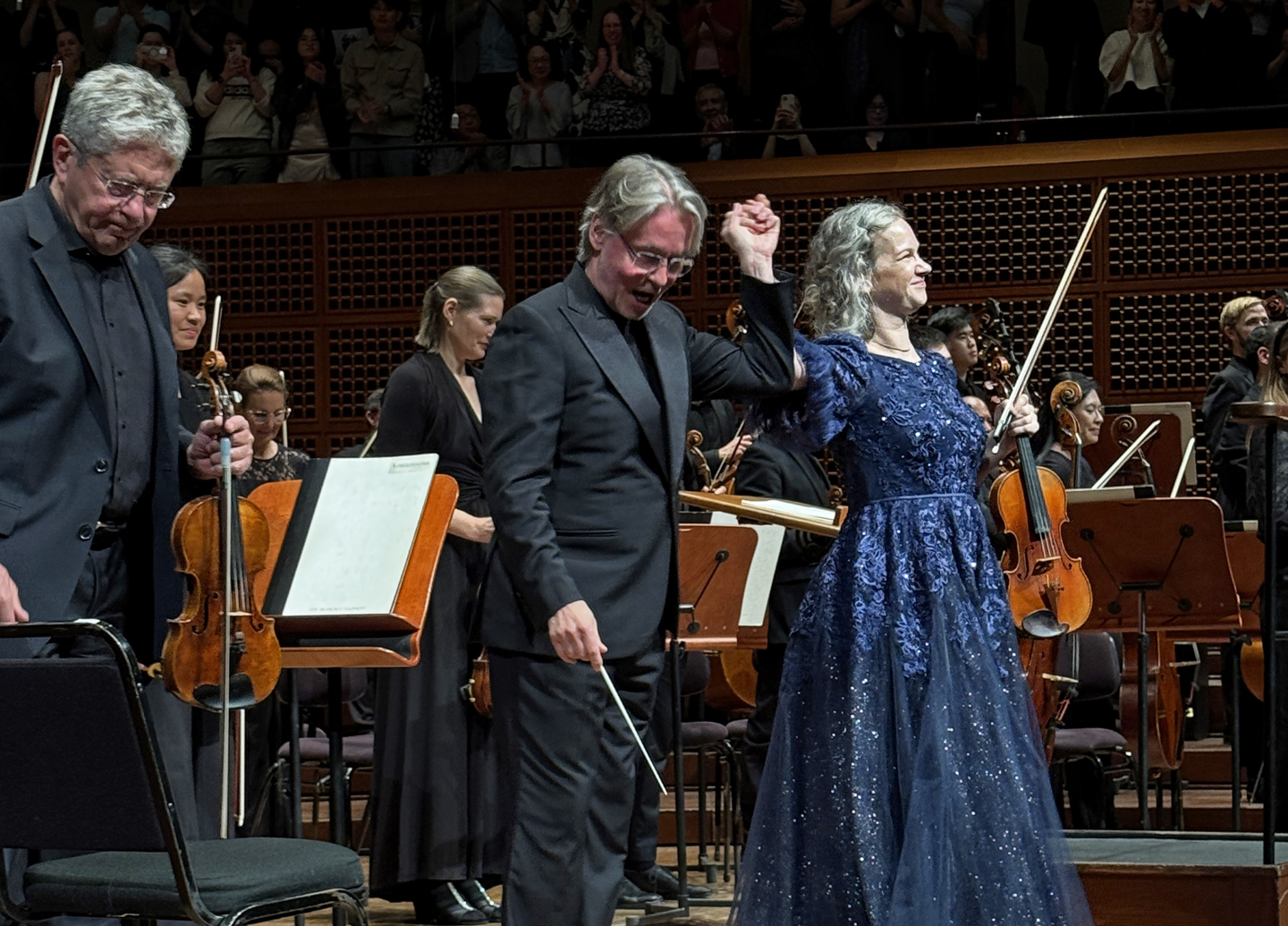
The following Friday, Isabelle Faust was the guest soloist in the Berg Violin Concerto. Esa-Pekka Salonen conducted. Also on the program were Chorale, by Magnus Lindberg, and, after intermission, Stravinsky's The Firebird. This was a concert I got tickets to by trading in an unused ticket for an earlier performance, so the seat was not especially good. When there's a soloist, I like to be right up front and just left of stage right, so I'm right in front of the soloist (D104 is my usual seat), but this time I was well off to stage left, which was a little disappointing. I did, however, enjoy Salonen's reading of The Firebird. He got a very warm welcome when he first appeared on stage and, as at other recent concerts I've attended with Salonen conducting, calls from the crowd for him to stay in San Francisco. 

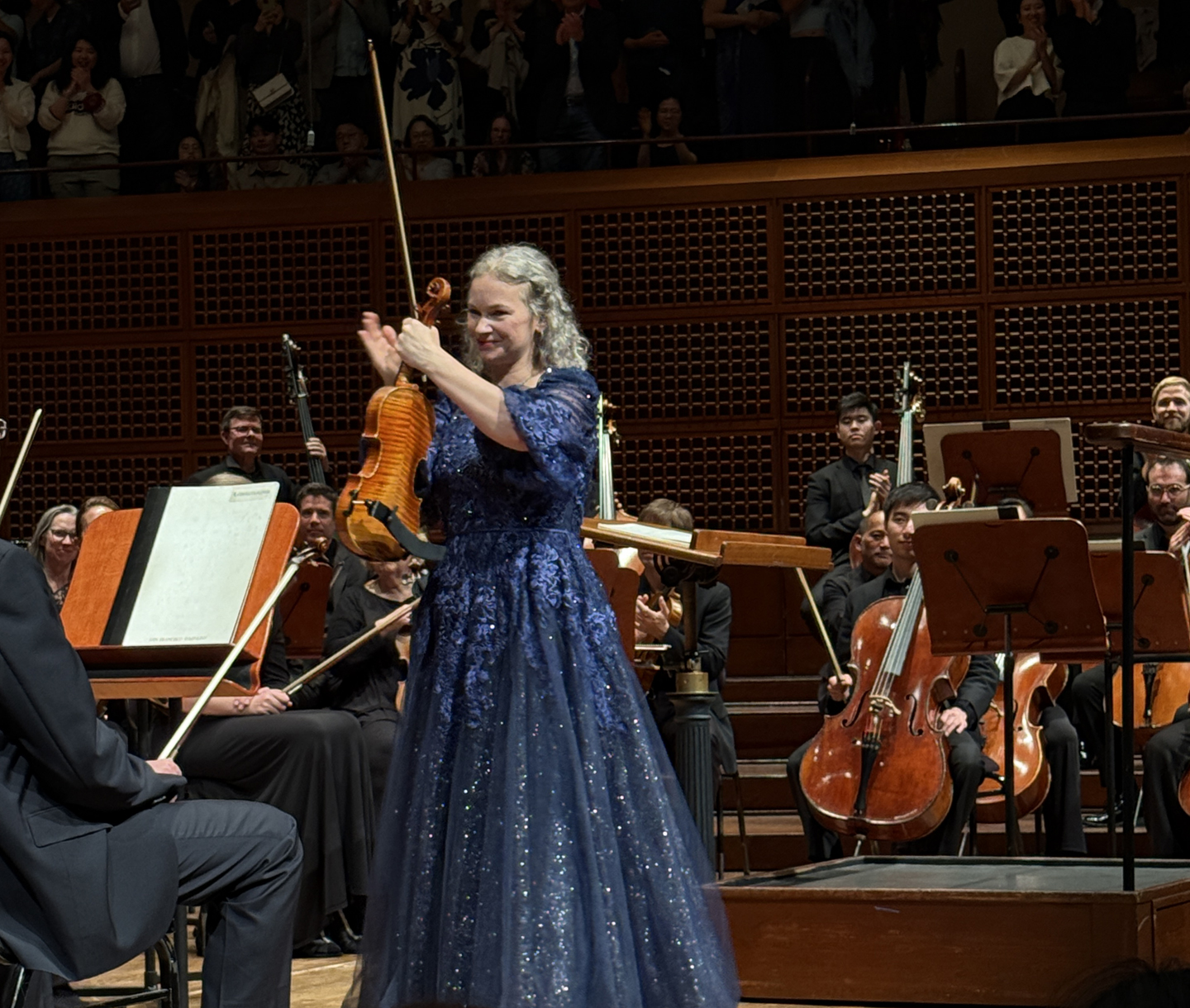
On the 30th, it was an all-Beethoven program. Beethoven's Symphony No. 4 came before intermission, his Violin Concerto was performed after intermission with Hilary Hahn as soloist. Elsa-Pekka Salonen conducted. The highlight was the concerto. Hahn was in top form. Precise, with each note articulated, and with nearly perfect intonation, but never cold or distant-seeming. A very full house gave her a long standing ovation. She came back for an encore (something from the Bach solo partitas and sonatas) and then came back for a second encore, doing a piece I didn't recognize. It's always fun to watch her during rests because she often turns her back to the audience to watch the orchestra herself and really seems to enjoy listening from what is perhaps the best 'seat' in the house. I've noticed also that she always applauds for those who accompany her. A memorable performance. 


Wednesday, June 14, 2017

Music I'm Listening to: Garrick Ohlsson with Susanna Mälkki Conducting the San Francisco Symphony

Garrick Ohlsonn following his performance of Beethoven's
Piano Concerto No. 1, Conductor Mälkki to the right
I attended the June 9, performance of the San Francisco Symphony at Davies Hall. The program began with a performance of Stravinsky's Scherzo Fantastique. Garrick Ohlsson performed Beethoven's Piano Concerto No. 1 before intermission. The second half was devoted to a performance of Stravinsky's Le Sacre du Printemps, and a very powerful performance it was.

I'd never heard the opening Stravinsky piece at all, never heard Le Sacre du Printemps live, and Ohlsonn gave a fine performance of the Beethoven concerto, all of which made for an excellent concert experience. The 1795 Beethoven concerto is an interesting transitional piece between the classical and romantic styles. Beethoven's Symphony No. 3 of 1803, is usual considered the composition that ushered in the romantic period, but here in the first piano concerto you can already hear something new. The first cadenza is very, very long, for one thing, and, in both that cadenza and the piece as a whole there are sections that sound like the future Beethoven amidst sections that sound more like Mozart. I don't know if Ohlsson's interpretation made the contrasts more obvious than they sometimes are, but it's something I'd never noticed before.

The highlight of the evening, however, was Le Sacre du Printemps. I own half a dozen recordings and I've heard it on the radio many times, but seeing the piece played live is especially exciting because so much is going on on stage (and it's a very big ensemble—according to the program, scored for: three flutes plus piccolo and alto flute (third flute doubling second piccolo), four oboes and English horn (fourth oboe doubling second English horn), three clarinets plus E flat clarinet and bass clarinet (second clarinet doubling second bass clarinet), four bassoons and contrabassoon (fourth bassoon doubling second contrabassoon), eight horns (seventh and eighth doubling tenor tubas, also known as Wagner tubas), three trombones, two bass tubas, five timpani (divided between two players), bass drum, tam-tam, triangle, tambourine, guiro, ancient symbols, and strings). It's as interesting to watch as it is to listen to. (A guiro is that Latin American percussion instrument made from an open-ended gourd with parallel notches cut in the side). There was barely enough room on stage for all the musicians. I don't think I've ever heard a performance of Le Sacre du Printemps as good as this one. Mälkki kept things taut, precise, and powerful without ever giving in to what I suspect must be a huge temptation to let the tempo pick up as the energy of the music increases. Maintaining the relentless drive but without rushing is probably the key to making the piece a success. Mälkki kept things right on the edge from start to finish. It was electrifying. Goose bumps and giggles. I've never seen a longer, more enthusiastic standing ovation in the many years I've been attending the San Francisco Symphony concerts. It must have lasted a good eight minutes. A memorable performance.

Friday, March 10, 2017

Music I'm Listening to: Two San Francisco Symphony Concerts (February-March 2017)

It's been a busy month. I've had little time to write. It's been more than two weeks now since I attended the February 24th performance at Davies Symphony Hall. Michael Tilson Thomas conducted Scheherazade.2 by John Adams and selections from Romeo and Juliet, by Prokofiev. The former, written for Leila Josefowicz (the soloist during the February performances) is not quite a violin concerto. I think Adams described it as a "dramatic symphony." Adams appeared on stage before the music began to discuss the piece, summarizing what was in the program notes. Adams conceived of the violin part as expressing Scheherazade, but Scheherezade as a strong, modern woman, and I can think of no violinist active today better to play it than Josefowicz, who is muscular in her playing but beautifully nuanced at the same time. I've seen her play three times now. I've been impressed each time. Scheherazade.2 is a complex piece, hard to take in on a single hearing, but I enjoyed it and enjoyed seeing Josefowicz wrestle with it. The performance brought the entire hall to its feet. Conductor Thomas and Josefowicz were eager to acknowledge Adams afterward, pointing to him in the balcony seats and insisting that he stand and be recognized.

The Prokofiev was familiar music from the ballet Romeo and Juliet, but it's a piece I'd never heard live before, and its always fun to hear a familiar piece live for the first time. It makes you acutely aware of who in the orchestra is doing what when. I was pleased my favorite part of the ballet, the section knows as "Dance of the Knights" was one of the selections—but, of course, it would be.

On the evening of March 10, I was back at Davies Symphony Hall for a concert featuring another fine violinist, this time Arabella Steinbacher. Marek Janowski was the guest conductor. The program included Beethoven's Coriolan Overture and the Brahms Symphony No. 4. Steinbacher was soloist in a performance of the Hindemith Violin Concerto, an unfamiliar piece that she handled with aplomb.

Steinbacher never lacks the ability to play lyrically when that is called for, but she excels at precise, staccato, modern music like the Hindemith, and her violin, which is rather gritty in the low register, suited the music. Janowski and the Symphony gave us a fine performance of the Brahms as well, receiving an extended standing ovation at its conclusion, with the symphony players at one point refusing to stand so that Janowski could be recognized alone. He looks a trifle frail, but he gets the job done. On the occasions I've seen him work, I've always had the impression that he's particularly good at communicating with the San Francisco performers and that they respond to him deeply, in a way that they don't with some other conductors.

Photographs of John Adams and Arabella Steinbacher courtesy of The San Francisco Symphony. Photo of Steinbacher by Jiri Hronik. Photograph of pointing Josefowicz by the author.

Tuesday, September 16, 2014

Music I'm Listening To: San Francisco Symphony with Leif Ove Andsnes (September 12, 2014)

I attended the Friday, September 12 performance of the San Francisco Symphony. The program included Rossini's overture to La Gazza Ladra, Alternative Energy by Mason Bates, and Beethoven's Piano Concerto No. 1. Leif Ove Andsnes was soloist in the Beethoven concerto. Michael Tilson Thomas conducted. The orchestra gave a lively performance of Rossini's very familiar overture (although I would not have been able to name it before I had read the program), getting the evening off to buoyant start before shifting gears to a very modern piece, the Bates, which was composed in 2012.

The program notes say the San Francisco Symphony has done of series of concerts during the past two seasons pairing the music of Mason Bates with pieces by Beethoven, and this was another in that series, but nowhere does it explain why these two composers have been paired. I imagine there is a notional link, but it isn't obvious to me and the program had nothing to say about the juxtaposition, which was a little annoying (the failure to explain was annoying, that is). Personally, I'd rather hear a program of all modern music or all music of whatever period, unless there's some compelling reason to pair two pieces that are very different in style.

Composer Mason Bates wrote an extensive comment on Alternative Energy for the program notes. The piece begins, we are told, on a rural farm in 1896 and takes us to 2222, in Rykjavik, by way of Chicago (in 2012) and Xinjiang Province (in 2112). The piece is described as "an energy symphony" that moves from the cranking of an automobile engine, to sounds of contemporary Chicago, to scenes of a futuristic Chinese energy industry (including a meltdown), and finally to a post-apocalyptic Icelandic rainforest, before ending with "the occasional song of future birds" and "distant tribal voices" that call for fire "our first energy source." A motif played first on the violin (by Associate Concertmaster Nadya Tichman) recurs throughout the piece, often as a violin line, but in other guises as well. The composition includes recorded sounds played back through a surround-sound sound system that were nicely integrated--which is often not the case when electronic and live instrument sounds are used together. Some sections had a clearly Chinese feel (with the violins sounding like an erhu), other sections suggested gamelan music, sometimes the mood was jazzy. There was a cinematic sweep throughout. I thought the piece consistently interesting. I very much enjoyed the performance but didn't feel the need to know the "story" behind it. The audience was very appreciative. The composer appeared on stage to take bows along with conductor Thomas and the orchestra. He seemed very pleased with the performance, which was recorded for possible future release.

After intermission, Leif Ove Andsnes gave a controlled but lively rendition of the Beethoven piano concerto that was very well received by an appreciative audience. The applause lasted long enough to bring Andsnes out again to play two Beethoven bagatelles as an encore. Andsnes looked very sharp in a nicely tailored suit. The quality of the fabric it was cut from was apparent even from the audience (although I was seated in the second row and right in front of the piano). The concert was a very nice start to the 2014–2015 season.

(Photograph of Mason Bates by Ryan Shude, courtesy of the San Francisco Symphony website.)

Sunday, April 21, 2013

Music I'm Listening To: The San Francisco Symphony with Soloist Augustin Hadelich (April 21, 2013)

On Friday night (April 19) I had the pleasure of attending a San Francisco Symphony performance. Conductor laureate Herbert Blomstedt led the orchestra in Beethoven's Violin Concerto and the Nielsen Symphony No. 5. German violinist Augustin Hadelich was soloist in the Beethoven concerto.

I suspect Mr. Hadelich made quite a few new fans on Friday night. His articulation was remarkable. The performance had a wonderful clarity. I heard notes in the concerto that I wasn't even aware were there--perhaps because many violinists slur them most of the time. I don't know, but the overall impression was one of breathtaking precision--which is not to say that the playing lacked lyrical qualities where lyrical qualities were required. Hadelich had a way of slightly cheating the duration of certain notes at the end of phrases that created an interesting tension.


Mr. Hadelich, according to the program notes, plays the 1723 Ex-Kiesewetter Stradivarius, on loan from Clement and Karen Arrison through the Stradivari Society. I'm not aware of having heard this instrument before, but it had a kind of middle-of-the-road clarity that seemed well suited to Mr. Hadelich's controlled, no-nonsense style. I think this is a fairly late Strad. Stradivarius's extant violins range from 1666 (the Ex-Beck) to 1737 (the Lord Norton and the Comte d'Amaille). Some of the earlier ones seem to have rather stronger characteristics. The 1716 Booth, played now by Arabella Steinbacher, for example, has a certain gritty throatiness in the low register but sounds sweet at the high end. The 1715 Ex-Marsick that James Ehnes plays is rather sweet sounding throughout the range. Joshua Bell's 1713 Gibson Strad is especially lush sounding, which seems appropriate given Bell's fondness for rather romantic works.

Overall, very impressive. This was among the best performances of the Beethoven Violin Concerto I've ever heard. The audience seems to have agreed with me. The members of the Symphony onstage seemed mesmerized listening to the cadenzas in the solo part and the hall burst into spontaneous applause at the end of the first movement. Much has been said recently about whether or not to applaud in the middle of multi-movement classical pieces. Generally, I like to hear the whole before applauding, but the audience was thrilled and I have every sympathy for the expression of appreciation in this case. Conductor Blomstedt, however, clearly disapproved, gesturing to the audience to stop with fingers waved behind his back (and apparently annoyed again at the end of the first movement of the Nielsen--although in that case, I suspect the applause was simply the result of confusion about whether the music had ended).

At the close of the Beethoven, Mr. Hadelich received a long standing ovation, to which he responded with an encore. I was pleased that he announced beforehand what he was going to play (Paganini's Caprice No. 24). I have no doubt I would have recognized it as a Paganini caprice, but I would have had to do some research to figure out which one it was. It's funny how very familiar pieces of music can be difficult to put a name to.

After intermission the ensemble played the Nielsen symphony--a rather expansive piece that seems always to be spilling out of a vessel too small for it. In some sections, it gave the impression of a solid wall of sound that was difficult to process. Elsewhere, the music became suddenly more melodic. There are some interesting textures here, but it was a lot to absorb all at once. I've certainly heard this before. I may even have a recording of it, but it's been a long time. While I've always found Nielsen interesting, and I certainly have a number of recordings of his music, they aren't recordings of music I turn to repeatedly. It's been many years since I've heard much Nielsen at all. I remember buying several Nielsen LPs in college at what was then my favorite haunt--Mole's Records, in Columbus, Ohio. Perhaps it's time to listen to some of them with more mature ears.

Had a tasty dinner afterwards at Absinthe. The yam and goat cheese ravioli were delicious. The emphasis was more on the yams than on the goat cheese. The slight sweetness of the yams went very well with a Fonsainte Grenache rosé I had from Corbieres. I enjoyed my appetizer (tuna tartare) with a Pouilly Fuissé.

Photographs of conductor Herbert Blomstedt and violinist Augustin Hadelich courtesy of the San Francisco Symphony.

Saturday, March 9, 2013

Music I'm Listening To: The San Francisco Symphony at the Green Music Center (March 7, 2013)

I attended the March 7, 2013 performance of the San Francisco Symphony at the Green Music Center. Michael Tilson Thomas conducted Drift and Providence, by Samuel Carl Adams, the Beethoven Piano Concerto No. 4 (Yuja Wang, soloist), and the Brahms Symphony No. 1.  Conductor Thomas led a precise and satisfying interpretation of the Brahms symphony with an especially lush second movement. The woodwinds in particular were memorable, especially the oboe in the first movement, the clarinet in the second, and the flute in later movements. The oboe sounded especially poignant following the sudden unexpected death of the Symphony's principal oboist, William Bennet, February 28, following his collapse from a brain hemorrhage on February 23 during a performance. The basses, trombones, and percussion were remarkably resonant. This new hall seems to emphasize the low end of things. I wonder if conductors have to learn a new hall and adjust their performances to it? I imagine they do. The tympani at the end of the piece were played with special verve, I thought.

Yuja Wang's performance of the Beethoven Concerto was met with a standing ovation. With the exception of a momentary stumble in the first movement (my imagination?) it was impeccable, marked by crisp articulation and fleet fingering. She wore a citron yellow gown off one shoulder with a draped bodice and a long, full skirt with a daring slit--very pretty and rather more conventional than the "bathing suit" she chose the last time I saw her perform.

To me, however, the highlight of the evening was the opening piece, Drift and Providence. I didn't realize until today (reading the program notes) that Samuel Adams is the son of composer John Adams. It runs in the family, apparently, as does art generally: His mother is photographer Deborah O'Grady. I also see from the liner notes that the piece is in five movements, each of which is labeled with references to the West, and San Francisco in particular. Listening to the piece for the first time without knowing that, I'd have been hard-pressed to say where one movement began and another ended. The music clearly had sections, but the overall effect was of a broad, multifaceted, shifting layer of sound with no clearly defined breaks. Talking with the composer after the concert, he called it "kaleidoscopic." It gave me the impression of a progression from a mellow, sleepy state to a new state of consciousness more agitated and aware than the first, followed by a kind of compressed recapitulation of that progression and then a raucous summing up. The early parts of the piece suggested metal wind chimes, a gamelan orchestra, wind, and waves--but all as if heard with the ears of someone heavily drugged--this followed by a shift (the "drift" of the title, no doubt) in the direction of something brighter. The dreamy, shimmering quality of much of Drift and Providence is enhanced by the use of a computerized feed of processed sound, manipulated by the composer during the performance. It's a piece I'd like to hear again.

We attended a gathering for the artists after the concert. Yuja Wang decided not to appear. Michael Tilson Thomas looked bored and distracted and eager to leave--not that I blame him. Samuel Adams was a delight to talk with. It turns out he lives in Brooklyn, where I spent my earliest years. He even knew the street I lived on, St. John's Place--our stickball field.

Photos courtesy of the San Francisco Symphony. Photo of Deutsche Grammophon artist Yuja Wang © Felix Broede. Photo of composer Samuel Carl Adams by Deborah O'Grady.

Tuesday, March 20, 2012

Music I'm Listening To: The Santa Rosa Symphony with the Eroica Trio (March 19, 2012)

Last night I heard one of the last Santa Rosa Symphony concerts I'll hear for a while, as I've decided not to renew my subscription, after 11 years. The new seats assigned in the Green Music Center for next season were not especially good, as I expected, and they've eliminated the mini-series option (your choice of three of the season's concerts) that I liked. The cost relative to the quality of the performances just didn't make sense any more. Instead I've added the Green Music Center series of the San Francisco Symphony to my regular subscription in San Francisco--which seems the best of both worlds; you get four concerts with the San Francisco performers and guests at the new music center for only a modest sum more than the cost of the Santa Rosa Symphony subscription.

On the program last night was The Chairman Dances (subtitled Foxtrot for Orchestra) by John Adams, Beethoven's Triple Concerto, and Beethoven's Symphony No. 3, the Eroica (appropriately enough).  The Chairman Dances has a somewhat convoluted origin. It was originally conceived as part of Adams' opera Nixon in China in a scene with Chairman Mao dancing with his wife but was deleted from that project and reworked as a stand-alone piece only to be later worked into the opera again, in a different context--in a scene that involved President Nixon and his wife dancing. As the program points out, we mostly think of Madame Mao as a member of the Gang of Four, but she was in her younger days a rather glamorous actress, Chiang Chin, and the original conception of the piece draws on the tradition of cinematic dance music with that part of her history in mind. Hearing it as a concert piece, of course, none of that really matters.

It was typically Adams in its use of repetitive, almost hypnotic sections with sudden gear changes that drop the listener into passages of more upbeat and expansive material, all colored with a wide range of instrumentation, including piano, harp and a large and varied percussion section. I always like Adams. Despite a somewhat shaky start, Ferrandis got things under control fairly quickly and he and the orchestra delivered a workmanlike performance. The piccolos and horns were standouts.

The main event was the Beethoven Triple Concerto, with the Eroica Trio, with founding members Erika Nickranz and Sara Sant'Ambrogio on Piano and Cello, and with Susie Park on violin; Park joined the trio in 2006. The women created quite a stir as they entered the auditorium, Park and Nickranz dressed in glittering silver, Sant'Ambrogio in white with silver shoes.

Again, a solid performance. Although Maestro Ferrandis kept the accompaniment so quiet through much of the first movement that the soloists seemed rather too loud, the rest of the performance was nicely balanced. Cellist Sant'Ambrogio seemed more on top of the challenging cello part than Alisa Wielerstein was when I last heard this piece live (in San Francisco). The cello was particularly sweet in the middle movement. The trio played a Piazzolla tango "Oblivion" as an encore--perhaps the highlight of the evening.

Ferrandis's reading of the Eroica seemed rushed to me in the first movement, but all in all it was a creditable performance, despite a certain lack of attention to the long lines of the piece. Again the woodwinds and the horns seemed especially good. On the whole, Ferrandis seemed more in charge of things and more focused last night than he often is. Normally I attend the Sunday afternoon concerts. Because of a schedule conflict I had to switch to the Monday night performance this time. Perhaps he's best in the evening performances?

Photo of Bruno Ferrandis courtesy of the Santa Rosa Symphony website. Photo of the Eroica Trio from the Eroica Trio website (photo by Nina Choi).

Saturday, February 5, 2011

Music I'm listening to: Chee-Yun, Alisa Weilerstein, and Jeremy Denk, with Marek Janowski Conducting the San Francisco Symphony

Last night, Friday February 4, I attended a San Francisco Symphony concert featuring Chee-Yun, Alisa Weilerstein, and Jeremy Denk as soloists, with Marek Janowski conducting an all-Beethoven program that opened with the Symphony No.1 followed by the Triple Concerto, and, after intermission, the Symphony No. 2.

I hate to complain, but the concert last night was rather uneven, I thought. As is so often the case at concerts (although not usually in San Francisco), the first piece on the program gave the impression that the performers weren't quite warmed up. I suppose it was competently played, but there wasn't much excitement to it. I'm afraid I felt much the same way about the Triple Concerto, which ought to have been the centerpiece of the program. No oomph, and Weilerstein seemed to be unsure about where her entrances were, despite having the score in front of her. All three of the soloists used scores. I guess that's OK, but it's a bit unusual--not that I could remember the solo part to Yankee Doodle.

Part of the problem was the odd dead spot that I'm increasingly convinced really does exist at Davies Symphony Hall. I was in seat Y107, just under the overhang of the balcony. At other concerts sitting in this area (most recently Gil Shaham and Itzhak Perlman) I've noticed that the sound is very muddy, and especially in the lower registers of the various instruments. It appears most marked when a solo instrument is playing over the orchestra.

This is particularly unfortunate in the case of the Triple Concerto. Chee-Yun's violin was usually crisp and had presence, the piano was audible throughout, but Weilerstein's cello, especially when she was playing on the lower two strings, seemed to disappear at times--as if she were miming, her fingers and bow moving but producing no sound. Too often, she was simply inaudible. That was disconcerting, to say the least, but it was especially disappointing in the many sections of the concerto that involve a conversation among the three solo instruments: The cello wasn't talking. I wonder if others in the audience had the same impression? [I just looked back at my most recent previous posts that touch on this problem: At the Gil Shaham concert, I was in Y107--the same seat. At the Perlman concert, I was in seat 107, two rows back, in AA107. Clearly there's a pattern here.] Chee-yun looked lovely in a magenta gown, Weilerstein wore a dress of a pretty amethyst color.

The performance of the Syphony No. 2, however, was excellent. The conductor and musicians seemed finally to have connected, and we were treated to a lively, nuanced performance of Beethoven's second symphony, which seems to me an altogether more self-assured, more interesting composition than his first. The woodwind section was a stand-out, as it usually is at the San Francisco Symphony.

Photo of Davies Symphony Hall courtesy of the San Francisco Symphony.

Tuesday, April 20, 2010

Music I'm Listening to: Schleswig-Holstein Festival Orchestra and Lang Lang (April 19, 2010)

I heard a very enjoyable concert last night at Davies Symphony Hall in San Francisco. Christoph Eschenbach conducted the last of 23 concerts in a US tour by the Schleswig-Holstein Festival Orchestra in Beethoven's Leonore Overture No. 3, Mozart's Piano Concerto No. 17, Prokofieff's Symyhony No. 1, and Beethoven's Piano Concerto No. 1. The soloist in both concertos was Lang Lang.

The audience got a treat after the published program was complete. The orchestra performed an encore--although, frustratingly, no one told us what it was and no one afterwards knew either. Following the orchestral encore, Lang Lang returned to the stage for a scheduled talk with the audience. Lang Lang expressed his thanks to the orchestra, whipped out what looked like a brand new iPad, and proceeded to play what he called a "high-tech version of Flight of the Bumblebee" by drumming his fingers on the pad, occasionally reaching over to the real piano to embellish a bit, much to the audience's delight. I'm still not sure whether he was actually playing, using an app on the iPad or if he was just fooling around, pretending to play while the music played in the background (I think the latter). If that were not enough, stage hands next brought out a second piano stool and we got to hear Eschenbach and Lang Lang play two pieces for four hands--Eschenbach, of course, started his career as a pianist. Again, frustratingly, no one told us what we were listening to and no one afterward knew what the encores were, but it sounded like Debussy to me--perhaps from his Petite Suite. Probably because this was the last concert of a long tour, the mood after the show was relaxed--celebratory almost. Some of the best music I've ever heard live has been encores like this, when the pressure is off and the musicians are just enjoying themselves.

Taken as a whole, the concert was wonderful, but it got off to a slow start. Beethoven's Leonore Overture No. 3 is what I used to put on the record player, turned up loud, to listen to just before going out for final exams in college. Somehow I felt powerful, full of knowledge, in control, ready to conquer if I marched out with that music ringing in my ears. It's stirring music--or at least it should be. Eschenbach and the orchestra managed to make it sound almost lugubrious. The pace was slow, the sound was dull. I've had this experience before at Davies Symphony Hall. There seem to be pockets of rather muddled sound--although the seats were good: Upper orchestra, dead center. I noticed this also at the Itzhak Perlman concert I recently heard there. The strings in particular lacked brilliance last night. Having said that, it makes no sense to attribute the flatness entirely to the acoustics; the second half of the program was excellent. I can't explain it, but the Leonore Overture was a disappointment, and I'm afraid the Mozart suffered from the same dark, dull tone in places. The piano playing was impeccable and nicely expressive, however, especially in the middle movement (Andante). Lang Lang is one of those performers that immediately banish all worry about a possible missed or stray note, even in the most demanding of passages. He is interesting to watch--although the unnecessary flourishes suggestive of bad ballet can become tiresome after a while. His gestures while playing reminded me of Melvyn Tan (Whatever happened to Melvyn Tan?), although Lang Lang is somewhat less flamboyant.

(Photo of Christoph Eschenbach courtesy of the San Francisco Sympony. Photo by Eric Brissau.)

Three things struck me visually. First, the layout of the string instruments on stage was a mirror image of what we're used to seeing in the US. The basses and cellos were on the left, the violas on the right. I've seen European orchestras perform before, and our local conductor in Santa Rosa, Bruno Ferrandis, a Frenchman, once remarked that the layout in Santa Rosa was "backwards." I'm aware of this difference in the way we array the strings, but I've never really noticed it before. It seemed to make little difference to the sound. Second, there were only two or three blond heads among the Schleswig-Holstein performers, which was a trifle surprising at first. Again--no effect on the sound. (However, as this is an orchestra for young performers drawn from areas well outside of Schleswig-Holstein, it's not hard to explain.) Third, the women in the orchestra were dressed rather more daringly than the performers I'm used to seeing in San Francisco. One of the front-row cellos had on a tight-fitting, off-the-shoulder top, another seemed to be wearing something resembling a body suit--everyone in black, of course. Once again--no effect on the sound, but these things are part of the extra dimension that a live performance provides.

I've remarked here before that I've learned to treasure the gems of live performances and not worry too much about the disappointments. This concert would have been worth it just for the second half of the program. Eschenbach gave us a very precise, controlled performance in the first three movements of Prokofieff's Classical symphony that fit the music perfectly and allowed for a strongly contrasting, almost frenzied final movement. Here the sound was clear and clean, and bright and loud where it should have been. A delight.

Lang Lang and the orchestra were in top form for the Beethoven Concerto as well. An appreciative audience immediately stood up for an ovation at the end. I wish they had been more appreciative during the performance. I've noticed over the years an inverse correlation between the celebrity  of a performer (as distinct from his or her talent) and the manners of the audience they attract. The more famous a performer is outside the world of music enthusiasts (for whatever reason) the more likely the audience is to be full of people more interested in the person than the music. These people tend to have a low tolerance for sitting still and being quiet. Davies Symphony Hall is always a co-conspirator: The seats creak, the hollow metal backs of the seats sound like timpani, the hard wood floor might as well be a giant drum--every heel resonates; coughing, sneezing, watch alarms, rustling paper, and dropped water bottles all made an appearance. Still, with the excellent performances of the Prokofieff and the Beethoven concerto, Lang Lang's funny iPad performance, and three encores, I'm not complaining. It was a lot of fun.

(Photo of Lang Lang, courtesy of the San Francisco Symphony.)

Dinner beforehand at Café Della Stella was solid, as always, if not exciting. I had an excellent arugula salad with roasted (grilled?) pears, scampi as a main dish, and a tasty panna cotta for dessert. The highlight was a very tasty 2008 Villa Teresa Pinot Grigio from Italy's Veneto region. Very dry, deceptively delicate, very flavorful. Behind the fruit it had something of the quality of a really good Fino sherry. Delicious.
Related Posts with Thumbnails