Showing posts with label Stravinsky. Show all posts

Saturday, February 22, 2025

Music I'm Listening to: Daniil Trifonov with the San Francisco Symphony

Last night (February 21, 2025) I had the pleasure of attending the San Francisco Symphony concert at Davies Symphony Hall. On the program were a new piece, Strange Beasts (a San Francisco Symphony Commission and World Premiere) by the appropriately named composer Xavier Musik, Prokofiev's Piano Concerto No. 2 (with soloist Daniil Trifonov), and, after intermission, Stravinsky's The Rite of Spring

Strange Beasts was interesting for its wide range of aural textures and the sense of unease it created (in several places I was reminded of a Bernard Herrmann score), this heightened by angular photographs of Los Angeles projected above the orchestra, images taken by the composer. Muzik spoke before the performance, explaining that he suffers from anxiety, that, if left unchecked, tends toward catastrophic imaginings and that composing and photography help him to stay sane. He said he imagines the looming buildings in the slide show (many projected upside down) as being like monsters or the strange beasts of the title of his composition. While I thought the photographs mostly ordinary snapshots of no special interest in themselves, the way they were projected, rapidly changing, worked fairly well with the repeated crescendos of unsettling sound welling up in the music. I thought Strange Beasts was longer than it needed to be, but I'll be interested to watch this young man's career. I think in places it was very successful even if it seemed a bit rambling and without structure (at least without structure discernible to me). 

Prokofiev's Piano Concerto No. 2 followed with Trifonov at the keyboard. His manner on stage was serious but, at the same time, he gave the impression of being on the verge of spinning slowly out of control. He seemed nervous and awkward. At the piano, however, Trifonov was electric. I was very impressed by the clarity of his phrasing despite the very fast tempos in the concerto. He got an extended standing ovation and came back to play two encores, the first I think was from one of Prokofiev's piano sonatas, but it was not something familiar. The second I recognized immediately, a piece from Prokofiev's Cinderella, that seemed perfect to me. 

After intermission, Salonen conducted the orchestra members in a tight performance of The Rite of Spring. Overall, it was an excellent concert, but that second encore may have been the highlight of the evening. 

Thursday, October 4, 2018

Music I'm Listening to: The San Francisco Symphony with Leonidas Kavakos

I attended the September 28 performance of the San Francisco Symphony, at Davies Symphony Hall, part of an ongoing Stravinsky Festival. MTT conducted Petruschka, The Rite of Spring, and the Violin Concerto. Leonidas Kavakos was the soloist in the concerto.

It was fun to hear Petruschka live for the first time, but I was more  interested in the rest of the program as this was my second time hearing the San Francisco Symphony doing each of the other two pieces. Back in 2013, I heard Leila Josefowicz play the Stravinsky concerto (my comments on that concert here) and heard The Rite of Spring just last summer, with Susanna Mälkki conducting (comments here). I was curious to hear these two pieces again and with MTT conducting.

I don't know what it is about MTT. I know he's popular. He's won multiple Grammy Awards. I just don't get the way he conducts. I thought The Rite of Spring oddly static in the first half. It's a piece that should be marching forward, relentlessly, and he managed to make it seem like it was standing still at times. I always feel a disconnect between him and the orchestra (with one notable exception, his brilliant reading of the Mahler Fifth Symphony I heard back in March this year). In the second half of The Rite of Spring, things finally seemed to be in gear and the audience was very appreciative, but this performance, while enjoyable, didn't leave me with anything of the excitement I felt hearing virtually the same musicians under Mälkki's baton back in June of 2017.

I felt kind of the same way about the concerto. The opening chord—the chord that opens each of the concerto's movements—seemed weak. It should come as a shock. I had never heard Kavakos play before or even heard his name, so I went into the concert with an open mind. After the initial chord, I was prepared to be disappointed, but, it got better. Again it took some time for the players and the conductor to convincingly join forces, or so it seemed to me. In the end, I liked Kavakos. That said, this performance didn't have the fire of the 2013 performance I attended with Josefowicz on the violin. 

Sunday, February 4, 2018

Music I'm Listening To: San Francisco Symphony led by Thierry Fischer, Soloist Gautier Capuçon

I attended the January 28 evening performance at Davies Symphony Hall. Conductor Thierry Fischer replaced Charles Dutoit on the podium, but the program was otherwise unchanged. He led the Royal Philharmonic Orchestra. The concert opened with Debussy's Petite Suite, followed by Haydn's Cello Concerto No. 1 and, after intermission, Stravinsky's Firebird Suite. Gautier Capuçon was soloist in the Haydn concerto.

Technical brilliance is by no means the only measure of a performer or a performance, but Capuçon is one of those who enters the stage with an aura of utter confidence and plays with such surety that, as a listener, you can take in a live performance with no anxiety—knowing that whatever happens on stage will be right. He is entirely persuasive. His performance of the Haydn concerto was taut with energy, passionate and gritty in places, yet lyrical where lyrical was called for.

Maybe it's just me, but when I listen to cello performances, I often find the four strings can have rather obvious differences of tone that don't always mesh well. The high string will be strident relative to the others or the low string too boomy. I thought Capuçon's cello unusually in synch with itself. According to Wikipedia, he mainly plays a 1701 instrument made by Matteo Gofriller, but also has a 1746 instrument by Joseph Contreras (both on loan to him). I don't know which he played on Sunday, but I liked its sound.

The audience was very appreciative. Following an extended standing ovation, Capuçon played El cant dels ocells (Song of the Birds) as an encore, supported by a number of cellos and basses in the orchestra. This Song of the Birds, based on a traditional Catalan song, seems to be a favorite encore among cellists following in the footsteps of Pablo Casals who regularly played it after concerts as a form of protest against the fascist Franco regime of Spain. I've heard  Zuill Bailey play it as encore as well.

Debussy's Petite Suite is always pleasant and it was fun to hear The Firebird Suite live. It's one of those pieces that offers a lot to look at on stage. I thought the performance of the latter a bit lacking in coherence here and there, but good overall. The audience was again very appreciative, offering another long standing ovation that resulted in another encore, the orchestra doing a lively run through something from one of Bizet's L'arlisienne suites. I noticed the Royal Philharmonic seats its musicians a bit idiosyncratically. Often European ensembles put the cellos stage right (while we usually put them stage left). In this case, the cellos were stage right but on the inside with the violas on the outside, closest to the audience. I noticed also that the Royal Philharmonic brought its own music stands.*

[*Correction: It appears that the San Francisco Symphony has acquired new music stands. They were still present at the next concert I attended. They're attractive.]

Photo of Thierry Fischer by Marco Borggrove. Photo of Gautier Capuçon by Gregory Batardon. Photos courtesy of the San Francisco Symphony.
SaveSave

Wednesday, June 14, 2017

Music I'm Listening to: Garrick Ohlsson with Susanna Mälkki Conducting the San Francisco Symphony

Garrick Ohlsonn following his performance of Beethoven's
Piano Concerto No. 1, Conductor Mälkki to the right
I attended the June 9, performance of the San Francisco Symphony at Davies Hall. The program began with a performance of Stravinsky's Scherzo Fantastique. Garrick Ohlsson performed Beethoven's Piano Concerto No. 1 before intermission. The second half was devoted to a performance of Stravinsky's Le Sacre du Printemps, and a very powerful performance it was.

I'd never heard the opening Stravinsky piece at all, never heard Le Sacre du Printemps live, and Ohlsonn gave a fine performance of the Beethoven concerto, all of which made for an excellent concert experience. The 1795 Beethoven concerto is an interesting transitional piece between the classical and romantic styles. Beethoven's Symphony No. 3 of 1803, is usual considered the composition that ushered in the romantic period, but here in the first piano concerto you can already hear something new. The first cadenza is very, very long, for one thing, and, in both that cadenza and the piece as a whole there are sections that sound like the future Beethoven amidst sections that sound more like Mozart. I don't know if Ohlsson's interpretation made the contrasts more obvious than they sometimes are, but it's something I'd never noticed before.

The highlight of the evening, however, was Le Sacre du Printemps. I own half a dozen recordings and I've heard it on the radio many times, but seeing the piece played live is especially exciting because so much is going on on stage (and it's a very big ensemble—according to the program, scored for: three flutes plus piccolo and alto flute (third flute doubling second piccolo), four oboes and English horn (fourth oboe doubling second English horn), three clarinets plus E flat clarinet and bass clarinet (second clarinet doubling second bass clarinet), four bassoons and contrabassoon (fourth bassoon doubling second contrabassoon), eight horns (seventh and eighth doubling tenor tubas, also known as Wagner tubas), three trombones, two bass tubas, five timpani (divided between two players), bass drum, tam-tam, triangle, tambourine, guiro, ancient symbols, and strings). It's as interesting to watch as it is to listen to. (A guiro is that Latin American percussion instrument made from an open-ended gourd with parallel notches cut in the side). There was barely enough room on stage for all the musicians. I don't think I've ever heard a performance of Le Sacre du Printemps as good as this one. Mälkki kept things taut, precise, and powerful without ever giving in to what I suspect must be a huge temptation to let the tempo pick up as the energy of the music increases. Maintaining the relentless drive but without rushing is probably the key to making the piece a success. Mälkki kept things right on the edge from start to finish. It was electrifying. Goose bumps and giggles. I've never seen a longer, more enthusiastic standing ovation in the many years I've been attending the San Francisco Symphony concerts. It must have lasted a good eight minutes. A memorable performance.

Sunday, March 13, 2016

Music I'm Listening To: Charles Dutoit Conducting the San Francisco Symphony, Nikolai Lugansky Soloist

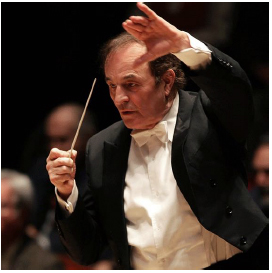
Renowned Swiss conductor Charles Dutoit is serious and precise on the podium (I'm sure he accepts no nonsense) but behind the seriousness, he seems to have a healthy sense of humor. He usually has an impish half-smile on his face and an air of amiable unflappability before and after he works. He almost dances when he conducts, seeming not so much to coax as to command music from the performers, and, apparently, they can't help playing at their best when he's in charge. At Friday night's concert (March 11, 2016), he drew forth some of the best music I've heard in a long time anywhere. Dutoit is something of a magician. On the program were Ravel's Mother Goose, Rachmaninoff's Rhapsody on a Theme of Paganini and, after intermission, Fauré's Pelléas et Mélisande Suite, and Stravinsky's Firebird Suite—a longer program than usual.

Mother Goose is rather amorphous, but it has a lot of color and interesting detail. It was well played and a good warm-up for the Rachmaninoff.

The  Rhapsody must be challenging. It frequently alternates long passages of notes that seem impossibly fast with strings of widely spaced single notes that mostly accent the orchestral part yet have to remain melodically coherent. Timing is critical to keep things together. Lugansky was nothing short of phenomenal, the orchestra behind him, equally superb. I can't imagine a better performance of this piece and have never heard a better one. Despite an enthusiastic standing ovation of several minutes, Lugansky declined to play an encore, suggesting with a gesture that his fingers weren't up to it. It was easy to forgive him. He had already done more than his duty.

Dutoit and the Symphony gave us more magic in the second half of the concert. I thought the Fauré particularly well done—lush and intense, but not overdone. Dutoit seems especially good at pushing boundaries of tempo and dynamics just enough to make familiar music exciting and fresh without going too far.

Photograph of Nikolai Lugansky by Marco Borggreve, courtesy of the San Francisco Symphony website. Photograph of Charles Dutoit, courtesy of the San Francisco Symphony Website.

Monday, April 27, 2015

Music I'm listening to: Two San Francisco Symphony Concerts

I recently attended two excellent San Francisco Symphony concerts. The Symphony performed with Pablo Heras-Casado conducting and Igor Levit at the piano on Thursday, April 17 at The Green Music Center and I heard the April 24 concert at Davies Symphony Hall in San Francisco, with guest conductor Vasily Petrenko on the podium. The soloist was Sa Chen, who performed Rachmaninoff's Piano Concerto No. 2. It's always best to write about concerts when the memories are fresh. Work and other obligations have caused me to delay in this case, but a few thoughts follow.

The Green Music Center concert was remarkable mostly for its overall clarity--everything where it should have been from start to finish. Heras-Casado conducted Haydn's Symphony No. 44, followed by the Mozart Piano Concerto No. 9 (with Levit at the piano) and, after intermission, Prelude to The Afternoon of a Faun (Debussy) and Stravinsky's Symphony in Three Movements. Levit isn't a showy performer, but he handled the Mozart deftly.

The hall, sadly, was only about two-thirds full, which is a shame. I really don't understand why Sonoma County classical music enthusiasts haven't supported the SFS concerts at the Green Music Center with more attendance. This is one of the finest ensembles in the world. It's so much easier to see them here in Sonoma County than to drive into the city, and the ticket prices have been very reasonable. As a result of the poor turnout, the Symphony will not continue the Green Music Center series next season--again, a shame.

I sat in one of the balcony seats over the performers at the Green Music Center, where the sound suffers a little but you get a good view of the conductor and you can watch the music move through the different sections of the orchestra. The program provided a lesson in the development of orchestral ensembles. The Haydn piece, written in 1771, was scored mostly for strings with the exception of two oboes and two natural horns. Natural horns have no valves and are limited to a single key, if my understanding is correct, but the key can be altered by adding extensions of curved tubing to the existing tubing. It was fun to watch the changes from above. The Mozart, written only six years later, was scored for a nearly identical ensemble. The Debussy, written more than a century later (1894) adds three flutes, English horn, two clarinets, two bassoons, two harps, and antique cymbals. There are four horns instead of two, and these are now modern, valved horns. With the Stravinsky, the ensemble swelled further.

The April 24 concert in the city was memorable mostly for Sa Chen's playing. I had never heard Sa Chen play or even heard of her. There are so many young Chinese piano wizards these days, it's hard to keep track sometimes. I don't really like Rachmaninoff's piano concertos--much too much bombast for my taste, but I know they're admired by many and they're known for being technically challenging. They require speed, precision, and power. Sa Chen, although she is a small woman, has all three of these qualities in spades.

My seat is in the fourth row, slightly to the left of center (from the audience's perspective). That puts me right across from the soloist, giving me an excellent view of a pianist's hands when the soloist is a pianist. Sa Chen wore a gold lamé gown off the right shoulder, allowing a view of her entire arm on the side closer to me. Her skin is pale and the spotlights from overhead made her arm look like it was carved from ivory-colored marble--although marble that was clearly alive. I was put in mind of the Pygmalion story. Watching the muscles move in her well developed forearms and her sometimes difficult-to-follow fingers was fascinating. Her hands are not especially big. It's remarkable that she achieves what she does. Her playing has the same compact, muscular power that you sense just looking at her. I was more impressed with her playing than I was prepared to be. She got an immediate standing ovation at the end of the piece and the applause lasted long enough to bring her out for an encore--a Rachmaninoff prelude, which was disappointing, as I had had enough of Rachmaninoff. I had hoped she would choose something more lyrical. I'm very curious now to hear what she sounds like playing other styles. Does she excel only at the biggest late romantic works? What does she sound like playing Bach, Mozart, Beethoven, Schubert, Debussy?

The second half of the program was taken up by Shostakovich's Symphony No. 12. Shostakovich is one of my favorite composers, but not because of the symphonies. I mostly enjoy him for his piano works, the string quartets, and the many quirky little pieces he wrote. Symphony No. 12, written in 1961, is subtitled "The Year of 1917." It's dedicated to the memory of Lenin. It paints a picture of the events of 1917 in four movements headed "Revolutionary Petrograd," "Razliv," "Aurora," and "The Dawn of Humanity," but the headings might as well have been "Loud," "A Little Less Loud," "Louder," and then "Very Loud and Drawn Out." The ending of the fourth movement--the end of the symphony--seems to go on forever. It's rather too triumphal for my sensibilities, or perhaps Petrenko failed to give it enough nuance to keep it interesting. The piece was interesting to hear, nevertheless, and despite the above remark, I'm confident Petrenko's reading was a good one. Petrenko was a pleasure to watch. He is tall and thin with somewhat spiky hair--and very Russian-looking. His gestures are big, but not overdone. His hands are immensely expressive. I got the feeling that there was a very strong connection between him and the orchestra--which is not always the case. I enjoyed the concert even if the music on offer wasn't of the sort I normally listen to.

All photos courtesy of the San Francisco Symphony website. Photo of Pablo Heras-Casado by Harald Hoffmann for Deutsche Grammophon. Photo of Sa Chen by Hong Wei. 

Thursday, October 17, 2013

Music I'm Listening To: Leila Josefowicz with the San Francisco Symphony conducted by Pablo Heras-Casado (October 4, 2013)

Because of work and various other obligations I make this brief and very belated comment on a recent concert in San Francisco. I attended the October 4, 2013 San Francisco Symphony performance at Davies Symphony Hall. The program included the Overture and Passacaille from Armide, by Lully. Three Studies from Couperin, by contemporary composer Thomas Ades, Stravinsky's Violin Concerto, and, after intermission, Mendelssohn's Symphony No. 3 "The Scottish Symphony." This was the first program in a series of three conducted by Spanish guest conductor Pablo Heras-Casado (above) featuring the music of Ades and Mendelssohn--which seems an odd pairing. The common thread conductor Heras-Casado sees in these two men is apparently a fascination with the Baroque.

The Lully piece was forgettable--literally. It's been only a couple of weeks since the concert, but I can't say I remember being moved by the piece at the time, and now I can't recall anything about it. The Ades composition was more interesting, if strange. It had a surreal quality. It sounded like a piece of early 18th century music that had been run through a computer and altered with a set of algorithms. I suppose the brain of Mr. Ades (who was in attendance) was, in fact, the computer that processed the underlying music of Francois Couperin and presented it to us in this new form. I'd have to hear the music again--probably several times--before I could say anything sensible about it, but it was interesting to listen to and probably worth the time to get to know better.

Having heard violinist Leila Josefowicz's exciting performance of Esa Pekka-Salonen's Violin Concerto in San Francisco not long ago (December 8, 2011), I was most eager to hear Ms. Josefowicz play again. I was not disappointed. She played the Stravinsky concerto with the same mixture of fierce determination and sheer delight she showed at the earlier concert. She seemed truly engaged with the orchestra and the conductor, turning to the other performers during her periods of rest--listening, watching, moving subtly with the music--before bursting in to play her solo sections. Overall, the concerto seemed powerfully yet deftly played--and played with a joyful verve that made the piece as much fun to watch as it was to listen to. The Mendelssohn was played impeccably too. Good to have Heras-Casado back in San Francisco again.

Photo of Pablo Heras-Casado courtesy of the San Francisco Symphony (photographer uncredited). Photo of Leila Josefowicz from Internet press kits, but I've been unable to find the appropriate copyright owner to acknowledge.    
Related Posts with Thumbnails