I attended the April 11 performance of the San Francisco Symphony at Davies Symphony Hall with Herbert Blomstedt conducting. There were two pieces on the program--Mozart's
Piano Concerto No. 21 before intermission, with Garrick Ohlsson at the piano, and Bruckner's
Symphony No. 4 after the break.
The Mozart concerto is probably his best loved, his best known. How many times have I heard it on the radio or on recordings I own? I have no idea, but I'd never heard it performed live before. And what a pleasure to hear Ohlsson play it with such precision--every note articulated, every note in its place--played without fuss, without idiosyncratic imposition of self. This was perhaps the purest Mozart I've ever heard. Ohlsson seemed transparent. By none of this do I mean to suggest Ohlsson's playing was mechanical, lacking emotion, or sterile: Quite the contrary. Ohlsson's genius was very much evident. By communicating the writing so simply and clearly, he achieved far greater emotional impact than many who try much harder. Ohlsson appeared concentrated and involved, entirely confident and content, engaged in a restrained dialog with the orchestra, focused on his fingers and the keyboard with no extraneous movement. It was simple. It was beautiful. It was simply a beautiful performance. The audience was very appreciative, bringing Ohlsson back on stage several times (although the hoped-for encore did not materialize). I noticed in the program that Ohlsson uses cadenzas by Radu Lupu, one of my favorite pianists.
During my freshman year of college--when I first started exploring classical music seriously--I listened to Bruckner quite a lot, but moved on to other things fairly quickly (there was so much new to hear). Doubtless I've heard snippets of Bruckner on the radio since then, but I can't recall sitting down and listening to a recording of a Bruckner piece since that time--for several decades, in other words--and last night was the first time I'd ever heard anything by Bruckner live. Although, I do vaguely remember that the
Symphony No. 4 was my favorite of the symphonies, the familiarity of the piece was something of a surprise--at one time, I must have known it well--but I've never heard it before like last night.
 While the Mozart performance was superlative, the Bruckner was even better
--one of those concert hall experiences that make you inwardly (sometimes outwardly) giggle with joy, one of those experiences that give you goose bumps. I don't know what to say except that the orchestra--always very fine--seemed in top form, every performer in synch with the rest of the players and with the conductor, who must know this piece very well, as he conducted with no score.
The tempos seemed perfect throughout. The challenging horn entrances were handled beautifully. Blomstedt elicited wonderful performances especially from the darker sections of the orchestra--notably the double basses, the bassoons, the low end of the brass section, and the violas. Easily the best performance of the Bruckner
Symphony No. 4 I've ever heard--and am ever likely to hear. While it is a very long piece and it gets a bit repetitious (especially in the third movement), it's full of melodic invention and textures and it has quite a few hooks that satisfy. My thanks to the conductor and all the performers for giving me a renewed appreciation of the piece.
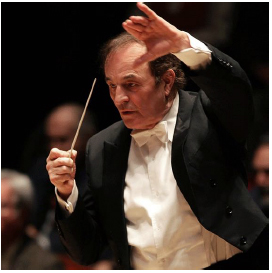
The rest of the audience seems to have felt much as I did. A sustained standing ovation began immediately after the maestro lowered his hands. Blomstedt, looking a bit frail but very lively nevertheless, delighted in acknowledging the various sections of the orchestra. I think the French horns and the violas got the biggest surges of applause. I'm happy especially for the violas, who always seem to get less attention than they deserve. A memorable evening.
Photo of Herbert Blomstedt courtesy of the San Francisco Symphony (uncredited). Photo of Garrick Ohlsson by Philip Jones Griffiths, courtesy of the San Francisco Symphony.





 Posts
Posts

