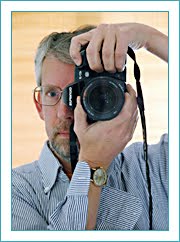
The Santa Rosa Symphony Youth Orchestra (SRSYO) will be departing San Francisco for Münich on June 19 to start a 10-day tour of Europe. Main stops are Salzburg, Vienna, and Budapest. My son is Principal Clarinet. I'll be going along as a chaperone/photographer/blogger.
The SRSYO 2018 Europe Tour blog is now up and running. See the blog for information about the tour, the upcoming Bon Voyage Concert on Saturday, June 16, in Weill Hall at the Green Music Center, and for daily updates on the concerts the group will perform in Europe and their other activities while away. https://srsyo.blogspot.com.
Showing posts with label Green Music Center. Show all posts
Thursday, June 14, 2018
Monday, December 4, 2017
Music I'm Listening to: Grams Conducts the Santa Rosa Symphony, Stewart Goodyear Piano
![]() |
| Conductor candidate Andrew Grams, before going onstage |
![]() |
| Conductor Grams and soloist Stewart Goodyear backstage |
Wednesday, April 27, 2016
Music I'm Listening To: A Week of Music
I heard Midori in recital at the Green Music Center on April 23 and Hilary Hahn in recital at Davies Symphony Hall on the 26th. On the 29th, I'll be in San Francisco again to hear a concert conducted by Pablo Heras-Casado featuring Shostakovich's Symphony No. 9.
It's sad a name as big as Midori can't fill the Green Music Center. Filling the hall seems to have been a persistent problem since its opening, about four years ago. The first two seasons, I was delighted to subscribe to reasonably priced San Francisco Symphony concerts at the Center, but that program was abandoned—because the hall was usually no more than two-thirds full. Is Rohnert Park too far to drive if you live in San Francisco? I suppose people who live in San Francisco don't feel the need, no matter how good the sound, and it appears the native (Sonoma County) audience for classical music isn't big enough to support the venue unaided. I've heard it suggested that the Center hasn't been well enough advertised in San Francisco. Perhaps attendance will pick up if Bruno Ferrandis is replaced by a better, more charismatic conductor at the Santa Rosa Symphony (his contract runs out at the end of this season and will not be renewed).
At the Midori recital on the 23rd, I sat in the seats behind the stage for the first time. They are closer to the performer than I realized, but it's easy to forget how directional the sound projection of a violin is. I remember noticing sharp changes in dynamics at concerts by Kyung-wha Chung (who virtually dances while playing, frequently turning from side to side). Midori, mostly facing away from my vantage point, was sometimes hard to hear, especially during the opening piece, a Bach sonata for violin and piano that lacked impact. However, I very much enjoyed her performance of Schubert's C Major Fantasy for Piano and Violin (although it always seems a little longer than it needs to be) and her performance of the Brahms Piano and Violin Sonata No. 1, in G Major). Two pieces by Tchaikovsky rounded out the program—The Valse Sentimentale and the Valse-Scherzo. Midori also played an encore, a song by Grieg, as she told us in the lobby after the performance. She was accompanied on stage by pianist Özgur Aydin.
I've heard Hilary Hahn twice before in San Francisco, playing the Tchaikovsky violin concerto, with James Gaffigan conducting, and playing one of the Prokofieff concertos, with Osmo Vänskä conducting. I'd never heard her in recital before. It was an excellent opportunity to listen closely to the sound of her violin (according to the Wikipedia article on Hahn "an 1864 copy of Paganini's Cannone made by Vuillaume"), which seems particularly sweet in the mid-register and rather nicely balanced throughout its range, unlike some violins that seem to favor either the low or the high end.
The program was varied, earlier music in the first half, more modern music after intermission. It began with Mozart's Sonata in G Major for Violin and Piano (Cory Smythe accompanying) followed by the Bach Sonata No. 3 in C major for Solo Violin. Hahn played the Bach absolutely purely, absolutely correctly—every note articulated and right where it was supposed to be—without sounding in the least cold or distant, somehow being utterly confident and charismatically present yet almost transparent, the music seeming to flow through and out of her. Her performance was mesmerizing—probably the most convincing performance of one of the Bach solo violin pieces I've ever heard, its only possible rival in my experience being one by Itzhak Perlman I heard as a college student in the early 1980s in Columbus, Ohio. Hahn was deeply moving. The entire audience immediately rose to its feet after she finished and brought her back on stage to acknowledge the applause several times before letting her go and starting the mid-concert leg stretch. She wore a beautiful floor length skirt—black with embroidered metallic discs.
She was equally impressive in a selection from Anton Garcia Abril's Six Partitas for Solo Violin (which I'd like to hear more of), in the Copland Sonata for Violin and Piano that followed, and in Tina Davidson's Blue Curve of the Earth, which is one of the 27 pieces Hahn commissioned for her recording In 27 Pieces (Hahn played this as an encore at the May 25, 2012 concert with Osmo Vänskä that I attended, so I've heard her perform it twice now).
For an encore, Hahn played the world premiere, she said, of Catch, by Aaron Severini, one of the honorable mentions among the 400 or so pieces she received as entries in her encore competition. She spoke directly to the audience in introducing the piece. After the concert, signing autographs for the longest line of people I've ever seen at Davies Symphony Hall waiting for a signing, she kindly wrote the name of the piece in my program for me. She gives the impression of being an extremely gracious, down-to-Earth person. When I asked her to date the CD cover she signed for me, she didn't know what day it was. It must be hard to keep track sometimes when you travel as much as a touring performer does.
[Update: The concert on the 29th was wonderful. Heras-Casado was overflowing with energy and so was the music. The program included Dance Suite by Bartok, the world premiere of Auditorium, by Mason Bates, Ravel's Le Tombeau de Couperin, and Symphony No. 9, by Shostakovich. ]
Photo of Midori courtesy of the Green Music Center website. Photo of Hilary Hahn courtesy of the San Francisco Symphony website.
It's sad a name as big as Midori can't fill the Green Music Center. Filling the hall seems to have been a persistent problem since its opening, about four years ago. The first two seasons, I was delighted to subscribe to reasonably priced San Francisco Symphony concerts at the Center, but that program was abandoned—because the hall was usually no more than two-thirds full. Is Rohnert Park too far to drive if you live in San Francisco? I suppose people who live in San Francisco don't feel the need, no matter how good the sound, and it appears the native (Sonoma County) audience for classical music isn't big enough to support the venue unaided. I've heard it suggested that the Center hasn't been well enough advertised in San Francisco. Perhaps attendance will pick up if Bruno Ferrandis is replaced by a better, more charismatic conductor at the Santa Rosa Symphony (his contract runs out at the end of this season and will not be renewed).
At the Midori recital on the 23rd, I sat in the seats behind the stage for the first time. They are closer to the performer than I realized, but it's easy to forget how directional the sound projection of a violin is. I remember noticing sharp changes in dynamics at concerts by Kyung-wha Chung (who virtually dances while playing, frequently turning from side to side). Midori, mostly facing away from my vantage point, was sometimes hard to hear, especially during the opening piece, a Bach sonata for violin and piano that lacked impact. However, I very much enjoyed her performance of Schubert's C Major Fantasy for Piano and Violin (although it always seems a little longer than it needs to be) and her performance of the Brahms Piano and Violin Sonata No. 1, in G Major). Two pieces by Tchaikovsky rounded out the program—The Valse Sentimentale and the Valse-Scherzo. Midori also played an encore, a song by Grieg, as she told us in the lobby after the performance. She was accompanied on stage by pianist Özgur Aydin.
I've heard Hilary Hahn twice before in San Francisco, playing the Tchaikovsky violin concerto, with James Gaffigan conducting, and playing one of the Prokofieff concertos, with Osmo Vänskä conducting. I'd never heard her in recital before. It was an excellent opportunity to listen closely to the sound of her violin (according to the Wikipedia article on Hahn "an 1864 copy of Paganini's Cannone made by Vuillaume"), which seems particularly sweet in the mid-register and rather nicely balanced throughout its range, unlike some violins that seem to favor either the low or the high end.
The program was varied, earlier music in the first half, more modern music after intermission. It began with Mozart's Sonata in G Major for Violin and Piano (Cory Smythe accompanying) followed by the Bach Sonata No. 3 in C major for Solo Violin. Hahn played the Bach absolutely purely, absolutely correctly—every note articulated and right where it was supposed to be—without sounding in the least cold or distant, somehow being utterly confident and charismatically present yet almost transparent, the music seeming to flow through and out of her. Her performance was mesmerizing—probably the most convincing performance of one of the Bach solo violin pieces I've ever heard, its only possible rival in my experience being one by Itzhak Perlman I heard as a college student in the early 1980s in Columbus, Ohio. Hahn was deeply moving. The entire audience immediately rose to its feet after she finished and brought her back on stage to acknowledge the applause several times before letting her go and starting the mid-concert leg stretch. She wore a beautiful floor length skirt—black with embroidered metallic discs.
She was equally impressive in a selection from Anton Garcia Abril's Six Partitas for Solo Violin (which I'd like to hear more of), in the Copland Sonata for Violin and Piano that followed, and in Tina Davidson's Blue Curve of the Earth, which is one of the 27 pieces Hahn commissioned for her recording In 27 Pieces (Hahn played this as an encore at the May 25, 2012 concert with Osmo Vänskä that I attended, so I've heard her perform it twice now).
For an encore, Hahn played the world premiere, she said, of Catch, by Aaron Severini, one of the honorable mentions among the 400 or so pieces she received as entries in her encore competition. She spoke directly to the audience in introducing the piece. After the concert, signing autographs for the longest line of people I've ever seen at Davies Symphony Hall waiting for a signing, she kindly wrote the name of the piece in my program for me. She gives the impression of being an extremely gracious, down-to-Earth person. When I asked her to date the CD cover she signed for me, she didn't know what day it was. It must be hard to keep track sometimes when you travel as much as a touring performer does.
[Update: The concert on the 29th was wonderful. Heras-Casado was overflowing with energy and so was the music. The program included Dance Suite by Bartok, the world premiere of Auditorium, by Mason Bates, Ravel's Le Tombeau de Couperin, and Symphony No. 9, by Shostakovich. ]
Photo of Midori courtesy of the Green Music Center website. Photo of Hilary Hahn courtesy of the San Francisco Symphony website.
Monday, April 27, 2015
Music I'm listening to: Two San Francisco Symphony Concerts
I recently attended two excellent San Francisco Symphony concerts. The Symphony performed with Pablo Heras-Casado conducting and Igor Levit at the piano on Thursday, April 17 at The Green Music Center and I heard the April 24 concert at Davies Symphony Hall in San Francisco, with guest conductor Vasily Petrenko on the podium. The soloist was Sa Chen, who performed Rachmaninoff's Piano Concerto No. 2. It's always best to write about concerts when the memories are fresh. Work and other obligations have caused me to delay in this case, but a few thoughts follow.
The Green Music Center concert was remarkable mostly for its overall clarity--everything where it should have been from start to finish. Heras-Casado conducted Haydn's Symphony No. 44, followed by the Mozart Piano Concerto No. 9 (with Levit at the piano) and, after intermission, Prelude to The Afternoon of a Faun (Debussy) and Stravinsky's Symphony in Three Movements. Levit isn't a showy performer, but he handled the Mozart deftly.
The hall, sadly, was only about two-thirds full, which is a shame. I really don't understand why Sonoma County classical music enthusiasts haven't supported the SFS concerts at the Green Music Center with more attendance. This is one of the finest ensembles in the world. It's so much easier to see them here in Sonoma County than to drive into the city, and the ticket prices have been very reasonable. As a result of the poor turnout, the Symphony will not continue the Green Music Center series next season--again, a shame.
I sat in one of the balcony seats over the performers at the Green Music Center, where the sound suffers a little but you get a good view of the conductor and you can watch the music move through the different sections of the orchestra. The program provided a lesson in the development of orchestral ensembles. The Haydn piece, written in 1771, was scored mostly for strings with the exception of two oboes and two natural horns. Natural horns have no valves and are limited to a single key, if my understanding is correct, but the key can be altered by adding extensions of curved tubing to the existing tubing. It was fun to watch the changes from above. The Mozart, written only six years later, was scored for a nearly identical ensemble. The Debussy, written more than a century later (1894) adds three flutes, English horn, two clarinets, two bassoons, two harps, and antique cymbals. There are four horns instead of two, and these are now modern, valved horns. With the Stravinsky, the ensemble swelled further.
The April 24 concert in the city was memorable mostly for Sa Chen's playing. I had never heard Sa Chen play or even heard of her. There are so many young Chinese piano wizards these days, it's hard to keep track sometimes. I don't really like Rachmaninoff's piano concertos--much too much bombast for my taste, but I know they're admired by many and they're known for being technically challenging. They require speed, precision, and power. Sa Chen, although she is a small woman, has all three of these qualities in spades.
My seat is in the fourth row, slightly to the left of center (from the audience's perspective). That puts me right across from the soloist, giving me an excellent view of a pianist's hands when the soloist is a pianist. Sa Chen wore a gold lamé gown off the right shoulder, allowing a view of her entire arm on the side closer to me. Her skin is pale and the spotlights from overhead made her arm look like it was carved from ivory-colored marble--although marble that was clearly alive. I was put in mind of the Pygmalion story. Watching the muscles move in her well developed forearms and her sometimes difficult-to-follow fingers was fascinating. Her hands are not especially big. It's remarkable that she achieves what she does. Her playing has the same compact, muscular power that you sense just looking at her. I was more impressed with her playing than I was prepared to be. She got an immediate standing ovation at the end of the piece and the applause lasted long enough to bring her out for an encore--a Rachmaninoff prelude, which was disappointing, as I had had enough of Rachmaninoff. I had hoped she would choose something more lyrical. I'm very curious now to hear what she sounds like playing other styles. Does she excel only at the biggest late romantic works? What does she sound like playing Bach, Mozart, Beethoven, Schubert, Debussy?
The second half of the program was taken up by Shostakovich's Symphony No. 12. Shostakovich is one of my favorite composers, but not because of the symphonies. I mostly enjoy him for his piano works, the string quartets, and the many quirky little pieces he wrote. Symphony No. 12, written in 1961, is subtitled "The Year of 1917." It's dedicated to the memory of Lenin. It paints a picture of the events of 1917 in four movements headed "Revolutionary Petrograd," "Razliv," "Aurora," and "The Dawn of Humanity," but the headings might as well have been "Loud," "A Little Less Loud," "Louder," and then "Very Loud and Drawn Out." The ending of the fourth movement--the end of the symphony--seems to go on forever. It's rather too triumphal for my sensibilities, or perhaps Petrenko failed to give it enough nuance to keep it interesting. The piece was interesting to hear, nevertheless, and despite the above remark, I'm confident Petrenko's reading was a good one. Petrenko was a pleasure to watch. He is tall and thin with somewhat spiky hair--and very Russian-looking. His gestures are big, but not overdone. His hands are immensely expressive. I got the feeling that there was a very strong connection between him and the orchestra--which is not always the case. I enjoyed the concert even if the music on offer wasn't of the sort I normally listen to.
All photos courtesy of the San Francisco Symphony website. Photo of Pablo Heras-Casado by Harald Hoffmann for Deutsche Grammophon. Photo of Sa Chen by Hong Wei.
The Green Music Center concert was remarkable mostly for its overall clarity--everything where it should have been from start to finish. Heras-Casado conducted Haydn's Symphony No. 44, followed by the Mozart Piano Concerto No. 9 (with Levit at the piano) and, after intermission, Prelude to The Afternoon of a Faun (Debussy) and Stravinsky's Symphony in Three Movements. Levit isn't a showy performer, but he handled the Mozart deftly.
The hall, sadly, was only about two-thirds full, which is a shame. I really don't understand why Sonoma County classical music enthusiasts haven't supported the SFS concerts at the Green Music Center with more attendance. This is one of the finest ensembles in the world. It's so much easier to see them here in Sonoma County than to drive into the city, and the ticket prices have been very reasonable. As a result of the poor turnout, the Symphony will not continue the Green Music Center series next season--again, a shame.
I sat in one of the balcony seats over the performers at the Green Music Center, where the sound suffers a little but you get a good view of the conductor and you can watch the music move through the different sections of the orchestra. The program provided a lesson in the development of orchestral ensembles. The Haydn piece, written in 1771, was scored mostly for strings with the exception of two oboes and two natural horns. Natural horns have no valves and are limited to a single key, if my understanding is correct, but the key can be altered by adding extensions of curved tubing to the existing tubing. It was fun to watch the changes from above. The Mozart, written only six years later, was scored for a nearly identical ensemble. The Debussy, written more than a century later (1894) adds three flutes, English horn, two clarinets, two bassoons, two harps, and antique cymbals. There are four horns instead of two, and these are now modern, valved horns. With the Stravinsky, the ensemble swelled further.
The April 24 concert in the city was memorable mostly for Sa Chen's playing. I had never heard Sa Chen play or even heard of her. There are so many young Chinese piano wizards these days, it's hard to keep track sometimes. I don't really like Rachmaninoff's piano concertos--much too much bombast for my taste, but I know they're admired by many and they're known for being technically challenging. They require speed, precision, and power. Sa Chen, although she is a small woman, has all three of these qualities in spades.
My seat is in the fourth row, slightly to the left of center (from the audience's perspective). That puts me right across from the soloist, giving me an excellent view of a pianist's hands when the soloist is a pianist. Sa Chen wore a gold lamé gown off the right shoulder, allowing a view of her entire arm on the side closer to me. Her skin is pale and the spotlights from overhead made her arm look like it was carved from ivory-colored marble--although marble that was clearly alive. I was put in mind of the Pygmalion story. Watching the muscles move in her well developed forearms and her sometimes difficult-to-follow fingers was fascinating. Her hands are not especially big. It's remarkable that she achieves what she does. Her playing has the same compact, muscular power that you sense just looking at her. I was more impressed with her playing than I was prepared to be. She got an immediate standing ovation at the end of the piece and the applause lasted long enough to bring her out for an encore--a Rachmaninoff prelude, which was disappointing, as I had had enough of Rachmaninoff. I had hoped she would choose something more lyrical. I'm very curious now to hear what she sounds like playing other styles. Does she excel only at the biggest late romantic works? What does she sound like playing Bach, Mozart, Beethoven, Schubert, Debussy?
The second half of the program was taken up by Shostakovich's Symphony No. 12. Shostakovich is one of my favorite composers, but not because of the symphonies. I mostly enjoy him for his piano works, the string quartets, and the many quirky little pieces he wrote. Symphony No. 12, written in 1961, is subtitled "The Year of 1917." It's dedicated to the memory of Lenin. It paints a picture of the events of 1917 in four movements headed "Revolutionary Petrograd," "Razliv," "Aurora," and "The Dawn of Humanity," but the headings might as well have been "Loud," "A Little Less Loud," "Louder," and then "Very Loud and Drawn Out." The ending of the fourth movement--the end of the symphony--seems to go on forever. It's rather too triumphal for my sensibilities, or perhaps Petrenko failed to give it enough nuance to keep it interesting. The piece was interesting to hear, nevertheless, and despite the above remark, I'm confident Petrenko's reading was a good one. Petrenko was a pleasure to watch. He is tall and thin with somewhat spiky hair--and very Russian-looking. His gestures are big, but not overdone. His hands are immensely expressive. I got the feeling that there was a very strong connection between him and the orchestra--which is not always the case. I enjoyed the concert even if the music on offer wasn't of the sort I normally listen to. All photos courtesy of the San Francisco Symphony website. Photo of Pablo Heras-Casado by Harald Hoffmann for Deutsche Grammophon. Photo of Sa Chen by Hong Wei.
Friday, September 13, 2013
Music I'm Listening to: The San Francisco Symphony at the Green Music Center (September 12, 2013)
Last night was the first concert in the 2013-2014 subscription concert series that features the San Francisco Symphony at the Green Music Center in Rohnert Park. Michael Tilson Thomas conducted Zosha di Castri's Lineage, Tchaikovsky's Piano Concerto No. 1, and Prokofiev's Symphony No. 3. Pianist Yefim Bronfman was soloist in the Tchaikovsky.
The highlight of the concert was the Di Castri piece, which is brand new (having been premiered only a few months ago). Describing highly abstract modern music is an impossible task, but it was an engaging expanse of shifting colors and textures that I enjoyed very much. It seemed a bit nostalgic and melancholy on the whole, but somehow forward-looking in mood at the same time. The long droning notes in some places put me in mind of ancient Japanese court music (gagaku) or Noh music. I would have asked the composer (who was in attendance) about whether she was familiar with gagaku, but she was pinned down throughout intermission by well-wishers and others asking questions, so I didn't bother her.
This year, we're sitting in new seats, having chosen to look down on the performers from the upper balcony. It's quite a different experience. I enjoyed being able to watch the conductor and the mechanics of the performance--the turning of pages on the music stands, the taking up and putting down of mutes, the quiet cleaning of instruments, the sometimes frantic activity in the percussion section. Lineage keeps no fewer than seven percussionists busy. According to the program notes, they were handling timpani, marimba, vibraphone, xylophone, glockenspiel, snare drum, bass drum, ocean drum, suspended cymbals, crash cymbal, china cymbal, nipple gongs, tubular bells, almglocken, tam-tams, woodblocks, and rainstick--not to mention a piano and a celesta. Viewing from above is a compromise. The sound is a little muddy. During the Tchaikovsky, there were times when the piano was inaudible over the orchestra. During the Prokofiev, sometimes the harps were inaudible. That said, the sound isn't bad up top and it's a lot of fun to be able to see everything that goes on during a performance. Watching from the balcony makes a concert a much more visual experience.
One unexpected visual was a half-empty concert hall. No one seemed to know why so many seats were unsold (I asked several ushers). We subscribed to the San Francisco concerts at the Green Music Center last year, and I remember a full house on every occasion. Another change from last year--a very positive change--is the parking situation. They are no longer creating long traffic jams in Rohnert Park by charging for parking. Parking has been folded into the ticket prices--as it should have been from the outset. Bravo!
The highlight of the concert was the Di Castri piece, which is brand new (having been premiered only a few months ago). Describing highly abstract modern music is an impossible task, but it was an engaging expanse of shifting colors and textures that I enjoyed very much. It seemed a bit nostalgic and melancholy on the whole, but somehow forward-looking in mood at the same time. The long droning notes in some places put me in mind of ancient Japanese court music (gagaku) or Noh music. I would have asked the composer (who was in attendance) about whether she was familiar with gagaku, but she was pinned down throughout intermission by well-wishers and others asking questions, so I didn't bother her.
This year, we're sitting in new seats, having chosen to look down on the performers from the upper balcony. It's quite a different experience. I enjoyed being able to watch the conductor and the mechanics of the performance--the turning of pages on the music stands, the taking up and putting down of mutes, the quiet cleaning of instruments, the sometimes frantic activity in the percussion section. Lineage keeps no fewer than seven percussionists busy. According to the program notes, they were handling timpani, marimba, vibraphone, xylophone, glockenspiel, snare drum, bass drum, ocean drum, suspended cymbals, crash cymbal, china cymbal, nipple gongs, tubular bells, almglocken, tam-tams, woodblocks, and rainstick--not to mention a piano and a celesta. Viewing from above is a compromise. The sound is a little muddy. During the Tchaikovsky, there were times when the piano was inaudible over the orchestra. During the Prokofiev, sometimes the harps were inaudible. That said, the sound isn't bad up top and it's a lot of fun to be able to see everything that goes on during a performance. Watching from the balcony makes a concert a much more visual experience.
One unexpected visual was a half-empty concert hall. No one seemed to know why so many seats were unsold (I asked several ushers). We subscribed to the San Francisco concerts at the Green Music Center last year, and I remember a full house on every occasion. Another change from last year--a very positive change--is the parking situation. They are no longer creating long traffic jams in Rohnert Park by charging for parking. Parking has been folded into the ticket prices--as it should have been from the outset. Bravo!
Friday, December 7, 2012
Music I'm Listening to: The San Francisco Symphony's Inaugural Concert at the Green Music Center (December 6, 2012)
Last night I attended the first performance of the San Francisco Symphony in the new Green Music Center. I had seen the main concert hall at the Center twice before--once before the seats were installed and a second time when Santa Rosa Symphony subscribers were given an opportunity to see the finished hall, a few months back. This was my first experience of a performance there. The new complex is in Rohnert Park, only about 20 minutes south of where I live. I'm used to seeing the San Francisco performers at their home base, Davies Symphony Hall, in San Francisco, a much longer drive. Naturally, I was most curious about how the main hall sounds--and I was looking forward to better sound than at Davies, which seems to have some unfortunate dead spots, but I was also curious to see how people moved in the new space, to test the seats for comfort, to check out the sight lines, to get a feel for how the audiences and performers felt there.
On the program were Richard Strauss's tone poem Till Eulenspiegel's Merry Pranks, the world premiere of Mark Volkert's Pandora, and Beethoven's Piano Concerto No. 5, Yefim Bronfman soloist. Michael Tilson Thomas led the orchestra. Mark Volkert is the San Francisco Symphony's Assistant Concertmaster--and a composer, which was news to me.
Conductor Michael Tilson Thomas appeared very pleased to be at the new venue. Following the opening piece, the Strauss tone poem, he addressed the audience briefly. He spoke mostly about the Mark Volkert composition, but also suggested that the San Francisco Symphony was excited to be performing at the Green Music Center. He referred to it as an historic night at "your new concert hall" and then corrected himself, calling it "our new concert hall."
I found the seats comfortable enough, although the arm rests are rather narrow and I wouldn't call the seating inviting, beautiful as it is to look at. The seats aren't ones you sink into a little for a feeling of pampered support. They are merely solid. I sat dead center in Row O, which has no seats immediately in front of it, so it was hard for me to get an idea of leg room or of the sight lines from the center portion of the main hall (I was wondering how easy it is to see over people's heads, as the pitch of the floor seems quite gradual), but a perfect location for attempting to judge the sound quality. During intermission, the central gathering area outside the performance hall proper felt decidedly cramped. Patrons lined up to get a glass of wine or coffee and a cookie filled the entire center of the room in two rows, making it difficult to walk across the space--or anywhere at all. There was no room to stroll about or watch people come and go (intermission's greatest pleasure), although on warm evenings it will be possible to enjoy the presumably less crowded entrance area outside the building, which is lined with rather impressive old olive trees.
I wish I were an acoustician. I can't make a professional judgment of the sound quality, but I noticed a few things of interest. In a word or two, the hall sounds immediate and clean with very little reverberation (to my ears, anyway). The result is that the sound has real presence but feels a trifle cold. The reflections are mostly lateral (with very little seeming to come from the very high ceiling) and very quick, which gives the sound great clarity and quite an amazing sense of dimensional precision--if that's the right phrase. What I mean is that you can very clearly hear where the sound of each instrument is coming from. Its position to the left or right side of the stage is quite apparent. For the most part, these seem to be good things.
However, the spatial clarity created a slightly disconcerting effect I've never experienced in a concert hall before. There was a disjunct between the actual and apparent sources of the sound of Bronfman's piano, for example. The actual origin of sound radiating from a piano, I suspect, lies in a small, somewhat diffuse range defined by the midpoints of the strings being struck by the piano's hammers at a given moment. I may be wrong. I'm not a physicist. It may be a range defined by the points of contact between the hammers and the piano strings. At any rate, it's inside the "box" of the piano, not at the pianist's fingers on the keyboard, which is where I think we expect it to be--however wrongly. In other words, the actual sound source is about two and a half feet behind the keyboard, or, from the perspective of a listener with the piano placed at right angles to the seats in a concert hall, about two and a half feet to the right. Sitting in the fifteenth row (plus the aisle in front of me), I was perhaps 50 feet from the piano. The time difference between sound arriving at my ears from the apparent point of its origin (the keyboard) and its actual point of origin (to the right, somewhere inside the box) must be very small indeed. Ordinarily in such situations the brain easily tricks us into hearing the sound coming from where we expect it, which is at the point of the activity we see (fingers at the keyboard). The result of the very precise sound of the new hall was that Bronfman's playing was unambiguously radiating from inside the piano box, to the right, while his fingers seemed to be doing something entirely unrelated off to the left. That is, the acoustics are so precise that the brain has trouble connecting the dots. The effect was particularly remarkable when the pianist's left hand (further away and often not visible on the lower keys) was running up the keyboard in quick scales while the more visible right hand was playing a different line on the higher keys. The scales seemed like the singing voices of creatures alive inside the black piano case, quite independent of what Bronfman was doing at the keyboard. I regret I was unable to attend the pre-concert tour yesterday led by one of the men that designed the hall.
I imagine my position exactly at the center of the space had something to do with the effect. By pointing it out, I don't mean to criticize, necessarily. I mean it rather as a comment on the qualities of the new concert hall, which, generally speaking, I liked. It's certainly a huge improvement over the sound at the old Luther Burbank Center for the Performing Arts. It will require more visits to our new concert hall to get a real sense of the place, but, so far, I'm encouraged to think the experience there will be good. I deeply resent, however, being asked to pay $10 to park in one of the ample, immediately adjacent Sonoma State University parking lots that normally cost $2 to park in. Parking was free at The Luther Burbank Center. I believe it bad policy to do anything that supports the notion that the arts are for rich people only. Charging for parking helps make live music less accessible to people of ordinary means. It's bad enough having the name of Sanford Weill on the new hall.
As for the performance, conductor Michael Tilson Thomas led the orchestra in what seemed a clean, correct reading of Till Eulenspiegel's Merry Pranks (the French horns stood out for their warmth and their fine unison playing), and Bronfman handled the Beethoven concerto with seemingly effortless aplomb. I wouldn't call Mr. Bronfman portly, but he's not a small man. Words like "nimble" are not the first that come to mind as he walks on stage, yet his playing is wonderfully quick and agile. I very much enjoyed his interpretation of the concerto.
The highlight of the evening, however, was Volkert's Pandora. Pandora is written for strings only and Volkert takes full advantage of the aural possibilities stringed instruments offer, using a range of extended techniques. The piece reminded me of Bartok's Concerto for Orchestra--not because of any melodic resemblance, but because of the way soloists and small ensembles within the larger group are momentarily given a leading role before the flow of the piece is handed back or passed to another group or soloist. Although this is "program music" based on the story of Pandora unleashing myriad woes upon the human race, it can be enjoyed without any thought about the narrative content--like any good program music. All in all, an enjoyable evening.
Photo of Yefim Bronfman by Dario Acosta, courtesy of the San Francisco Symphony.
On the program were Richard Strauss's tone poem Till Eulenspiegel's Merry Pranks, the world premiere of Mark Volkert's Pandora, and Beethoven's Piano Concerto No. 5, Yefim Bronfman soloist. Michael Tilson Thomas led the orchestra. Mark Volkert is the San Francisco Symphony's Assistant Concertmaster--and a composer, which was news to me.
Conductor Michael Tilson Thomas appeared very pleased to be at the new venue. Following the opening piece, the Strauss tone poem, he addressed the audience briefly. He spoke mostly about the Mark Volkert composition, but also suggested that the San Francisco Symphony was excited to be performing at the Green Music Center. He referred to it as an historic night at "your new concert hall" and then corrected himself, calling it "our new concert hall."
I found the seats comfortable enough, although the arm rests are rather narrow and I wouldn't call the seating inviting, beautiful as it is to look at. The seats aren't ones you sink into a little for a feeling of pampered support. They are merely solid. I sat dead center in Row O, which has no seats immediately in front of it, so it was hard for me to get an idea of leg room or of the sight lines from the center portion of the main hall (I was wondering how easy it is to see over people's heads, as the pitch of the floor seems quite gradual), but a perfect location for attempting to judge the sound quality. During intermission, the central gathering area outside the performance hall proper felt decidedly cramped. Patrons lined up to get a glass of wine or coffee and a cookie filled the entire center of the room in two rows, making it difficult to walk across the space--or anywhere at all. There was no room to stroll about or watch people come and go (intermission's greatest pleasure), although on warm evenings it will be possible to enjoy the presumably less crowded entrance area outside the building, which is lined with rather impressive old olive trees.
However, the spatial clarity created a slightly disconcerting effect I've never experienced in a concert hall before. There was a disjunct between the actual and apparent sources of the sound of Bronfman's piano, for example. The actual origin of sound radiating from a piano, I suspect, lies in a small, somewhat diffuse range defined by the midpoints of the strings being struck by the piano's hammers at a given moment. I may be wrong. I'm not a physicist. It may be a range defined by the points of contact between the hammers and the piano strings. At any rate, it's inside the "box" of the piano, not at the pianist's fingers on the keyboard, which is where I think we expect it to be--however wrongly. In other words, the actual sound source is about two and a half feet behind the keyboard, or, from the perspective of a listener with the piano placed at right angles to the seats in a concert hall, about two and a half feet to the right. Sitting in the fifteenth row (plus the aisle in front of me), I was perhaps 50 feet from the piano. The time difference between sound arriving at my ears from the apparent point of its origin (the keyboard) and its actual point of origin (to the right, somewhere inside the box) must be very small indeed. Ordinarily in such situations the brain easily tricks us into hearing the sound coming from where we expect it, which is at the point of the activity we see (fingers at the keyboard). The result of the very precise sound of the new hall was that Bronfman's playing was unambiguously radiating from inside the piano box, to the right, while his fingers seemed to be doing something entirely unrelated off to the left. That is, the acoustics are so precise that the brain has trouble connecting the dots. The effect was particularly remarkable when the pianist's left hand (further away and often not visible on the lower keys) was running up the keyboard in quick scales while the more visible right hand was playing a different line on the higher keys. The scales seemed like the singing voices of creatures alive inside the black piano case, quite independent of what Bronfman was doing at the keyboard. I regret I was unable to attend the pre-concert tour yesterday led by one of the men that designed the hall.
I imagine my position exactly at the center of the space had something to do with the effect. By pointing it out, I don't mean to criticize, necessarily. I mean it rather as a comment on the qualities of the new concert hall, which, generally speaking, I liked. It's certainly a huge improvement over the sound at the old Luther Burbank Center for the Performing Arts. It will require more visits to our new concert hall to get a real sense of the place, but, so far, I'm encouraged to think the experience there will be good. I deeply resent, however, being asked to pay $10 to park in one of the ample, immediately adjacent Sonoma State University parking lots that normally cost $2 to park in. Parking was free at The Luther Burbank Center. I believe it bad policy to do anything that supports the notion that the arts are for rich people only. Charging for parking helps make live music less accessible to people of ordinary means. It's bad enough having the name of Sanford Weill on the new hall.
As for the performance, conductor Michael Tilson Thomas led the orchestra in what seemed a clean, correct reading of Till Eulenspiegel's Merry Pranks (the French horns stood out for their warmth and their fine unison playing), and Bronfman handled the Beethoven concerto with seemingly effortless aplomb. I wouldn't call Mr. Bronfman portly, but he's not a small man. Words like "nimble" are not the first that come to mind as he walks on stage, yet his playing is wonderfully quick and agile. I very much enjoyed his interpretation of the concerto.The highlight of the evening, however, was Volkert's Pandora. Pandora is written for strings only and Volkert takes full advantage of the aural possibilities stringed instruments offer, using a range of extended techniques. The piece reminded me of Bartok's Concerto for Orchestra--not because of any melodic resemblance, but because of the way soloists and small ensembles within the larger group are momentarily given a leading role before the flow of the piece is handed back or passed to another group or soloist. Although this is "program music" based on the story of Pandora unleashing myriad woes upon the human race, it can be enjoyed without any thought about the narrative content--like any good program music. All in all, an enjoyable evening.
Photo of Yefim Bronfman by Dario Acosta, courtesy of the San Francisco Symphony.
Thursday, January 12, 2012
Places I'm Visiting: The Green Music Center (January 2012)
Last Sunday I visited the new Green Music Center in Rohnert Park, on the Sonoma State University campus. Subscribers to the Santa Rosa Symphony are being given the opportunity to see the place and state their seat preference for upcoming seasons (not that I expect anyone but the wealthy and well connected to get what they want). For reasons I still don't understand, the new hall is about 160 seats smaller than the old Luther Burbank Center for the Arts (or the Wells Fargo Center for the Arts) that it will replace. Would it really have destroyed the acoustics to have made the place 10 feet wider to add a couple more rows of seats? Shouldn't the new building have been more capacious, if anything? Surely there was a solution that would have delivered great sound without making it harder to get good seats. I've been a subscriber for going on 12 years now. I had a seat dead center, about two thirds of the way back, which was perfect (in the new hall, a seat a little further back and therefore a little higher would seem to be ideal). As I don't have the means to make large donations, I suspect my new seat will be a disappointment. We'll see.
That said, the sound seems likely to be superb, and it certainly seems to be even, with no dead spots. It sounds good just about anywhere you listen from, even from the upper balconies--although the sight lines are not very good from the side balcony seats. There is a clarity to the sound that is already apparent from listening to some of the performers that were playing on stage while I visited, allowing patrons to get a feel for the space.
The new concert hall is undeniably beautiful. All clad in satiny wood of various grains and colors, you simply want to reach out and touch everything. On the downside, there is a somewhat cramped feel to the place, particularly in those side balcony areas. I think they will be difficult for some of the more elderly people in the audiences to navigate (and the symphony concerts are attended by a mostly elderly crowd, unfortunately). The rise of the main floor is quite gradual. I suspect shorter people will be disappointed, especially in the center orchestra section toward the front. Perhaps most worrisome, the stairways are all made of the same beautiful woods that cover the floors--beautiful to look at, but treacherous; even I had trouble in places seeing the edges of the stairs. The wood strips run parallel to the stairs and, depending on the angle of the light, the sea of parallel seams can create an illusion of a single flat space. This seems like an accident waiting to happen. I'd be willing to bet that either a guest falls or, before that, someone involved in management will see that some sort of material needs to be added to the edges of the steps to provide a visual aid. Let's hope it's the latter.
That said, the sound seems likely to be superb, and it certainly seems to be even, with no dead spots. It sounds good just about anywhere you listen from, even from the upper balconies--although the sight lines are not very good from the side balcony seats. There is a clarity to the sound that is already apparent from listening to some of the performers that were playing on stage while I visited, allowing patrons to get a feel for the space.
The new concert hall is undeniably beautiful. All clad in satiny wood of various grains and colors, you simply want to reach out and touch everything. On the downside, there is a somewhat cramped feel to the place, particularly in those side balcony areas. I think they will be difficult for some of the more elderly people in the audiences to navigate (and the symphony concerts are attended by a mostly elderly crowd, unfortunately). The rise of the main floor is quite gradual. I suspect shorter people will be disappointed, especially in the center orchestra section toward the front. Perhaps most worrisome, the stairways are all made of the same beautiful woods that cover the floors--beautiful to look at, but treacherous; even I had trouble in places seeing the edges of the stairs. The wood strips run parallel to the stairs and, depending on the angle of the light, the sea of parallel seams can create an illusion of a single flat space. This seems like an accident waiting to happen. I'd be willing to bet that either a guest falls or, before that, someone involved in management will see that some sort of material needs to be added to the edges of the steps to provide a visual aid. Let's hope it's the latter.
Thursday, April 23, 2009
Music I'm Listening to: Green Music Center


I had the pleasure of touring the Green Music Center today, still under construction, in Rohnert Park, a few miles south of Santa Rosa. It promises to be a very big improvement over the Luther Burbank Center (also known as the Wells Fargo Center for the Arts) in Santa Rosa. It will be the new home of the Santa Rosa Symphony, when they finally finish building it. I think the tours were designed to encourage new donations, as money appears to be an ongoing problem. I must say I was impressed. I'll probably donate again, so I guess the strategy worked.
It reminded me very much of Casals Hall, in Ochanomizu, Tokyo, but it is modeled after Tanglewood. Like Tanglewood, it has a back end that opens to allow outdoor listeners to enjoy concerts in good weather. The woodwork is beautiful. The stage is maple, the floors fir. The floor will not be carpeted, which is good for acoustics, but every moved foot, every dropped pen will be audible--along with the usual cough drop wrapper accompaniment, no doubt. (I'm sure I'm not the first to think of it, but I want to compose a short piece for cough, candy wrapper, shuffling feet, and program page.) That aside, it sounded good from what we could hear. The echo is terrible at the moment, but there are no seats in place yet, there was no audience, and every new hall takes a year or so to "tune." It promises to be very good. A pair of clarinetists was on hand to demonstrate the sound. They seemed enthusiastic about the hall from the performer's point of view.
No expense has been spared. The new hall seems to have everything, from world-class facilities for guest soloists and conductors (including rooms with private baths), to computer-controlled risers for the orchestra seating, and a climate-controlled area for storing instruments.
In addition to the main performance hall, there is a spacious lobby (itself designed as an event space with enough seating to allow the entire orchestra to serenade the room from a second-floor balcony), a recital hall seating 250 (the main hall will seat 1,406, slightly fewer than the 1,560 the Luther Burbank Center seats--I hope I got the numbers right), classroom space, and more. The seating capacity is the one thing that is disappointing. I would have expected more seating, rather than less. The guide pointed out that the outdoor space will seat 3,000, but that will not be usable all year long, nor is the sound likely to be ideal.
Still, I'm optimistic. The facilities seem likely to attract some of the world's best performers. I just hope prices don't rise so much that it becomes unaffordable for all but the rich. They've already said parking will no longer be free (as it is at the Luther Burbank Center--sorry, Wells Fargo Center). The arts should be for all. That said, someone does have to pay for the arts. Here's to hoping that our community and surrounding communities can sustain this place.
The guides said that special tours can be arranged for out-of-town or overseas guests. Come visit me. Let's go. Art is all around. Let's drink it in.
Subscribe to:
Comments (Atom)