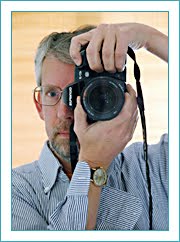
Some photos from last night's Santa Rosa Symphony concert. Maestro Bruno Ferrandis conducted Prelude and Liebestad from Wagner's Tristan und Isolde, The Dharma at Big Sur for Electric Violin, by John Adams, and Prokofiev's Alexander Nevsky. Tracy Silverstein was the soloist on electric violin, Jacalyn Kreitzer (mezzo-soprano) was soloist in the Prokofiev, which also featured the Sonoma State University Symphonic Chorus. My son, Warren, played a solo piece before the concert Rhapsodie for Solo Clarinet, by Giacomo Miluccio (1928-1999) as part of an appeal for donations to support the Santa Rosa Symphony Youth Orchestra's upcoming European Tour, in June, which will take them to Salzburg, Vienna, and Budapest. The photo above shows Warren, Principal Clarinet of the Santa Rosa Symphony Youth Orchestra with his teacher, Roy Zajac, Principal Clarinet of the Santa Rosa Symphony. Below is Tracy Silverstein with his six-stringed electric violin.
Showing posts with label John Adams. Show all posts
Sunday, April 8, 2018
Music I'm Listening to: Tracy Silverstein (and my son) with the Santa Rosa Symphony
Friday, March 10, 2017
Music I'm Listening to: Two San Francisco Symphony Concerts (February-March 2017)
It's been a busy month. I've had little time to write. It's been more than two weeks now since I attended the February 24th performance at Davies Symphony Hall. Michael Tilson Thomas conducted Scheherazade.2 by John Adams and selections from Romeo and Juliet, by Prokofiev. The former, written for Leila Josefowicz (the soloist during the February performances) is not quite a violin concerto. I think Adams described it as a "dramatic symphony." Adams appeared on stage before the music began to discuss the piece, summarizing what was in the program notes. Adams conceived of the violin part as expressing Scheherazade, but Scheherezade as a strong, modern woman, and I can think of no violinist active today better to play it than Josefowicz, who is muscular in her playing but beautifully nuanced at the same time. I've seen her play three times now. I've been impressed each time. Scheherazade.2 is a complex piece, hard to take in on a single hearing, but I enjoyed it and enjoyed seeing Josefowicz wrestle with it. The performance brought the entire hall to its feet. Conductor Thomas and Josefowicz were eager to acknowledge Adams afterward, pointing to him in the balcony seats and insisting that he stand and be recognized.
The Prokofiev was familiar music from the ballet Romeo and Juliet, but it's a piece I'd never heard live before, and its always fun to hear a familiar piece live for the first time. It makes you acutely aware of who in the orchestra is doing what when. I was pleased my favorite part of the ballet, the section knows as "Dance of the Knights" was one of the selections—but, of course, it would be.
On the evening of March 10, I was back at Davies Symphony Hall for a concert featuring another fine violinist, this time Arabella Steinbacher. Marek Janowski was the guest conductor. The program included Beethoven's Coriolan Overture and the Brahms Symphony No. 4. Steinbacher was soloist in a performance of the Hindemith Violin Concerto, an unfamiliar piece that she handled with aplomb.
Steinbacher never lacks the ability to play lyrically when that is called for, but she excels at precise, staccato, modern music like the Hindemith, and her violin, which is rather gritty in the low register, suited the music. Janowski and the Symphony gave us a fine performance of the Brahms as well, receiving an extended standing ovation at its conclusion, with the symphony players at one point refusing to stand so that Janowski could be recognized alone. He looks a trifle frail, but he gets the job done. On the occasions I've seen him work, I've always had the impression that he's particularly good at communicating with the San Francisco performers and that they respond to him deeply, in a way that they don't with some other conductors.
Photographs of John Adams and Arabella Steinbacher courtesy of The San Francisco Symphony. Photo of Steinbacher by Jiri Hronik. Photograph of pointing Josefowicz by the author.
The Prokofiev was familiar music from the ballet Romeo and Juliet, but it's a piece I'd never heard live before, and its always fun to hear a familiar piece live for the first time. It makes you acutely aware of who in the orchestra is doing what when. I was pleased my favorite part of the ballet, the section knows as "Dance of the Knights" was one of the selections—but, of course, it would be.
On the evening of March 10, I was back at Davies Symphony Hall for a concert featuring another fine violinist, this time Arabella Steinbacher. Marek Janowski was the guest conductor. The program included Beethoven's Coriolan Overture and the Brahms Symphony No. 4. Steinbacher was soloist in a performance of the Hindemith Violin Concerto, an unfamiliar piece that she handled with aplomb.
Steinbacher never lacks the ability to play lyrically when that is called for, but she excels at precise, staccato, modern music like the Hindemith, and her violin, which is rather gritty in the low register, suited the music. Janowski and the Symphony gave us a fine performance of the Brahms as well, receiving an extended standing ovation at its conclusion, with the symphony players at one point refusing to stand so that Janowski could be recognized alone. He looks a trifle frail, but he gets the job done. On the occasions I've seen him work, I've always had the impression that he's particularly good at communicating with the San Francisco performers and that they respond to him deeply, in a way that they don't with some other conductors.
Photographs of John Adams and Arabella Steinbacher courtesy of The San Francisco Symphony. Photo of Steinbacher by Jiri Hronik. Photograph of pointing Josefowicz by the author.
Saturday, December 11, 2010
Music I'm Listening to: Gil Shaham, The San Francisco Symphony
Heard a moderately disappointing concert in San Francisco last night, Michael Tilson Thomas conducting. On the program were Henry Cowell's Synchrony, Mozart's Violin Concerto No. 5 (Gil Shaham soloist), and Harmonielehre, by John Adams--choices that seemed a rather odd juxtaposition of the modern and the classical. I didn't particularly care for the Cowell, although I'm not sure it got the most sympathetic of readings from MTT. I'm afraid I would have to say the same about the Mozart. Shaham played well, but MTT's direction seemed flat and lifeless, particularly in the middle movement, which had a rather droning effect. The dramatic swelling effects of the third movement seemed stifled, the dynamics all wrong. Was it just me? Also, the sound seemed distant and muffled. I've had that sensation once before at Davies Symphony Hall, when hearing Itzhak Perlman in October 2009. Last night I was in seat Y107. At the Perlman concert I was in AA107--same seat two rows back. I wonder if there's a dead spot there? Still, that doesn't explain MTT's apparent apathy during the Mozart.
The night was saved by hearing what I thought was an excellent performance of Harmonielehre, by modern composer John Adams. To my surprise, Adams (pictured) appeared onstage afterward. He seemed very pleased with the performance, and the audience was very appreciative as well. Harmonielehre, nominally a minimalist composition, doesn't suffer from the monotony the word "minimalist" often conjures up. I felt like I was riding a scintillating wave throughout, but particularly in the rousing first and third movements of this long (40-minute), three-movement composition from 1985. It was almost hypnotizing in places, but never boring. I'm sure it is a taxing piece for the musicians to play (the cellos, for example, have to bow identical patterns over and over again, and the percussion has to maintain the same difficult rhythms for long stretches, although I noticed that the cello section had been divided where possible, so that one group would take over while others rested briefly). The San Francisco Symphony rose to the challenge, and the conductor seemed engaged in this case. Very enjoyable.
Photo of John Adams by Deborah O'Grady, courtesy of the San Francisco Symphony
The night was saved by hearing what I thought was an excellent performance of Harmonielehre, by modern composer John Adams. To my surprise, Adams (pictured) appeared onstage afterward. He seemed very pleased with the performance, and the audience was very appreciative as well. Harmonielehre, nominally a minimalist composition, doesn't suffer from the monotony the word "minimalist" often conjures up. I felt like I was riding a scintillating wave throughout, but particularly in the rousing first and third movements of this long (40-minute), three-movement composition from 1985. It was almost hypnotizing in places, but never boring. I'm sure it is a taxing piece for the musicians to play (the cellos, for example, have to bow identical patterns over and over again, and the percussion has to maintain the same difficult rhythms for long stretches, although I noticed that the cello section had been divided where possible, so that one group would take over while others rested briefly). The San Francisco Symphony rose to the challenge, and the conductor seemed engaged in this case. Very enjoyable.Photo of John Adams by Deborah O'Grady, courtesy of the San Francisco Symphony
Tuesday, May 11, 2010
Music I'm Listening To: Gustavo Dudamel and the Los Angeles Philharmonic
I enjoyed an excellent concert last night in San Francisco at Davies Symphony Hall with Gustavo Dudamel conducting the Los Angeles Philharmonic. The program was a simple one--City Noir, by John Adams, and Mahler's Symphony No. 1--although an extremely appreciative audience also got an encore that I believe to have been the Intermezzo from Act III of Puccini's Manon Lescaut, with some excellent solo passages for cello and viola. (I'm always rooting for the viola players of the world; I love the sound of the viola.)
City Noir was unfamiliar. That's not surprising, I suppose, as it's a new work (its first performance was in early October 2009). It's one of three pieces the composer has written about "the California experience, its landscape, and its culture," according to Adams in the program notes--this piece written in celebration of the city of Los Angeles in the spirit of film noir. It is, in fact, reminiscent of film scores of the 40s and 50s in places, although I wonder how much of that is attributable to the power of suggestion. It's sometimes brash and jazzy, sometimes slinky, sexy, and moody, but nearly always it has an irresistible nervous energy. I enjoyed this very much. I kept imagining black and white street scenes starkly lit, with Robert Mitchum lurking in a dark corner, obscured by a billow of cigarette smoke. The score was notable for a six-man percussion section, two harps, a sizzling alto sax, and some wonderful trombone playing. The entire orchestra was extraordinary, actually--focused, crisp, and astonishingly responsive to the conductor. The sound was excellent, too. I was somewhat off to the left this time (from the perspective of the audience, in seat CC 5). Maybe the dead spot I've experienced at Davies Symphony Hall is mostly in the middle section of what they call "upper orchestra?" Hmmm....an ongoing investigation.
[Update (December 11, 2010): See my comment on last night's concert for more about the Davies Symphony Hall dead spot.]
With one reservation, the Mahler was wonderful. I have three recordings of this piece--Solti and the Chicago Symphony on CD (London F35L-50050), Leonard Bernstein and the New York Philharmonic (Columbia Masterworks MS 7069), and Erich Leinsdorf and the Boston Symphony (RCA Victor Red Seal LM-2642), both on LP. The Leinsdorf recording has always been my favorite (in part because of the absolutely beautiful suit Leinsdorf is wearing in the cover photo--OK, that's not the best reason, but that suit is beautiful).
The performance last night was rather different from what I'm used to. Dudamel chose a very slow tempo. I think this worked against Mahler in the first movement. The opening, with its sustained notes, is already quite slow and the music seemed to lack focus as a result of the excessively languorous pace (and a restless audience didn't help). The remaining three movements, however, were highly persuasive. Again the conductor took what seemed to me some rather broad liberties with the tempo--this time not just slow overall, but using rubato liberally--stealing here, giving back there. Dudamel's reading was idiosyncratic, but it worked. He milked the score for every drop of expressiveness. Again the playing was startlingly crisp and together--the members of each section absolutely perfect in their unison--the kind of playing that gives you goosebumps, the kind of playing that can elicit involuntary giggling--unbridled joy. This is live music at its best. Dudamel clearly has something special. It was a privilege to hear the orchestra, despite the somewhat less successful first movement. The audience appeared nearly unanimous in its approval, rewarding the players and their leader with a standing ovation that lasted several minutes.
Fashion Note: Gustavo needs to talk to his tailor--His attire was cut very long in the back, in a way that seemed to accentuate his rather short stature. The opposite effect presumably would be more desirable.
(Photo of Gustavo Dudamel courtesy of the San Francisco Symphony. Photo by Mathias Bothor.)
City Noir was unfamiliar. That's not surprising, I suppose, as it's a new work (its first performance was in early October 2009). It's one of three pieces the composer has written about "the California experience, its landscape, and its culture," according to Adams in the program notes--this piece written in celebration of the city of Los Angeles in the spirit of film noir. It is, in fact, reminiscent of film scores of the 40s and 50s in places, although I wonder how much of that is attributable to the power of suggestion. It's sometimes brash and jazzy, sometimes slinky, sexy, and moody, but nearly always it has an irresistible nervous energy. I enjoyed this very much. I kept imagining black and white street scenes starkly lit, with Robert Mitchum lurking in a dark corner, obscured by a billow of cigarette smoke. The score was notable for a six-man percussion section, two harps, a sizzling alto sax, and some wonderful trombone playing. The entire orchestra was extraordinary, actually--focused, crisp, and astonishingly responsive to the conductor. The sound was excellent, too. I was somewhat off to the left this time (from the perspective of the audience, in seat CC 5). Maybe the dead spot I've experienced at Davies Symphony Hall is mostly in the middle section of what they call "upper orchestra?" Hmmm....an ongoing investigation.
[Update (December 11, 2010): See my comment on last night's concert for more about the Davies Symphony Hall dead spot.]
With one reservation, the Mahler was wonderful. I have three recordings of this piece--Solti and the Chicago Symphony on CD (London F35L-50050), Leonard Bernstein and the New York Philharmonic (Columbia Masterworks MS 7069), and Erich Leinsdorf and the Boston Symphony (RCA Victor Red Seal LM-2642), both on LP. The Leinsdorf recording has always been my favorite (in part because of the absolutely beautiful suit Leinsdorf is wearing in the cover photo--OK, that's not the best reason, but that suit is beautiful).
The performance last night was rather different from what I'm used to. Dudamel chose a very slow tempo. I think this worked against Mahler in the first movement. The opening, with its sustained notes, is already quite slow and the music seemed to lack focus as a result of the excessively languorous pace (and a restless audience didn't help). The remaining three movements, however, were highly persuasive. Again the conductor took what seemed to me some rather broad liberties with the tempo--this time not just slow overall, but using rubato liberally--stealing here, giving back there. Dudamel's reading was idiosyncratic, but it worked. He milked the score for every drop of expressiveness. Again the playing was startlingly crisp and together--the members of each section absolutely perfect in their unison--the kind of playing that gives you goosebumps, the kind of playing that can elicit involuntary giggling--unbridled joy. This is live music at its best. Dudamel clearly has something special. It was a privilege to hear the orchestra, despite the somewhat less successful first movement. The audience appeared nearly unanimous in its approval, rewarding the players and their leader with a standing ovation that lasted several minutes.
Fashion Note: Gustavo needs to talk to his tailor--His attire was cut very long in the back, in a way that seemed to accentuate his rather short stature. The opposite effect presumably would be more desirable.
(Photo of Gustavo Dudamel courtesy of the San Francisco Symphony. Photo by Mathias Bothor.)
Subscribe to:
Posts (Atom)