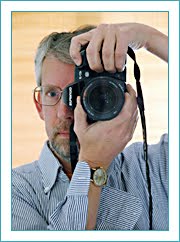
I attended the opening last night (November 3, 2016) of a show of contemporary painting at Sonoma State University's University Art Gallery, tucked away in a corner of the campus and hard to find (I wonder who thought it was a good idea to give EVERY building on the Sonoma State campus the same address?) but worth the trouble. "Cries and Whispers" features paintings by two Northern California painters, John Yoyogi Fortes and Cate White.
Both painters draw in a way that seems deliberately intended to look less skilled than it really is, White using a nervous, wiry line, Yoyogi Fortes a thicker, weightier line. Both painters make narrative paintings, White's seemingly grounded in reality, Yoyogi Fortes's more abstract, a little surreal. Both painters use layering and juxtaposition of apparently random elements that give the works a graffiti-like look. The work of neither painter would look out of place in an urban concrete setting. It's easy to see why this pairing made sense to the curators.
While the two painters clearly have affinities, they have different concerns. Cate White's work is intensely personal. Assuming the named characters peopling her canvases are real people—people she knows—she is recording significant moments in her life. If these are fictional people, there is at least a recurring cast of characters. "Rory" is one such character. Among the most memorable paintings by White is Rory Counting His Money (2015, acrylic on wood panel), in which we see precisely that: Rory, secretively counting money in a kitchen, seemingly worried about who might observe him, perhaps someone in the room pictured through an open door behind him. The kitchen is crudely depicted but realistically enough drawn in the top half of the painting to make it easy to accept the space on its own cartoon-like terms, but White pulls the carpet out from under the viewer in the bottom half of the painting by making Rory's legs transparent, by suddenly shifting to an abstract depiction of space roughly blocked out with patches of flat color. And Rory's cat, too, is transparent. The orange outlines of the cat and the orange patch beneath Rory's boots are jarringly set against the aqua highlights in the room. The real world dissolves here. In other works, White again uses this transparent effect to keep things one step removed from reality.
In Dre Looking at Me at the Mike Brown Memorial (2015, acrylic on Canvas), a nude female figure is one of several figures (the others clothed) that hold up cell phone cameras to snap photos of the pile of stuffed animals and other objects that appeared in Ferguson, Missouri's Canfield Drive as a spontaneous memorial at the site of the police shooting of 18-year-old Michael Brown, in August 2015. If the female figure is White herself, the image shows an outsider both observing and being observed—observed by people local to the scene (the man in the car, Dre), the scene under the surveillance of police cars tucked away into nearby alleyways. Why the foreground figure is nude, I cannot say. In other paintings, a prison visit is depicted; a woman, possibly the artist, stands naked, peeing in the shower; a soldier, flanked by two dogs sits in an ambiguous space (apparently on a sofa placed outdoors), a pair of phantom arms holding his gun.
The work of Yoyogi Fortes is bolder. In some ways it appears crude. The thick, clumsy outlines are reminiscent in places of Philip Guston's late work (itself a crude departure from his earlier representational work). At the same time, however, Yoyogi Fortes is a subtle colorist and his concerns are more painterly than White's. He works in layers. There are splashed areas of dripping paint. Some layers are applied, sanded down, and then overlaid with new layers. Thin, wiped layers float on top of textures left behind by thicker, sculpted layers underneath. The surfaces are of interest in themselves.
The cast of characters is more abstract than in White's work. It includes a stylized monkey face and headless bodies with skinny, booted legs (or heads on legs, reminiscent of Spongebob Squarepants). Recurring symbols include dollar signs and elongated, bloodshot eyes (R. Crumb comes to mind), and brick walls or linear grids. There is frequent use of irregular blobs of pure color that help to rob the paintings of depth—the flatness and the color blobs reminiscent of Japanese techniques, the first associated with traditional woodblock prints before artists in Japan were widely familiar with Western-style perspective, the latter a favorite technique of certain schools of contemporary Japanese abstract printmakers—as in Sweaty Pickle (immediately above: 2016, acrylic, pencil, charcoal, enamel, and collage on canvas). The positioning of these various elements on the canvases suggests narrative in some places, particularly the narrative style of manga or other graphic novels. Elsewhere, the elements appear more randomly placed, more like graffiti tags on walls that have been tagged and covered, tagged and covered repeatedly—although, no doubt, the artist is making decisions about placement based on compositional concerns. Text fragments commonly appear, as in POV (above: 2015, acrylic, enamel, charcoal, pencil, collage, and glitter on canvas), again suggestive of graffiti or street art, a style very much in vogue these days. Not all the pieces by these two artists are immediately appealing. It took me a while to warm up to some of the work, but I left the show glad I'd made the effort to see it. The paintings of both artists are worth a look. Recommended.
"Cries and Whispers: Paintings by John Yoyogi Fortes and Cate White" runs through December 11, 2016 at University Art Gallery at Sonoma State University. Parking Lot A is the closest. Exorbitant ($8) parking fee required. Gallery hours 11:00AM to 4:00PM Tuesday through Friday, weekends 12:00PM to 4:00PM. Closed Mondays and holidays. Closed November 11 (Veteran's Day) and November 23-25 (Thanksgiving). For more information, call (707) 664-2295.
Showing posts with label opening. Show all posts
Friday, November 4, 2016
Tuesday, May 5, 2015
Art I'm Looking At: "Ain't Natural" at Hammerfriar Gallery in Healdsburg
I attended the opening of the latest show at Hammerfriar Gallery in Healdsburg on May 2. The show, called "Ain't Natural," brings together four superb collage artists working in the Bay Area--Jenny Honnert Abell, John Hundt, Sherry Parker, and Scott Wilson.
Collage unites the four artists but they work in very different styles. Jenny Honnert Abell's work combines the surreal with religious iconography. Brought up a Catholic, she attended parochial girls' schools through high school. While explicitly religious themes don't seem central to her work, clearly the imagery of the church made a lasting impact on her sensibilities. In talking with her about her collages I sensed in her an uneasiness about making fun of the religious imagery she appropriates, a hard-to-shake compulsion to take it seriously, at least at some level. Yet, the work is irreverent. The show includes several small pieces on worn but fancy book covers, in themselves evocative of churchly things like decorated vestments. Onto these covers she's attached perches for Jesus-headed birds that somehow manage to look content and not unnatural--the serenity of expression of the Jesus heads doing its work. In other pieces on display, bird heads grow out of tree branches. Pictured here is a somewhat different piece entitled "The Monroe Flower" that I liked for its use of color and the multiple levels of enclosed detail it employs.
John Hundt seems to work exclusively with engraved book illustrations. He carefully cuts out architectural fragments, figures, animals, snippets of scenery and other elements with a tiny pair of scissors and assembles the pieces to create imaginary spaces that are clearly unreal but spaces that use perspective and subtle overlaps to trick the eye into seeing them as plausible, inhabitable. I'm reminded of the photographic work of Jerry Uelsmann. Merged and blended contradictions in Hundt's work involve not only physical space but also time; inevitably the old engraved images are evocative of something old-fashioned--we no longer illustrate books with engravings much and the subjects Hundt chooses are often historical--but, at the same time, the strange juxtapositions seem modern--at least modern in the sense the word is used in art history.
Sherry Parker is among the most delightfully inventive artists I've encountered in the Bay Area. Her work is consistently of the highest caliber. She has an exquisite sense of composition. Her subtle color sense is equally impressive. Most especially, though, I like her work for the slightly edgy whimsy she nearly always achieves. Bizarre creatures, part human, part machine, inhabit her surreal landscapes. These are dream worlds, yet they are familiar enough to be both seductive and deeply unsettling. They are inviting and a little frightening at the same time.
To take just one example, "Yellow-throated Lookout Bird" is immediately amusing because of its title, which plays on the conventions of real bird names, and many of Parker's titles are funny. Here we see a lone, one-legged sentinel on what looks like a coastal rock, keeping its squinty eye out for signs of approach. But its ability to see is illusory. The bird's eye is just a screw at the base of a blade from a pair of clippers--a rather long, decurved blade from a nasty-looking pair of clippers. The antenna, perhaps, takes in more useful information than the eye?
Scott Wilson's work is also slightly disturbing, but in a different way. Made largely from illustrated medical texts, the collages are interesting for their formal qualities of composition and attractive for their combinations of pinks and beige and palest orange--the colors of flesh and viscera. But many of the images used illustrate pathologies, so this is diseased flesh we are looking at. Collage titles name the diseases. Wilson presents his odd combinations as if they are plates in an actual text--deformities to be studied, learned from, repelled by. Abstract shapes often overlay or augment the human body parts suggesting early 20th century Russian abstraction. As a child, I remember being given an encyclopedia of the insect world. It was a very thick volume. I don't remember the text, but the plates were photographic and numerous. Each plate was an array of related insects--bizarre insects, large and small. Round beetles, oblong beetles, elongated beetles. Beetles with antennae longer than their bodies. Grasshoppers of every description. Walking sticks. All in black and white. Repellent yet fascinating at the same time. I spent hours looking at that book. I was immediately reminded of it when viewing Wilson's collages. They are likewise simultaneously fascinating and repellent.
Hammerfriar Gallery is at 132 Mill Street, in Healdsburg. The "Ain't Natural" show will run through June 22. Well worth a visit.
Collage unites the four artists but they work in very different styles. Jenny Honnert Abell's work combines the surreal with religious iconography. Brought up a Catholic, she attended parochial girls' schools through high school. While explicitly religious themes don't seem central to her work, clearly the imagery of the church made a lasting impact on her sensibilities. In talking with her about her collages I sensed in her an uneasiness about making fun of the religious imagery she appropriates, a hard-to-shake compulsion to take it seriously, at least at some level. Yet, the work is irreverent. The show includes several small pieces on worn but fancy book covers, in themselves evocative of churchly things like decorated vestments. Onto these covers she's attached perches for Jesus-headed birds that somehow manage to look content and not unnatural--the serenity of expression of the Jesus heads doing its work. In other pieces on display, bird heads grow out of tree branches. Pictured here is a somewhat different piece entitled "The Monroe Flower" that I liked for its use of color and the multiple levels of enclosed detail it employs.
John Hundt seems to work exclusively with engraved book illustrations. He carefully cuts out architectural fragments, figures, animals, snippets of scenery and other elements with a tiny pair of scissors and assembles the pieces to create imaginary spaces that are clearly unreal but spaces that use perspective and subtle overlaps to trick the eye into seeing them as plausible, inhabitable. I'm reminded of the photographic work of Jerry Uelsmann. Merged and blended contradictions in Hundt's work involve not only physical space but also time; inevitably the old engraved images are evocative of something old-fashioned--we no longer illustrate books with engravings much and the subjects Hundt chooses are often historical--but, at the same time, the strange juxtapositions seem modern--at least modern in the sense the word is used in art history.
Sherry Parker is among the most delightfully inventive artists I've encountered in the Bay Area. Her work is consistently of the highest caliber. She has an exquisite sense of composition. Her subtle color sense is equally impressive. Most especially, though, I like her work for the slightly edgy whimsy she nearly always achieves. Bizarre creatures, part human, part machine, inhabit her surreal landscapes. These are dream worlds, yet they are familiar enough to be both seductive and deeply unsettling. They are inviting and a little frightening at the same time.
To take just one example, "Yellow-throated Lookout Bird" is immediately amusing because of its title, which plays on the conventions of real bird names, and many of Parker's titles are funny. Here we see a lone, one-legged sentinel on what looks like a coastal rock, keeping its squinty eye out for signs of approach. But its ability to see is illusory. The bird's eye is just a screw at the base of a blade from a pair of clippers--a rather long, decurved blade from a nasty-looking pair of clippers. The antenna, perhaps, takes in more useful information than the eye?
Scott Wilson's work is also slightly disturbing, but in a different way. Made largely from illustrated medical texts, the collages are interesting for their formal qualities of composition and attractive for their combinations of pinks and beige and palest orange--the colors of flesh and viscera. But many of the images used illustrate pathologies, so this is diseased flesh we are looking at. Collage titles name the diseases. Wilson presents his odd combinations as if they are plates in an actual text--deformities to be studied, learned from, repelled by. Abstract shapes often overlay or augment the human body parts suggesting early 20th century Russian abstraction. As a child, I remember being given an encyclopedia of the insect world. It was a very thick volume. I don't remember the text, but the plates were photographic and numerous. Each plate was an array of related insects--bizarre insects, large and small. Round beetles, oblong beetles, elongated beetles. Beetles with antennae longer than their bodies. Grasshoppers of every description. Walking sticks. All in black and white. Repellent yet fascinating at the same time. I spent hours looking at that book. I was immediately reminded of it when viewing Wilson's collages. They are likewise simultaneously fascinating and repellent.
Hammerfriar Gallery is at 132 Mill Street, in Healdsburg. The "Ain't Natural" show will run through June 22. Well worth a visit.
Monday, March 16, 2015
Art I'm Looking At: "Birds" at Ice House Gallery (March 16, 2015)
I attended the opening of the latest show at Ice House Gallery in Petaluma, "Birds" a show of art depicting birds--work by a diverse group of artists including Dick Cole, Sylvia Gonzalez, Diana Majumdar, Robert Poplack, Michele Rosett, Stephanie Sanchez, and Joanne Tepper.
Sylvia Gonzalez's work is attractive for its decorative qualities. She sketches birds on top of subtle, layered backgrounds created using a number of techniques, notably Xerox lithography. Some of her pieces are colorful arrays of smaller works. Diana Majumdar sketches very freely, but she nicely captures the kind of quizzical attitudes that often make birds so endearing, and she gets the birds right--which satisfies the bird watcher in me. Recognizable among her works in the show were Bushtits (Psaltriparus minimus, detail shown above) and a sparrow that I couldn't positively identify but one rendered in a way that makes me confident I could have done so with a field guide in hand--perhaps Five-striped Sparrow (Aimophila quinquestriata) or Black-throated Sparrow (Amphispiza bilineata). Dick Cole's work shows some nice painterly effects. Joanne Tepper's work is realistic--with an emphasis on draughtsmanship--but often whimsical at the same time. In her paintings she likes to pose real bird species on teacups, for instance (one such painting was on the cover of the 2014 Art Trails catalog).
I spent about an hour walking around Petaluma after visiting Ice House Gallery and dropping in at Griffin Map Design & Gallery, a couple of doors down, where the Ladies Night show is still on. The most interesting bird art I saw during the evening may have been this 4-foot-high cardboard creation in a shop window along the main drag. I wonder who made this wonderful owl? If you're a bird lover and an art lover, however, my top recommendation would be to take the time to visit Erickson Fine Art Gallery in Healdsburg to see some of the wonderful bird paintings done on gold leaf by Antoinette Von Grone that Erickson shows.
Later I stopped at Riverfront Gallery where an eye-catching photographic montage by Jeremy Joan Hewes depicting a crow or raven seemed the most interesting thing on the walls. Finally, I checked out Prince Gallery, which has a new show of photography up. I especially liked the work of one Laura Alice Watt. Her dreamy pinhole images struck a chord--beautiful, blurry corners of the natural world, not at all in the tradition of "nature photography"--but striking nevertheless. She says in her artist's statement that she rejects the perfection of much nature photography, saying "I am more interested in a direct connection with the world around me...attempting to see nature from the inside, via interaction, rather than simply admiring from afar." Compelling images.
Sylvia Gonzalez's work is attractive for its decorative qualities. She sketches birds on top of subtle, layered backgrounds created using a number of techniques, notably Xerox lithography. Some of her pieces are colorful arrays of smaller works. Diana Majumdar sketches very freely, but she nicely captures the kind of quizzical attitudes that often make birds so endearing, and she gets the birds right--which satisfies the bird watcher in me. Recognizable among her works in the show were Bushtits (Psaltriparus minimus, detail shown above) and a sparrow that I couldn't positively identify but one rendered in a way that makes me confident I could have done so with a field guide in hand--perhaps Five-striped Sparrow (Aimophila quinquestriata) or Black-throated Sparrow (Amphispiza bilineata). Dick Cole's work shows some nice painterly effects. Joanne Tepper's work is realistic--with an emphasis on draughtsmanship--but often whimsical at the same time. In her paintings she likes to pose real bird species on teacups, for instance (one such painting was on the cover of the 2014 Art Trails catalog).
I spent about an hour walking around Petaluma after visiting Ice House Gallery and dropping in at Griffin Map Design & Gallery, a couple of doors down, where the Ladies Night show is still on. The most interesting bird art I saw during the evening may have been this 4-foot-high cardboard creation in a shop window along the main drag. I wonder who made this wonderful owl? If you're a bird lover and an art lover, however, my top recommendation would be to take the time to visit Erickson Fine Art Gallery in Healdsburg to see some of the wonderful bird paintings done on gold leaf by Antoinette Von Grone that Erickson shows.
Later I stopped at Riverfront Gallery where an eye-catching photographic montage by Jeremy Joan Hewes depicting a crow or raven seemed the most interesting thing on the walls. Finally, I checked out Prince Gallery, which has a new show of photography up. I especially liked the work of one Laura Alice Watt. Her dreamy pinhole images struck a chord--beautiful, blurry corners of the natural world, not at all in the tradition of "nature photography"--but striking nevertheless. She says in her artist's statement that she rejects the perfection of much nature photography, saying "I am more interested in a direct connection with the world around me...attempting to see nature from the inside, via interaction, rather than simply admiring from afar." Compelling images.
Labels:
art exhibit,
Art I'm looking at,
art show,
Colin Talcroft,
Diana Majumdar,
exhibit,
gallery opening,
Ice House Gallery,
Laura Alice Watt,
opening,
Petaluma,
Prince Gallery,
review,
Show,
Sylvia Gonzalez
Saturday, March 14, 2015
Opening of the show "Birds" tonight at Ice House Gallery, in Petaluma (March 14, 2015)
Tonight I plan to attend the opening of a new show at Ice House Gallery, in Petulama. "Birds" an exhibition celebrating the art of rendering birds by artists Dick Cole, Sylvia Gonzalez, Diana Majumdar, Robert Poplack, Michele Rosett, Stephanie Sanchez, and Joanne Tepper. 405 East D Street, Petaluma. Reception tonight from 5:30 to 8:00. Look for a review here in the next couple of days.
Subscribe to:
Comments (Atom)