Showing posts with label Show. Show all posts

Thursday, November 13, 2025

Art I'm Looking At: Manet & Morisot at The Legion of Honor

I recently saw ‘Manet & Morisot’ now on at the Legion of Honor in San Francisco. I thought it well worth a visit for two main reasons. First, it offers an unusual opportunity to see a large number of paintings by Berthe Morisot all together and, second, it offers an equally unusual opportunity to see three of Manet’s most famous paintings (‘The Balcony,’ ‘Boating,’ and ‘The Railway’), which are usually widely dispersed. In addition, the show highlights the relationship between Manet and Morisot both on a personal level and as painters, which, of course, is the central theme of the exhibition. ‘Manet & Morisot’ runs through March 1 next year in San Francisco before moving to the Cleveland Museum of Art  for a run from March 29 through July 5.

I had not seen a lot of work by Morisot before, although I am well aware of her and knew that Manet and Morisot were close friends. Manet painted her several times (there are two or three of his portraits of her in the show) and eventually they became family when Morisot married Édouard’s brother Eugène. In 2010 I had the privilege of spending a week in Paris staying in the apartment of friends. It was a short stroll away from the Cimetière de Passy (the Passy Cemetery) where I saw the side-by-side graves of Édouard, Eugène, and Morisot, among other celebrity graves, including those of the composers Gabriel Fauré and Claude Debussy.

I was impressed by Morisot’s bold, loose brushstrokes. Unlike Manet, Berthe Morisot belonged to the Impressionist group, having been invited to exhibit in the first Impressionist show by Edgar Degas. She exhibited in all but one of the subsequent Impressionist shows. Her brushwork brought several painters to mind, including Munch, Joan Mitchell, and Sargent, although I don’t mean to make any sort of direct comparison; Mitchell, was, of course, a mostly abstract painter and it has to be said that nobody has ever matched Sargent’s ability to evoke a texture or capture a highlight in a single, perfectly placed abstract smear of paint from a loaded brush, but these painters are all notable for their very obvious brushwork. I’ve included here a couple of details of Morisot up close. The show suggests that it was the influence of Morisot that led to Manet adopting a looser style over time, becoming more willing to let the brushwork show. 

I have seen both ‘The Balcony’ and ‘Boating’ in person in their normal homes (respectively the Musée d’Orsay in Paris and the Metropolitan Museum of Art in New York) but neither recently. It was particularly interesting to see ‘Boating’ again and in this context. The wall label notes that it was started in 1874 but that Manet worked on it repeatedly for at least a couple of years after that. What I thought striking was the background (essentially, the water), which appears to have been heavily reworked in the top third of the painting. I was left wondering whether he had started with obvious brushstrokes in all of the areas corresponding to water and then softened the brushwork in the top third of the image or if he had later added more painterly strokes in the lower two-thirds. Whichever is the case, the two sections appear rather starkly different and there isn’t much of a transition between them – something I’d never noticed before. It would be natural to blur the upper part of the background gradually to suggest distance, but the contrast between the two areas is quite noticeable once you notice it. It may be that he toned down the brushwork in the upper portion because it distracted from the face of the male figure. Who knows? In any case, there was much of interest to see in this show. Recommended.

Wednesday, January 17, 2024

Art I'm Making: Show at Hammerfriar Gallery

I'm pleased to announce that I'll be participating in a show of collage and mixed media work along with Molly Perez and Deborah Salomon at Hammerfriar Gallery, in Healdsburg, from February 24 to May 11, 2024. There will be an opening reception on Saturday February 24 (3PM-6PM) and I will be doing a collage demonstration at the gallery on Saturday, April 13 at noon. I hope to see you there.


Friday, August 13, 2021

Art I'm Making: Art Trails 2021

It's almost that time of year again—time for Art Trails, Sonoma County's premier open studio event. Moved up a month this year, studios will be open on two weekends in September (September 18, 19 and 25, 26) from 10:00AM to 5:00PM on each of the four days. Come see some of my recent work in person. Come for the art or just come by to say hello. I'm
looking forward to it. 
 
For more of my abstract monotype collage work, visit my website. https://ctalcroft.wixsite.com/collage-site  


Tuesday, April 2, 2019

Art I'm Looking At: The Art Wall at Shige Sushi Closes (April 2019)


The Art Wall at Shige Sushi is no more. The restaurant owners have decided to permanently close the Cotati location to focus on their new location in Sonoma. It was a really fun four-plus years. As curator, I feel like I was able to show a great deal of really good local art in that time. I sincerely thank everyone who helped to make The Art Wall possible.

The first show was in December and January 2014-2015. Only one person came to the opening reception. It was pouring with rain, no one had heard of the place (except as a restaurant) and it was right before Christmas. In the end, that was a good thing. There would have been room for no more. We held the reception while the restaurant was open—a mistake in such a small space. I quickly learned to have the receptions on Mondays, when the restaurant was closed. I will always be grateful to Claude Smith and Sherrie Parker for agreeing to participate in the first show.

I curated 26 shows of 8 weeks each with a couple of exceptions—one was six weeks, one ten weeks. I showed the work of 28 artists, 27 living, one deceased (Lewis Bodecker). There were 23 solo shows, three group shows (collage work by Claude Smith, Sherrie Parker, and me; Lisa Beerntsen and Deborah Salomon had a show together, and we did a show of contemporary photography that included work by nine artists). Of the 23 solo artists, 17 or 74% were women. Several artists participated in more than one show, including Janis Crystal Lipzin, Sherrie Parker, Claude Smith, and Deborah Salomon.

We sold at least one piece in (or as a result of) seven of the shows, not including work I bought myself. Including that, we sold at least one piece in 11, or 42% of the shows. Katie McCann sold the most in one show, with three of her collages going to an enthusiastic collector. The most expensive piece sold was a piece in Sherrie Lovler’s show, which sold for over $800. As I took only a 25% commission on sales, The Art Wall at Shige Sushi was not a profitable venture in monetary terms. It would not have been possible at all if the owners at Shige Sushi had not allowed me to use the space at no cost. It was profitable in terms of other, more important things. 

Please join us next Monday, April 8, 2019 for a final closing party from 6:00PM to 9:00PM. Everyone's invited. If you never made it to one of our shows, this will be your last chance. Wine and beer will be provided, but please bring a little something to eat to share with friends. Pot luck. Bring your own bottle, too, if you care to. But come, even if you come empty-handed. I'd really like to personally thank everyone who was involved—the artists and the art lovers—with making The Art Wall at Shige Sushi a success.

The photo above shows postcards for each of the 26 shows I curated, in chronological order.

Thursday, February 28, 2019

Art I'm Making: My Museum Shadows Series Photographs on The Art Wall at Shige Sushi


On The Art Wall at Shige Sushi: Colin Talcroft—Selections from the Museum Shadows Series
March 5 through April 28, 2019
Opening reception: Monday, March 11, 2019 5:00PM-7:00PM

Abstract photographs by me. The Art Wall at Shige Sushi presents selections from my Museum Shadows Series, an ongoing series of shadow photographs begun in 2012 captured in museums and galleries around the San Francisco Bay Area and in Europe.

On the Art Wall at Shige Sushi, 8235 Old Redwood Highway, Downtown Cotati, 94931.
Art viewable during regular business hours. Restaurant closed Mondays. More information at http://ctalcroft.wix.com/artwallatshige

Monday, April 23, 2018

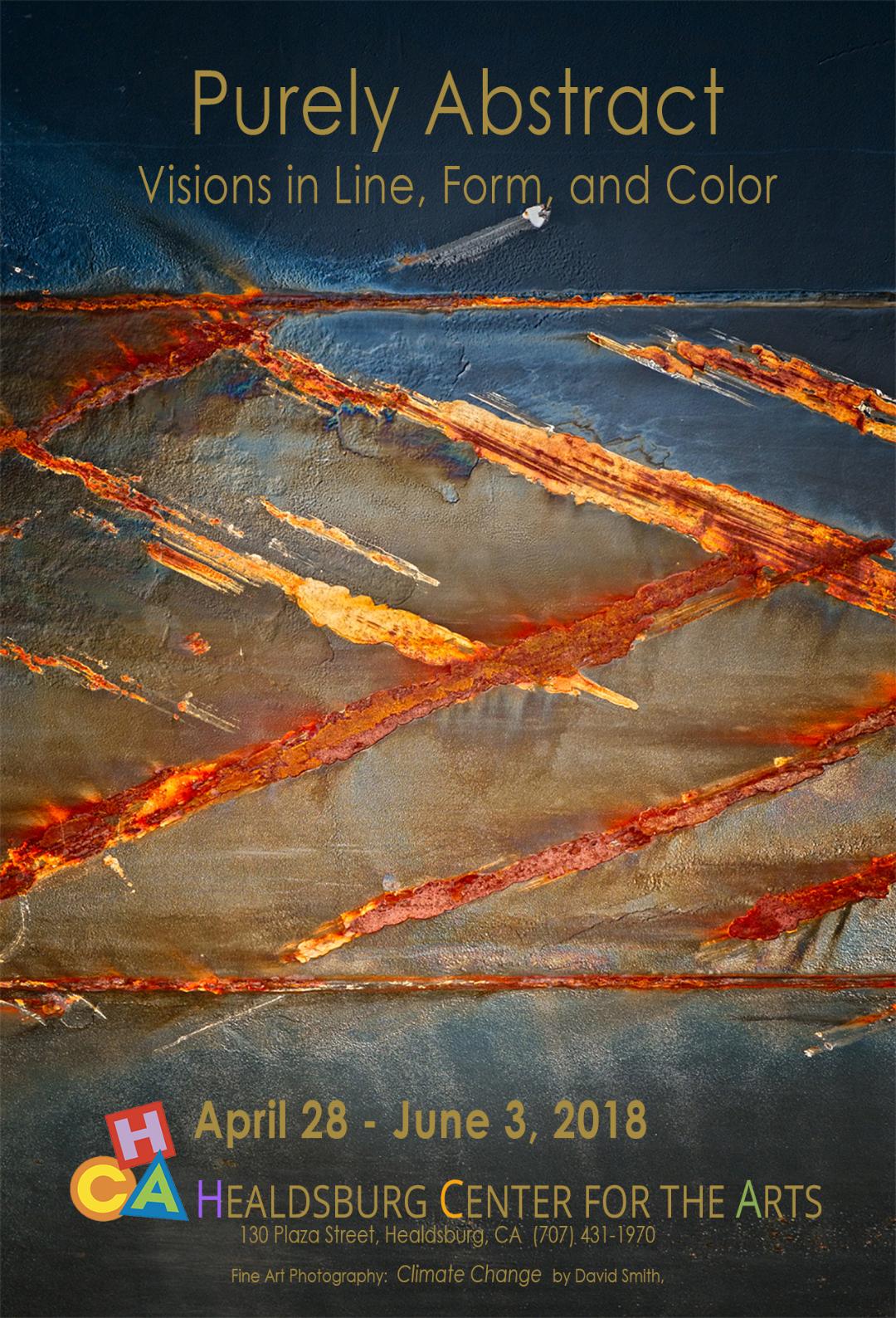
Art I'm Making: Two Collage Pieces in "Purely Abstract" at The Healdsburg Center for the Arts (April 28-June 3)

Two of my collages, Untitled Collage No. 146 (Santa Rosa), shown above and Untitled Collage No. 137 (Santa Rosa) shown below were juried into the upcoming Purely Abstract show at The Healdsburg Center for the Arts (130 Plaza St, Healdsburg, CA 95448), which will feature abstract art by artists from all over the United States, April 28 through June 3, 2018. The opening reception will be Saturday, April 28 from 5:00PM to 7:00PM. I'm working on Saturday, but hope to get to the reception by around 6:00PM https://www.healdsburgcenterforthearts.org


Art I'm Looking At: Kerry Vander Meer on The Art Wall at Shige Sushi (May 1 through July 1)

I'm pleased to announce the upcoming show on The Art Wall at Shige Sushi. I'll be showing mixed media work by Kerry Vander Meer, who works in Oakland. She's an inspiring colorist and has an exquisite sense of composition. Her work incorporates drawing, printmaking, and collage, using paper, fabric, and other found materials. Beautiful work. Artwork will be viewable during the restaurant's normal business hours from May 1 through July 1. Opening reception Monday, May 7, from 5:30 to 7:30PM. Come see the work, have a glass of wine, and meet the artist. 8235 Old Redwood Highway, Cotati, CA 94931

Kerry has recently done a wine label for Imagery Estate Winery as well. She'll be at the winery for one of their "Gallery Days" events, Sunday, May 20, 1:00-3:00PM. Her label will be on the 2017 Albariño. (Stay tuned for information about my own Gallery Days event later in the year. One of my pieces will appear on the Imagery 2017 Viognier label.)


Thursday, April 5, 2018

Art I'm Looking At: The Cult of the Machine at the De Young

Charles Sheeler, American Landscape, 1930
Museum of modern Art, New York
The Cult of the Machine, now on view at the De Young Museum in San Francisco, although promoted as a look at Precisionism in general (and it is that), is a veritable Charles Sheeler retrospective. It includes some of his most important works—photographs, paintings, and drawings. It was a pleasure to see in person so many Sheelers I've long admired in reproduction, particularly the paintings he made from some of his well known photographs of Ford's River Rouge plant, and his Upper Deck (1929) and Rolling Power (1939)*.

Installation view:
Shadows cast by Shaker furniture
There is less familiar work here, too—by Sheeler, by other familiar names, and by names new to me. Besides paintings, photographs, and objects of design from the period during which the Precisionist style flourished in the United States (roughly 1915 to 1945), there is a display of Shaker-designed household items that echo in their simplicity the stylized geometries of Precisionism. The venue is also showing the brief 1921 film Sheeler made with Paul Strand, Manhatta, that looks at a day in Manhattan, inspired by Whitman's Leaves of Grass, and a looping clip from Chaplin's Modern Times (1936). The Shaker items are artfully backlit, their shadows projected onto a screen. When viewed from behind, the shadows look like one of Sheeler's cityscapes.

Strand is represented by several well-known images such as Wall Street (1915) and The Court (1924). Several of Sheeler's photographs of the Doylestown Quaker meeting house are here, as are painted and drawn versions of views he photographed there, allowing side-by-side comparisons. There are a couple of good Paul Outerbridge photos and work from photographers less familiar, such as Anton Bruehl. His Untitled, a 1929 shot of part of a Cadillac engine is striking. Some of the photographs of my grandfather, Warren R. Laity, would have been right at home here.

Anton Bruehl, Untitled, 1929
Fine Arts Museums of San Francisco

Warren R. Laity, Mail Plane, circa 1930
(Not in show), Private collection

Gerald Murphy, Razor, 1924
Dallas Museum of Art                               
Also striking is a 1924 painting entitled Razor by Gerald Murphy that immediately brings to mind paintings from the same period by Stuart Davis that draw on advertising imagery and bright colors for their impact, works that anticipate Pop Art. There is nothing by Davis in the show and I was surprised to see only one piece by Charles Demuth—the name, along with Sheeler's, that comes to mind most readily when thinking of Precisonism. But most of the artists associated with Precisionism are here, including Joseph Stella, George Ault, Niles Spencer, Morton Shamberg, and Edmund Lewandowski. George Ault's Bright Light at Russell's Corners (1946, Smithsonian American Art Museum), a moody night scene dominated by eerily lit barns, and Lewandowski's small Furnace No. 5, are particularly attractive.

Francis Criss, Waterfront, c. 1940
Detroit Institute of Art
New to me were the painters Francis Criss, Elsie Driggs, Bumpei Usui, and Peter Blume. Criss's highly stylized Waterfront (c. 1940) reduces a waterfront industrial scene to its geometrical essence, using starkly contrasting saturated colors, a lamppost vestige of an earlier age, and a bold yellow-gold frame to heighten the effect. The frame is one of many in the show that are beautiful in their own right. Usui's 1924 New York cityscape 14th Street is a strong piece, with its cubes, cylinders, and pyramidal forms in a style reminiscent of some of the WPA frescoes of the period (and the show includes a painting by John Langley Howard, among those who contributed to the 1934 Coit Tower murals, a WPA project). There are also a couple of paintings by Georgia O'Keefe likely to seem surprisingly unlike her to most viewers. They differ markedly from the style she's best known for. One is a view of barns at Lake George. Another is a New York cityscape done from an elevated perspective—from the window of a high-rise apartment she shared there with husband Alfred Stieglitz.

Charles Sheeler, Upper Deck, 1929
Harvard Art Museums/Fogg Museum
Precisionism was an extension of cubism in its attention to the underlying geometry of things, in its interest in architectonic form, an extension of Futurism in its obsession with the modern and with machinery, but I'm not sure how coherent it was—if it was recognized at the time as a movement at all. Perhaps underscoring that is the fact that "precisionism" was only one of several contemporary terms used to describe the style. The painters were sometimes known as "the immaculates" or they were referred to as "modern classicists." "Precisionism" is the name that has stuck. Names aside, the work on display is quintessentially of its time.

Bumpei Usui, 14th Street, 1924
Virginia Museum of Fine Arts
"Precisionism" was a label given to the American expression of anxieties common between the world wars in rapidly industrializing societies globally. The paintings and photographs of the period reflect a fascination with machinery, with scale, with industrial might, but they also betray a deep, veiled fear. The clean lines, the simplified forms, and the tendency to eliminate human beings from angular cityscapes all suggest a need to slow things down, to examine reality in an artificial, controlled way, to tame things before they spin out of control. As the Cult of the Machine wall texts point out, these anxieties are familiar today, with technology rapidly outpacing our ability to adjust to it. To express the angst caused by forward leaps of technology, artists of the early twentieth century turned to depicting the physical manifestations of rapid change—to depicting bridges, dams, turbines, factories, propellers, ocean liners—large, tangible objects that overwhelm, things built not on a human scale. Artists of the early twenty-first century perhaps have a right to feel even more overwhelmed and anxious, handicapped as they are by the seemingly insubstantial nature of the technology that today drives so much change. Our technological marvels do not have an oppressive physical presence. They are not built on a grand scale. They are miniaturized and hidden behind sleek, portable steel and glass packages, hidden inside phones and tablets. They are barely visible. There is nothing to see.

The Cult of the Machine is on view at the De Young Museum (50 Hagiwara Tea Garden Dr, San Francisco, CA 94118) through August 12, 2018.

*It's worth noting that, in addition to the River Rouge pieces, both Upper Deck and Rolling Power were originally done as photographs (the Upper Deck photo is in the De Young show). There are many other examples of Sheeler working in a highly realistic style from photographs. I'm not aware of Sheeler being considered anticipatory to Photorealism, but surely he was, even if he usually took stylistic liberties a strict photorealist might not have.

Charles Sheeler, Rolling Power (1939)
Smith College Museum of Art


Wednesday, January 3, 2018

Art I'm Looking At: Linda Yoshizawa on The Art Wall at Shige Sushi (through February 25, 2018)

Linda Yoshizawa, on the Art Wall at Shige Sushi. Through February 25, 2018. Opening reception, Monday, January 22, 2018, 5:00PM to 7:00PM (open Monday for the reception only).

I've just finished hanging the latest show on The Art Wall at Shige Sushi--evocative, layered monotype collages of botanical subjects by Linda Yoshizawa.

Born and raised in Los Angeles, Linda graduated with a BA in studio art from Pomona College in 1978. She studied silkscreen printmaking at the UCLA extension and produced editions at a serigraph workshop run by Evelyn B. Johnson in Southern California. In 2007, she built a studio in San Ramon, expanding her work to include solarplate etchings, collagraphs, and mixed media prints. Her artwork is in personal and corporate collections across the country including the Library of Congress, Kaiser Permanente, Eden Medical Center, and El Camino Hospital Foundation. She shows at Valley Art Gallery in Walnut Creek and Andrea Schwartz in San Francisco. She is a member of the California Society of Printmakers and the Los Angeles Printmaking Society.

Monday, November 13, 2017

Art I'm Looking At: Edvard Munch in San Francisco


Edvard Munch, Puberty, 1894.
Munch museum, Oslo. Photo by the author.
It's been weeks now
since I saw the recently closed Edvard Munch show at SF MOMA (which ran from June 24 to October 9, 2017). I had intended to visit a second time and to write something, but time slipped away and then the fires hit (on the day the show closed). I did want to record a few impressions, however, even if belatedly. Mainly, I was struck by two things: the extraordinarily loose brushwork in many of the later canvases and a boldness of color that I have never associated with Munch. The latter, in particular, was a surprise. Munch is best known for two or three distinctive images: primarily The Scream and Madonna (in their various forms), and perhaps Vampire and Puberty (both of which exist in a number of versions as well). These are all angst-ridden, psychologically dark works rendered mostly in somber colors. This is the Munch I suspect most people know. The SF MOMA show brought together a large number of less familiar works, an extraordinary number from the Munch Museum in Oslo, that, seen together, fundamentally changed my view of the artist.

Edvard Munch, The Death of Marat, 1907.
Munch museum, Oslo. Photo by the author.
His brushwork often was bold—daring even. Many of the canvases look barely finished. They give the impression of roughed-in sketches to be completed later. Faces are mask-like, skull-like, or cartoonish. The Death of Marat (1907), for example, is a loose lattice of lines in thinned paint that allows the canvas to show through.

Edvard Munch, Self-portrait with Bottles, 1938.
Munch museum, Oslo. Photo by the author.
There is no denying that Munch was fairly obsessed with the death of his older sister Sophie, obsessed with sickness and death in general. His was a morbid mind, apparently, and many of the paintings are of morbid subjects. Yet, what was most striking about stepping into the galleries at the SF MOMA show was the color. If Munch was psychologically dark, he was by no means always dark in a literal sense. Munch was a strikingly distinctive colorist, as some of the examples here show, even if he often used slightly garish, starkly contrasting color combinations mainly to heighten a sense of unease.

Edvard Munch, Model by the Wicker Chair, 1919-21.
Munch museum, Oslo. Photo by the author.

Edvard Munch, The Artist and His Model, 1919-21.
Munch museum, Oslo. Photo by the author.

Sunday, November 5, 2017

Art I'm Looking At: "Somewhere Else" at Blasted Art Gallery, Santa Rosa

Bill Shelley and Chris Beards have launched a new art space in the Backstreet Building, in Art Alley, in Santa Rosa's SOFA Arts District. I attended the grand opening of the new space on Friday night (November 3), not knowing what to expect from the outset and then feeling a bit baffled by the curtain closing off the space when I arrived for a look. There was no door, just the curtain. The entry was reminiscent of a curtained-off side gallery in a museum reserved for a video installation, projected film, or a piece of neon or other lighted art--and that was what I had expected to find.

When I poked my head in, I was disappointed. First, neither Bill nor Chris was in the space, and I had come in part to say hello and lend support, but I was disappointed more because the space was simply an empty room with black-painted walls onto which a series of empty white frames of varying sizes had been hung--or, I should say, a series of framed white blanks, the frames painted white as well. My heart sank. I like these people. I wanted to like what they had done, but it seemed there was nothing much to see. The show seemed a hackneyed conceptual art piece that was immediately graspable and therefore of little interest. I left almost immediately to look at some of the other studios. I found Chris (pictured above) in a hallway. I said something polite and later was able to greet Bill on a second foray into the space. I had a little wine (and they were serving some decent wine). I talked with a few of the people visiting, mostly acquaintances. I looked at the empty frames on the walls.

Before long, the framed blanks seemed not entirely white any more. They had a slight blue-green cast, as if someone had got the color balance wrong in Photoshop. I thought that a little strange.

A few minutes later, I suddenly saw that the frames and the spaces they enclosed were not white at all, nor were they a pale, slightly blue-green sort of white, but a vivid, saturated aqua, the color approximated in the photo of Chris above. Chris later told me the color is called "Poolside Blue." I was genuinely shocked. I began to doubt my own eyes, but it became increasingly clear that it was no illusion. The "paintings" were, indeed, a blue-green reminiscent of the bottom of a swimming pool. I realized something else. When I first saw them, I had expected the mounted pieces to be white. Because of that and because my eyes took some time to adjust to the darkness in the room, I had seen them as white. It was only as my eyes became accustomed to the darkness that I was able to see the color. It wasn't long before I was doubting not the color, but that I had at first been capable of not seeing the color. And so it turns out that there was much more to see and think about in that black room than I first thought. I feel a little embarrassed that I was initially so quick to give up, but, in my own defense, I went back. I kept looking.

On one level, there really isn't much to see in the room--it's just a series of uniformly colored, framed spaces on a black wall, but during the past two days I've found myself thinking about what I saw almost constantly. The installation raises many questions about how we see, how expectations can color (literally) our perception, and how two people can see identical images very differently (there were quite a few people discussing what color they were seeing and not all agreeing). I keep asking myself: what color were the "images" on the wall? The answer depends on who you ask and when you ask.

Adding a layer of complexity, the chosen color is somewhere between blue and green. The blue/green distinction is notoriously slippery in many languages. In Japanese, for example, my second language, the word ao often stands for both the English words "blue" and "green." In Japanese the sky is ao but so is a "green" traffic light. Foliage, too, is ao. Chris and Bill chose the color deliberately for that ambiguity.

And then there is the problem of photography. When I got home to look at my photographs, they were dark and had to be adjusted. But adjust them to what? What color are those framed spaces on the wall at Blasted Art Gallery? I really can't say. When I first entered the space, they looked like the image below. When I left, they looked like the image above.

I look forward to seeing what Bill and Chris get up to in the future. The current show, "Somewhere Else" will be viewable again next weekend, November 11 and November 12, between 11AM and 3PM. Congratulations to both Bill and Chris on the new space and for presenting us with an entertaining intellectual exercise.

[Update: I later read some comments Chris wrote about the installation that mentioned the recorded highway sounds playing in the background. I didn't hear any sound. I have no recollection of a "soundtrack" to the show. I imagine I was so focused on what my eyes were telling me that I completely ignored what my ears were telling me.]

Tuesday, October 31, 2017

Art I'm Looking At: Susan Stover on The Art Wall at Shige Sushi October 31 to December 31

I'm pleased to announce the next show on The Art Wall at Shige Sushi, in Cotati. We'll be showing recent work by Susan Stover, known internationally for her textile-inspired encaustics. I put up the show yesterday. Looks great. Join us on Monday, November 6, for the opening reception from 5:30 to 7:30. See the work, meet Susan, enjoy nibbles and wine...

Saturday, September 2, 2017

Art I'm Looking at: Claude Smith, on The Art Wall at Shige Sushi

I'm pleased to announce the next show on the Art Wall at Shige Sushi will feature work by Graton-based artist Claude Smith. These are the last few days to see the exquisite work by Bob Nugent up on the Art Wall now (through tomorrow, Sunday, September 3). Claude's show will go up over the long weekend and open on Tuesday, September 5. The opening reception will be the following Monday, September 11, from 5:30 to 7:30PM. Drop by, meet the artist, have a glass of wine, take in the art.

Friday, June 30, 2017

Art I'm Looking At: Exhibit Pipeline on The Art Wall at Shige Sushi

Susan Stover: Where is My Allegiance?
I'm excited about the artist line-up for the rest of 2017 and into 2018 on The Art Wall at Shige Sushi. I've now filled the next five show slots (from July 2017 through the end of April 2018).

Bob Nugent: Sementes 80
First up will be Bob Nugent: Dialogues with Nature, a show of works by Bob Nugent, inspired by the time he spends in the Amazon River Basin in Brazil. Bob's work will be on the walls from July 5 through September 3, 2017. The opening reception will be July 10, 2017 from 5:30 to 7:30.

Claude Smith: Margins 06


The September–October 2017 slot will go to Graton-based artist Claude Smith.  Claude was a participant in the very first show on The Art Wall at Shige Sushi, in December 2014. Claude is primarily a painter, but he also does mixed media and collage work.

The November–December show will feature the work of Susan Stover, known for small, wall-mounted sculptural objects and abstract mixed-media pieces and encaustics.

The first show of 2018 will be devoted to work by Oakland-based printmaker Linda Yoshizawa who does intricate stencil-based prints and solar plate etchings of mostly botanical subjects.

Linda Yoshizawa: Morning Magnolias
 The February–March slot will go to Katie McCann, also an Oakland-based artist known for her wonderfully imaginative collages.

Katie McCann: Mind Full

Art I'm Looking At: Bob Nugent on The Art Wall at Shige Sushi (July 5 through September 3, 2017)

I'm very pleased to announce the upcoming show on The Art Wall at Shige Sushi. We'll be showing works inspired by the Amazon River Basin by Bob Nugent. Nugent's work has been shown around the world (over 100 solo shows and inclusion in more than 550 group exhibitions across the US, in Europe, Asia, and South America.) Don't miss this opportunity to see a selection of Nugent's subtle, evocative paintings. The show runs from July 5 through September 3, 2017

OPENING RECEPTION: MONDAY, JULY 10, 5:30 to 7:30PM

Bob Nugent appears on The Art Wall at Shige Sushi courtesy of Erickson Fine Art Gallery, Healdsburg.

Sunday, May 21, 2017

Art I'm Looking At: Stuart Davis at the De Young, San Francisco

Stuart Davis: In Full Swing, installation view
I've been aware of Stuart Davis since I was a teenager. He's always been among the 20th century American artists I've enjoyed most, along with other early American modernists such as Arthur Dove, John Marin, Charles DeMuth, and Charles Sheeler, but, having just seen the Stuart Davis show now on at the De Young Museum, in San Francisco (Stuart Davis: In Full Swing), I realize that I knew little about Davis the man, that I've never seen much of his early work, and that I've never seen large groups of related canvases by him together in one room.

Stuart Davis, Odol (1924)
Museum of Modern Art, New York   
Walking into the exhibition, one thing struck me immediately: the galleries were largely empty. The contrast with the Matisse/Diebenkorn show at SF MoMA was startling (it's been hard to walk in the Matisse/Diebenkorn galleries at times for all the people). Is Davis so obscure? Perhaps the high attendance at the SF MoMA show just reflects the ongoing power of early modern European artists to draw crowds. I imagine the Impressionists, for example, remain the single most popular group of artists among the general population and that most people attending the SF MoMa show go to see Matisse rather than Diebenkorn. There's a certain irony there. Davis was among the important American artists struggling for recognition in the 1920s and 1930s when US collectors and museums were still very much focused on European art, while American art—particularly modern American art—was viewed with some skepticism.

Stuart Davis, Lucky Strike (1921)
Museum of Modern Art, New York
Having never seen much of Davis's early work, I was unaware of his heavy quotation of advertising imagery. His well known later work, with its frequent use of text, is certainly suggestive of commercial signage, but early pieces in the De Young show are much more direct in their use of this kind of imagery. Odol (1924), for example, anticipates Pop Art's direct appropriation of product advertising by at least 20 years. In Lucky Strike (1921), Davis has, in effect, painted a collage of scraps of cigarette packaging. At this stage, the painter had already learned a great deal from Cubism, but his wholesale incorporation of advertising imagery into his paintings went well beyond the occasional, fragmentary quotations in the work of Braque, Picasso, and Juan Gris.

Stuart Davis, Place Pasdeloup  (1928)
Whitney Museum of American Art, New York
Davis spent a year in Paris, in 1928–1929. The look of his paintings suddenly changed. Oddly, the influence of Cubism seems less here in the city that gave birth to Cubism than in his earlier work. Davis's Paris scenes are blocked out in flat planes of color overlaid with simple black outlines that depict cafés, storefronts, street lamps, and architectural details—although details, in general, are comparatively few. The work is simple, highly stylized. These paintings suggest travel posters or illustrations in picture books for children. The work of Raoul Dufy comes to mind. The De Young show includes several examples from this period, among them the pictured Place Pasdeloup (1928).

Stuart Davis, New York Mural (1932)
Norton Museum of Art, West Palm Beach
Also of interest among the early pieces are the "Eggbeater" paintings (not shown here), these among works first championed by Edith Halpert of the Downtown Gallery. Having recently read Lindsay Pollock's biography of Halpert (The Girl with the Gallery: Edith Gregor Halpert and the Making of the Modern Art Market), it was fun to see the actual paintings. There is a striking 1932 mural of New York as well, which, according to the wall label, was made in response to an invitation from the Museum of Modern Art to produce mural designs about life in America after WWI. Davis's design includes many coded political references (Alfred Smith's brown derby and bow tie, a banana referring to the 1928 Smith campaign's use of the song "Yes, We Have no Bananas," and a champagne glass turned on its side (upper left) referring to the candidate's support for the repeal of Prohibition, among others).

Three compositionally related works
The show would have been worth seeing just for these early works, but there is a good selection of later, more familiar pieces, including several "sets" of compositionally related works mounted side by side that illustrate the way Davis repeatedly drew on his own canvases to create variations in the manner of a musician improvising variations on a theme. Davis was a jazz enthusiast and thought of his working process as being akin to jazz performance.

Throughout the show, and particularly in the later sections, I was struck by how strongly Davis's canvases suggest collage; most are very easily imagined as pasted paper cutouts. Some of the busiest pieces, such as The Mellow Pad (1945-1951) are notable also for the way Davis covers the entire canvas with color and form in a way that flattens and de-centralizes. He creates a dynamic overall pattern with almost no part of the image more important than any other. Here Davis would seem to have anticipated Jackson Pollock's drip paintings by at least a couple of years in his use of space if not in technique. Stuart Davis: In Full Swing, through August 6, 2017 at the De Young, offers much to see and much to think about.

Stuart Davis, The Mellow Pad (1945-1951)
The Brooklyn Museum


SaveSave

Tuesday, May 2, 2017

Art I'm Looking at: Lusha Nelson at the Philbrook Museum

I wish I could go to see this show of photographs by a photographer I'd never heard of before—Lusha Nelson. The Philbrook Museum, in Tulsa, Oklahoma, is doing a retrospective of Nelson's work. Apparently, he died quite young—which is a shame, as his career appears to have been off to a very good start, judging from the photographs included. The exhibition catalog is online and worth a look. (Photograph of actress Jean Arther (c. 1935) by Lusha Nelson.)

Tuesday, April 25, 2017

Art I'm Looking At: Suzanne Jacquot on The Art Wall at Shige Sushi (May 2 through July 2, 2017)

This week is the last week to see the Contemporary Bay Area Photography show on The Art Wall at Shige Sushi (through April 30). Next up is a solo show of recent paintings by Suzanne Jacquot. Opening May 2. Opening Reception May 8, 2017 5:00-7:00PM. The show will run through July 2, 2017.

For more information, visit the Art Wall website.

Saturday, March 25, 2017

Art I'm Looking At: Matisse/Diebenkorn at SF MoMA

Yesterday (March 24) I went to see SF MoMA’s Matisse/Diebenkorn show (March 11 through May 29, 2017). The show has been open here for a couple of weeks. I was hoping crowds would be thin with an initial rush of interest already past, but the galleries were crowded, even on a weekday. Perhaps rain was to blame, as a ticket-taker suggested when I enquired. I sometimes had trouble getting an unobstructed view of the mostly large canvases, and I see that elsewhere in the museum they’ve made no effort to improve the signage since my last visit—wall lettering so small as to be mostly useless (and signs are much needed given the illogical, disconnected layout of the stairways). These complaints aside, I very much enjoyed seeing this close look at the influence of Matisse on the work of Richard Diebenkorn.

The exhibition begins with a timeline showing where and when the American artist had significant contact with Matisse’s work, both through visits to collections with important Matisse holdings and through reproductions (several display cases hold books about Matisse that Diebenkorn owned). The exhibition follows Diebenkorn’s career in broadly chronological fashion and thematically, starting with large abstractions from his Urbana period. A side room focuses on black and white drawings by the two artists. Many works by Diebenkorn are mounted beside works by Matisse that organizers and catalog editors Janet Bishop (SF MoMA Thomas Weisel Family Curator of Painting and Sculpture) and Katherine Rothkopf (Senior Curator of European Painting and Sculpture, The Baltimore Museum of Art) believe were particularly important to Diebenkorn or that they believe show obvious influence. Matisse/Diebenkorn presents more than 100 works by the two painters from private collections, the estate of Richard Diebenkorn, museum collections all over the US, from museums in Paris and London, and other sources, including SF MoMA’s own holdings—in total, about 40 by Matisse, 60 by Diebenkorn. San Francisco is the second of only two locations that will host the show. Matisse/Diebenkorn was at The Baltimore Museum of Art from October 23, 2016 to January 29, 2017.

Matisse: Studio, Quai St. Michel, 1916
The Phillips Collection
Richard Diebenkorn moved to Urbana, Illinois, in 1952 to take up a year-long teaching position there. He doesn’t appear to have liked the landscape much, but during his stay he produced some important large abstractions (these and the Berkeley-period pieces are among my personal favorites). The show includes Urbana No. 2, Urbana No. 4, Urbana No. 5, and Urbana No. 6 (all from 1953), pairing Urbana No. 4 with Matisse’s 1916 Studio, Quai St. Michel (shown above) and Urbana No. 6 with the French painter’s Goldfish and Palette (below). The show would be of interest just for the opportunity to see this group of Urbana paintings, but the pairings highlight similar color choices, a willingness to leave behind traces of process, and an approach to composition marked by an ever-present tension between opposing forces—tension between the abstract and the representational; between complex gestural areas suggesting motion on the one hand and static expanses of subtly modulated color on the other; between the linear and the un-delineated; between the patterned and the plain; between three-dimensionally rendered form and flatness.

This dialectical approach to composition (along with a distinctive use of color) is perhaps what most clearly makes Matisse recognizable, particularly in his highly experimental work of 1914–1916, and walking through the galleries I began to feel it may also have been the most fundamental lesson Diebenkorn learned from Matisse. Both painters were adept at creating a slightly disturbing ambiguity that generates the same feeling you get when looking at an optical illusion presenting two contradictory perspectives the brain struggles to reconcile. The real magic Matisse and Diebenkorn achieve, however, is in at the same time providing just enough solid ground to stand on that we aren’t compelled to turn away.

Matisse: Goldfish and Palette, 1916
Museum of Modern Art, New York
Goldfish and Palette is a good example of the ambiguity. It’s not at all clear what kind of space we're looking into here. The junction of the base of the blue trapezoid in the top half of the painting and the white in the bottom half suggests the meeting of a floor and a wall at the back of a room, two planes presumably meeting at a 90-degree angle, but the more-or-less centrally placed vertical black strip flattens the space—although not completely: the fine white lines on top of the black (both the two vertical lines above and apparently beyond the fishbowl and the less-assertive horizontal lines under the table-like surface that appears to support the fishbowl) argue again for a three-dimensional space (is that a door beyond the fishbowl?). The flat, supporting surface of the "table" grounds the fishbowl, but an interpretation of that surface as a table top is undermined by the incursion of blue at the left and by the black edge of the table-like plane doubling as part of what looks like a pattern on the blue wall beyond (which again flattens the space—if it is a wall; perhaps it is blue sky seen through a decorative balcony railing?). Thus, the “table top” apparently supports the fishbowl yet it threatens to fold down against the blue space at the same time, while, logically, it can’t do that because there appears to be a pair of legs under the table (or is it three?). The cross-like black lines in the upper right corner of the painting perhaps represent bars on a window, but, if there is a window there, the blue area must be a wall…and on and on.

Diebenkorn: Urbana No. 6, 1953
Modern Art Museum of Fort Worth 
Diebenkorn’s Urbana No. 6 may not be as directly indebted to Goldfish and Palette as the curators suggest, but Diebenkorn has used similar techniques to create ambiguity, even if the image is much more abstract than Matisse’s. In Urbana No. 6, we see a similar central black band, although here horizontal rather than vertical. In Diebenkorn’s painting it's this band of darkness that seems to create a flat, supporting surface; Diebenkorn’s black band functions like Matisse’s table top, supporting pale forms and red accents that suggest Matisse’s fish. The pale blue area in the upper right suggests a window, reinforcing the notion that the black area is in an interior space. The blue could also give the impression of looking through an open door at the far side of a room. In that case, the black band would seem more like a large carpet. But this is abstraction. I don’t mean to suggest one should struggle to interpret a work like Urbana No. 6 as representational. Yet the human brain inevitably interprets and Diebenkorn gives our brains just enough to keep us groping—following the example of Matisse.

Left: Matisse: Yellow Pottery from Provence, 1905, Baltimore Museum of Art
Right: Diebenkorn: Berkeley No. 47, 1955, SF MoMA
In pairing Diebenkorn's Berkeley No. 47 (1955) with Matisse's Yellow Pottery from Provence (1905), the curators look at how Diebenkorn experimented with unusual color combinations apparently inspired by Matisse. If Diebenkorn had Matisse's Yellow Pottery in mind when he painted Berkeley No. 47, he turned things on their side again, translating Matisse's representational color into horizontal bands of abstract color.

Throughout the exhibition, the color echoes are striking. Diebenkorn's Untitled, 1964, for example, showing a spray of flowers in a small blue bottle on a chestnut-colored table with a window beyond rendered in contrasting light and dark blues (not shown here) echoes the brown table and grey wallpaper (patterned in similar light and dark blues) in Matisse's Pansies (c. 1903, not shown). More generally, there's a range of blues in Diebenkorn that strongly echoes the blues Matisse favored. Following his autumn 1964 visit to the Soviet Union (now Russia) as part of a cultural exchange (where he toured the State Hermitage Museum, in St. Petersburg, and the Pushkin State Museum of Fine Arts, in Moscow, both with large Matisse holdings), Diebenkorn made the paintings in his oeuvre most obviously indebted to Matisse. Recollections of a Visit to Leningrad from 1965 and Large Still Life from 1966 (below) use the characteristic Matisse blues, overtly decorative flourishes filling spaces that read as walls, and, again, spatial ambiguity. It's appropriate that Recollections adorns the catalog cover (top of this page).

The Matisse paintings Diebenkorn saw in the Soviet Union include some of the French painter's largest canvases. I was set to wondering if the monumental quality of Diebenkorn's large Ocean Park paintings was also inspired by Matisse. Diebenkorn started painting the Ocean Park series in 1967, returning to abstraction on a large scale and in earnest following a period of mostly figurative work not long after his return from the Soviet tour.

Diebenkorn: Large Still Life, 1966, Museum of Modern Art, New York


Drawings on display in a side room are instructive. Devoid of color, they make it easy to see Diebenkorn using some of Matisse's compositional tricks—in particular, the use of decorative patterns and the juxtaposition of flat and three-dimensional treatments. Matisse loved interlocking areas filled with patterns, sometimes suggestive of tiling. (It's tempting to think Matisse's 1912 and 1913 visits to Morocco inspired the habit, but he was already using this device before his trips to Africa.) The most striking example of influence among Diebenkorn's drawings is perhaps an untitled 1964 drawing in graphite and ink on paper showing a coffee cup, a plate, and silverware on a richly patterned tablecloth (below).

Diebenkorn: Untitled, 1964, Collection of Leslie A. Freely, New York
To illustrate the juxtaposition of two- and three-dimensional treatments, the curators pair Matisse's Reclining Model with a Flowered Robe (c. 1923-1924, not shown here) with Diebenkorn's Untitled (Woman Seated in a Chair) of 1963 (not shown here), pointing out that Matisse depicted his figure with volume against a flat (again heavily patterned) background, while Diebenkorn used a patterned drape to flatten his figure against background elements handled three dimensionally. I thought Diebenkorn's 1962 Girl with Flowered Background among the paintings an even better example (below).

Diebenkorn: Girl with Flowered Background, 1962
Modern Art Museum of Fort Worth
The figure is simplified, but it is clearly three-dimensional. The knees protrude, the waist recedes. One hand is behind an elbow, the other is in front of the girl's face. There is shadow below her skirt and under her chin, and her forearm throws a shadow across her chest. She casts a blue shadow on the wall behind her. The background is completely flat, and Diebenkorn muddies the relationship between the girl and the background—and here he shows how completely he's absorbed Matisse's example. The red-tipped floral curve at the girl's left shoulder (on the right side of the painting) connects with the line of trim on her collar,  undermining her three-dimensionality. The way the "horizon" line behind her is broken by the blue shadow has a similar effect, as do the connections between the shadow and the blue line of her collar (this time at her right shoulder, on the left side of the painting) and the connection between that blue line and the darker linear element on the wall behind her, just above her shoulder. The effect is to make the red and blue trim of her collar appear part of the decoration on the wall behind her.

Left: Matisse: Seated Nude, Head on Arms, 1936, private collection
Right: Diebenkorn: Untitled (Seated Nude), 1966, SF MoMA
Also of interest were drawings by Diebenkorn that show substantial reworking (pentimenti), with heavy lines overlaid at the end to mark the artist's final decision about what ought to go where—a technique Matisse used in a number of his drawings. Shown above are the French artist's Seated Nude, Head on Arms from 1936 and Diebenkorn's Untitled (Seated Nude) of 1966.

I also thought it notable that one of the Matisse drawings had been augmented (made larger) with an additional strip of paper added at its top edge. A thumbtack hole is visible in each of the four corners of the original sheet. The artist appears to have run out of space and added the paper at the top, adapting his working space to the demands of a composition in progress. I mention this drawing in particular (Model Resting on Her Arm, 1936) because I have seen film of Diebenkorn working in this way, pasting strips of paper onto a piece in progress as the composition seemed to require. Again the influence of Matisse? (I saw the film at The Sonoma Valley Museum of Art in 2015 in conjunction with a show of Diebenkorn's works on paper. The film shows Diebenkorn at work at Crown Point Press, in Oakland, collaborating with master printers Marcia Bartholme and Hidekatsu Takada, in 1986, photographed by Kathan Brown, the founding director of Crown Point Press. A review of that show is here.)

Matisse: French Window at Colliure, 1914
Musée National d'Art Moderne, Paris
The Matisse/Diebenkorn show is a pleasure to walk through because it is a lucid explication by example of the way Diebenkorn learned from Matisse, but it's worth a visit simply because it's a collection of very fine work by both artists and work that we don't often have a chance to see. While I am very familiar with the Ocean Park series, for example, I'd never before seen any of the very early pieces in person, and the SF MoMA show includes Ocean Park No. 6 (1968), Ocean Park No. 12 (1968), Ocean Park No. 27 (1970) and Ocean Park No. 29 (1970). The early numbers look distinctly awkward. You can see Diebenkorn here struggling to find something he hasn't quite figured out yet. By Ocean Park No. 54 (SF MoMA) Diebenkorn has found his stride again. In the mature Ocean Park paintings, Diebenkorn reflects Matisse mostly in his palette and in the use of large, subtly varied planes of pale color broken up by linear elements, mostly lines parallel to the edges of the picture plane or at 45 degrees to those lines (although often ever-so-sligtly askew). Diebenkorn has now completely absorbed Matisse and removed the referential entirely, but, if seen beside Matisse's most experimental work, even these paintings are not so far removed from Matisse as they may at first seem—paintings like French Window at Collioure, from 1914, shown above, or his Seated Pink Nude (below).

There's a lot to see. Matisse/Diebenkorn is a show that will bear more than one visit—perhaps even three.

Matisse: Seated Pink Nude, 1935-36
Musée National d'Art Moderne, Paris

SaveSave
Related Posts with Thumbnails