
Sunday, March 21, 2010


Miscellaneous: Fun with Fiverr

Any suggestions?
My Fiverr gigs.
Saturday, March 20, 2010
Plants I'm Growing--First Blooms: Rosa Mutabilis Chinensis, Salvia "Point Sal Spreader"

 First blooms today on Salvia leucophylla "Point Sal Spreader." This has proved an extremely reliable large salvia. It has survived our droughty summers with little coddling (almost none) and has been happy at temperatures as low as 23 degrees F. The foliage generally stays fresh looking except at the very end of the long, hot summer. The delicate lavender flowers contrast nicely with the fuzzy bluish leaves.
Friday, March 19, 2010
Movies I'm Watching: Sunrise

My interest in the film stems from a connection with the cinematographer, Karl Struss, who I came to know of by a circuitous route: I have a philatelic cover flown on one of the first Pan Am flights across the Pacific in the 1930s that was made by Struss and signed by him with a fountain pen in a bold, black hand. I picked it up years ago in a Tokyo junk shop. I noticed the same signature on a reproduction of one of his early photographs one day browsing the Internet. It wasn't until I did a little research that I made some connections and realized that my Karl Struss, the photographer by that name, and the Academy Award-winning cinematographer were one and the same person. It seems Struss was a stamp collector.
He was considered among the best cinematographers of the late silent and early talky period, although Struss worked through the end of the 1950s. He was nominated for the Academy Award for cinematography three more times: in 1931/32 (Dr. Jekyll and Mr. Hyde), in 1932/33 (Sign of the Cross), and in 1941 (Aloma of the South Seas). Later he filmed Limelight and The Great Dictator for Charlie Chaplin, several of the Tarzan movies, and the original (1958) version of The Fly.
The Man in Sunrise (the character is simply called The Man) is played by George O' Brien (who happens to look like a cross between Dustin Hoffman and Jon Hamm). He is strongly attracted to and tempted by a pretty, dynamic woman visiting the countryside (The Woman from the City). He contemplates drowning his wife, selling his farm, and absconding with this temptress, but it's a plan hatched by the city woman, and, despite The Man's attraction to her, he seems to have no heart for the idea from the outset; we understand that he loves his wife. Still, he attempts to go through with the murder, rowing his wife out to the deep part of a lake, only to find himself incapable. The Wife, naturally, is horrified when she guesses his intent.
The remainder of the film centers on the events of a day and evening in the city after The Wife runs in horror from her husband--bolting from the boat the moment he's rowed it back to dry land--and hops a tramcar into town to escape him, having well understood what he contemplated. He follows, catches up with her, and eventually convinces her his actions were the result of a brief spell of insanity caused by the guiles of the city woman. They reconcile and end up enjoying a date in town lasting late into the night, like young lovers again. To get home, they decide to sail back over the lake in which The Man had intended to commit the murder. A storm suddenly comes up as they cross the water, and their small vessel capsizes. Believing his wife is lost, The Man drags himself on shore, crazed with anger at The Woman from the City whom he believes ultimately responsible. He has nearly strangled the woman when we learn The Wife has, in fact, survived and been pulled from the water by a search party. At sunrise, as a new day dawns, we see the man and his wife together again and the shamed Woman from the City leaving the countryside in a cart. The characters are generic--called simply "The Man," "The Wife," "The Woman from the City." The emphasis is on the universal rather than on character development, the plot is stark--good and evil drawn in black and white, and the acting is overwrought by today's standards, but Sunrise remains interesting.
It is easy to see why Sunrise got the awards it did. It pushes the technological barriers of its day, making excellent use of crane shots; long, slow dolly shots; and montages and superimposed images, frequently in scenes of reverie, rapture, or emotional stress. These last are extraordinary given that they had to be done manually, in-camera. I was impressed also by the lighting and the exposure that gives the entire picture a quality very evocative of still photography of the period--somewhat dark by today's standards but with beautiful, creamy, soft highlights almost never allowed to blow out, and with an extraordinary tonal range. We get glimpses of the German expressionist style in the sparsely decorated and sometimes oddly distorted interior sets that seem in keeping with the simplicity of the plot and the characters, and in swirling, misty night scenes, but not all is gloomy and there are some very funny scenes--the pig chase, the photographer's studio, and, perhaps most memorably, the sequence with the obliging man trying to help a lady with a dress strap that keeps falling down. Considering the time that has passed, Sunrise has held up rather well.
Miscellaneous: My New Cocktail Debuts--Sonoma Dry Sour

I call it a Sonoma Dry Sour. I won't divulge the recipe here, but if you have a favorite bartender, let me know. I'll send the recipe to any bar you name if you agree to order it there and give it a try (and tell me what you think--even if you don't like it). Or you can hand deliver the recipe, as Louis did. Surely you know an artist at the bar in your fine city that might like to add it to their repertoire? Feel free to pass this post on to any of your friends that appreciate cocktails or link to it from any appropriate site. This is partly an experiment in tracking the dissemination of the recipe.
Photo by Louis Broome.
[Update at the end of 2011: I laugh at my own naiveté here. For a better drink I've invented since this, see my December 2011 post on the Fertile Eve.]
Thursday, March 18, 2010
Books I'm Reading: Four Essays on Liberty

Very enjoyable, but hard work. The prose is lucid and deliciously dense, but therefore demanding of great concentration. This is the kind of book that requires multiple readings to digest. Highlights were the essays on determinism and John Stuart Mill. Berlin pretty neatly demolishes determinism and makes a cogent case for human free will. The Mill essay put Mill's thinking into some semblance of perspective for me--ignorant me. The essay on positive and negative notions of liberty was also interesting and what initially attracted me to the book, which I purchased years ago in Tokyo. It only took me about 15 years to get around to it.... Recommended (if you enjoy this sort of thing).
Plants I'm Growing--First Blooms: Lithodora Diffusa, Halimiocistus sahucii

First blooms yesterday (March 17) on Lithodora diffusa (photo below), a pretty ground cover plant with blue star-shaped flowers. It does fairly well in our dry summers, but appreciates more water than it often gets. As a result, it seems to be happiest in partial shade.
I have no record of the first blooms in 2009, so I can't add this to my botanical calendar, but I record the 2010 first bloom date for use next year.

Music I'm Writing: String Quartet No. 5 (revised)
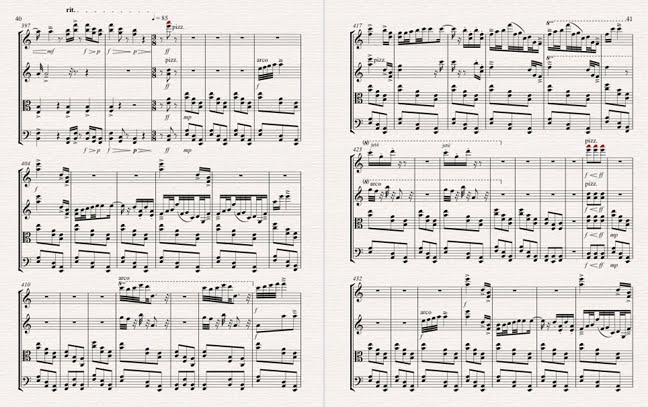
So far I've worked entirely in isolation, teaching myself as I go. It's not Beethoven, but I'm pleased with it, considering that at this time last year I had composed virtually nothing. If you listen, remember that this is a dumbed down (MP3) version of an electronically generated performance. I trust it would sound better with live performers.... Link good until March 25.
Colin Talcroft String Quartet No. 5
Wednesday, March 17, 2010
Miscellaneous: Interesting Concept

Fiverr is still in beta, it seems. I had problems--I tried to join, but the site has failed to deliver the confirmation e-mail required to complete registration. So, I can't try this out yet. Still, it seems like a great idea. There are plenty of things I'd happily do for five dollars. What would you do? Fiverr.
[Update: I eventually found the mail in my spam folder. I've put up my first gigs--offering to answer any wine-related question for $5, and offering to recommend bird watching hotspots in Sonoma County for $5. We'll see if I get any response.]
Wines I'm Drinking: Wine Sale at Grocery Outlet and Gift Card Giveaway
A few weeks back I reviewed a number of wines in these pages that I purchased at Grocery Outlet. The people at Grocery Outlet headquarters in Berkeley happened to see the reviews and they recently asked me to be part of a team of guest bloggers reviewing wines from the store ahead of an upcoming wine sale--one of the two big wine sales they hold each year.
I normally like to keep my distance from retailers and wineries when I write about wine. In this case, however, I've accepted a $50 gift card to buy wine at the store to review as part of the company's promotion of the sale (20% off all wine from March 30 to April 3). I also get to give away a $50 Grocery Outlet gift card to one of my readers. It could be you.
I accepted this trade-off because they told me I could say anything I liked, good or bad (which I would have done anyway) and because they even said I could take the money and run--that is, they admitted I might not buy wine with the card or review wine at all (but I will). So, the card came with no strings, and, frankly, it's nice once in a while to get something in return for all the work that an active blog entails. So, thank you Grocery Outlet.
Look forward to a series of reviews of bargain wines at Grocery Outlet in the week ahead of the sale (March 22-26) and to the gift card giveaway (details to be posted soon). With warmer weather looming, I plan to try mostly white wines and rosé, looking for underpriced gems.
(See more wine reviews by clicking the "Wines I'm Drinking" label in the bar at right.)
I normally like to keep my distance from retailers and wineries when I write about wine. In this case, however, I've accepted a $50 gift card to buy wine at the store to review as part of the company's promotion of the sale (20% off all wine from March 30 to April 3). I also get to give away a $50 Grocery Outlet gift card to one of my readers. It could be you.
I accepted this trade-off because they told me I could say anything I liked, good or bad (which I would have done anyway) and because they even said I could take the money and run--that is, they admitted I might not buy wine with the card or review wine at all (but I will). So, the card came with no strings, and, frankly, it's nice once in a while to get something in return for all the work that an active blog entails. So, thank you Grocery Outlet.
Look forward to a series of reviews of bargain wines at Grocery Outlet in the week ahead of the sale (March 22-26) and to the gift card giveaway (details to be posted soon). With warmer weather looming, I plan to try mostly white wines and rosé, looking for underpriced gems.
(See more wine reviews by clicking the "Wines I'm Drinking" label in the bar at right.)
Tuesday, March 16, 2010
Tidbits: Tattoo-less Ladies
If things continue like this, before long ladies with no tattoos will be all the rage in circus freak shows.
Art I'm Looking At: Found Art (March 16, 2010)

Plants I'm Growing--First Blooms: Tulipa clusiana

Of about 300 Tulipa bakeri bulbs we had, about 30 are left (see previous post), and most of the clusiana bulbs are gone, too, but a few clumps survive here and there around the garden. The brick red is on the outside of the petals. It's visible only before the flowers open or when they close up for the night. The interiors are yellow. This and bakeri have proven the most dependable of the species tulips here in Northern California. I don't have a record of their first bloom last year, so can't add this one to my botanical calendar--until next year.
Plants I'm Growing: Spring in Full Swing


 A series of warmer days (although it's been cold at night) and a break from the rain has brought many plants in the yard into full bloom. Shown here are Tulipa bakeri ("Lilac Wonder"), a species tulip rather than a Dutch hybrid. Plants like these are the ancestors of what most people think of as a tulip today; daffodils; and the little Santa Rosa plum tree that went in last year as a pollinator for the pluots.
Sunday, March 14, 2010
Music I'm Listening To: Brahms Violin Concerto


I had come back from a year in Japan not long before I bought this record. I had become a regular drinker of ice coffee, which was (and is) extremely popular in Japan, but the idea hadn't made much headway in Columbus yet; I had to teach the people at Bernie's how to make ice coffee by pouring hot coffee over a knife blade (to help dissipate the heat) and into a large glass of ice. Things have changed a bit since then. I still have trouble grasping the fact that 1980 is 30 years ago.
But I digress. I still like both recordings, and it's almost fun now to have to turn the record over somewhere in the middle. I even find the occasional scratches and pops somehow comforting, although I despised the distraction in the days before CDs, when a perfectly noiseless recording was virtually impossible. Now that it is possible, the noise on old records doesn't bother me any more.
Reading the liner notes to the Westminster release there was one interesting tidbit: The Violin Concerto, in three movements, was originally conceived in four, but Brahms threw out the two short middle movements he originally wrote and replaced them with the Adagio we now know as the middle movement. The liner essay (by Irving Kolodin) notes that parts of the discarded movements were later used in the second piano concerto Brahms wrote. Lazic's idea of converting the violin solo into a piano solo begins to seem less far fetched than it did at first.
Last time I heard anything about Erica Morini it was news that her beloved violin, the "Davidoff" Stradivarius (1727), had been stolen shortly before she died in 2005, at the age of 91. I wonder if they ever recovered it?
[Update: I did a little searching. As far as I can tell, the violin is still missing, but I notice that it's now referred to as the "Davidoff-Morini." That seems fitting; she owned it for nearly 75 years.]
Last time I heard anything about Erica Morini it was news that her beloved violin, the "Davidoff" Stradivarius (1727), had been stolen shortly before she died in 2005, at the age of 91. I wonder if they ever recovered it?
[Update: I did a little searching. As far as I can tell, the violin is still missing, but I notice that it's now referred to as the "Davidoff-Morini." That seems fitting; she owned it for nearly 75 years.]
Plants I'm Growing: Cistus Salvifolius, "Snow Fountain" Weeping Cherry


Saturday, March 13, 2010
Birds I'm Watching: Lake Ralphine/Spring Lake

Birds I saw: Anna's hummingbird, red-winged blackbird, pied-billed grebe, coot, turkey vulture, California towhee, spotted towhee, yellow-rumped warbler, Canada geese, scrub jay, crow, raven, Northern flicker, bushtits, Bewick's wren, American goldfinch, golden-crowned sparrow, mallard, bufflehead, snowy egret, double-crested cormorant, ring-billed gull, California gull, Brewer's blackbird, common merganser (46 on Lake Ralphine today), oak titmouse, spotted sandpiper, common goldeneye, ruby-crowned kinglet, house finch, and dark-eyed junco--thirty-one species on a three-hour walk covering about three miles.
On Friday (March 12) I spent about 40 minutes at Place-to-Play Park, in Santa Rosa. Some long-time birdwatchers in the area rightly lament that the park today is just a remnant of what used to be a much more extensive wild area, but it continues to attract a lot of birds. On a short walk covering a distance of only a few hundred yards (once around the small lake) I saw: Red-shouldered hawk, crows, common merganser, killdeer, double-crested cormorant, snowy egret, bufflehead, ruddy duck, black phoebe, yellow-rumped warbler, bushtits, California towhee, coots, turkey vulture, scrub jay, Canada geese, house finches, robin, golden-crowned sparrow, white-crowned sparrow, Nuttall's woodpecker, mourning doves, pied-billed grebe, and a Northern mockingbird. I also saw a warbler I was unable to identify--mostly yellow and pale gray with a distinct white eye ring. Twenty-five species in total, which is nearly as many as I saw at Lake Ralphine and Spring Lake--in a much smaller area and covering a much shorter distance.
Rain: More Rain (March 13, 2010)
It's a beautiful sunny day today, but we've had another 0.9 inches of rain since last reporting. Our 2009-2010 rainy season total now stands at 24.7 inches, which is behind the historical average of 25.8 inches for this day (March 13), but other locations in Santa Rosa have reported as much as 29.4 inches, or more than 3.5 inches higher than normal.
Now the question is how late in the season will it rain this year? We've already had more precipitation than in all of the 2008-2009 season (the season goes from July 1 to June 30), but late rains really help the plants through the hot dry summer. We'll see.
Now the question is how late in the season will it rain this year? We've already had more precipitation than in all of the 2008-2009 season (the season goes from July 1 to June 30), but late rains really help the plants through the hot dry summer. We'll see.
Friday, March 12, 2010
Music I'm Listening To: An Old Friend in Someone Else's Skin

This is a surprisingly taxing thing to do. It requires great concentration, and it forces a decision, a mental transformation. Either we abandon the old and accept the new (rarely easy), separating what is from what we remember it to have been, or we must reject the new outright. Some transformations go smoothly, others remain works in progress with uncertain outcomes.
For a moment, I thought I was listening to the Brahms Double Concerto (for violin and cello). Then immediately I thought I was listening to the Brahms Violin Concerto. Next, I thought I was simply listening to one of the two Brahms piano concertos, as the solo instrument was most certainly a piano, not a violin or a cello--but none of these ideas quite made sense. As I was listening to the piano, I kept hearing the music as it seemed it ought to have been--played instead by a violin. The music was both eerily familiar and new at the same time. Had this been Vivaldi or Bach, I don't think the confusion would have been so deep. I drove the long way home, waiting for the music to finish, eager to hear who and what I was listening to--although, by the time the music was over, I had come to the only conclusion that made any sense: this was a transcription for piano of the Brahms Violin Concerto.
And so it was. I was listening to Johannes Brahms' Piano Concerto No. 3 [sic], arranged by Dejan Lazic (Dejan Lazic, piano; Robert Spano conducting the Atlanta Symphony Orchestra; Channel Classics CCS SA 29410.) This is a new disc, released March 9, 2010.
Brahms wrote only two piano concertos, but Mr. Lazic has conjured another one for us. According to what I've been able to find, Lazic has left the orchestral score untouched, but he has re-conceived the solo violin part for piano and written new cadenzas.
It's surprising how well the piece has made the transition from a concerto for stringed instrument to a piece featuring piano. It's virtually impossible not to hear the sound of bow on string in certain passages, in part because they are so familiar to the ear, but also because, having been conceived for violin, they naturally take advantage of the strengths and peculiarities of that instrument. It's hard to convert cantabile passages for violin into music for what is essentially a percussion instrument without doing them some violence, but Lazic's transcription is extremely persuasive. Only in a few places did I find myself longing for the scrape and grit of the string--only in a few places did I find it impossible to abandon the old friend for the new. All in all, a remarkable creation. I wonder if Brahms would have minded? Recommended.
Art I'm Looking At: Teaching Printmaking

The mini-course is finishing up now, but I've been very impressed with some of the work of these first-time printermakers. It's been a pleasure to watch them become comfortable using cutting tools (only one cut finger so far!) and become expert at rolling out ink and applying it to blocks and plates for printing. They've learned to use the Japanese baren for applying pressure (or at least a cheap plastic version of the baren). They've learned to print, sign, and number an edition, choosing the best impressions for inclusion. I think we may have bred a printmaker or two.... They've been having a lot of fun, and so have I.

Thursday, March 11, 2010
About This Blog: Advertising

Today I got Tylenol sinus medicine ads. I hope that doesn't mean my writing is getting stuffy....
[Update: I killed the Google ads not long after I wrote this, but it was interesting to watch at the time.]
Wednesday, March 10, 2010
Movies I'm Watching: The Best Movies I've Never Seen

Badlands (1973)
Tom Jones (1963)
Tiger Bay (1959)
Walkabout (1970)
Doro no Kawa (1981)--also known as Muddy River
The Conversation (1974)
Hobson's Choice (1953)
The Dresser (1983)
Odd Man Out (1947)
Five Fingers (1952)--also known as Operation Cicero
The Duellists (1977)
The Marriage of Maria Braun (1978)
Fail Safe (1964)
The 49th Parallel (1941)
The League of Gentleman (1960)
Orphée (1949)
The Train (1965)
Topsy Turvy (1999)
I'm All Right Jack (1959)
Room at the Top (1958)
Some of these will be well known to cinephiles, but none seems to be part of mainstream consciousness--at least not in the US. Some of these have a higher profile in Britain. Among them, Tiger Bay, Walkabout, Hobson's Choice, and Five Fingers, are special favorites of mine. All highly recommended. For trivia buffs, Hobson's Choice includes one of the first film performances of Prunella Scales, later better known as Sybil Fawlty, wife of Basil Fawlty, John Cleese's character in Fawlty Towers.
Not to mention the incomplete 1937 I, Claudius, with Charles Laughton and Merle Oberon.... The surviving footage, unfinished as it is, will send shivers down your spine. Few people I know have ever heard of it.
I wonder what your favorite little-known films are? Send me your list. Don't exclude films because they are on this or other similar lists. I'm interested to see where the overlap is.
Back to movie reviews
Wines I'm Making: Finished Pruning the Vines
Finished pruning the vines today (Cabernet Sauvignon and Sangiovese). Everything looks good. It's still early, but some of the buds are already beginning to swell. Another year, another vintage on the way....
Tuesday, March 9, 2010
Tidbits: Sarah Palin Enjoyed Use of Canada's Scary Socialist Health Care System
And survived! This according to a report by The Huffington Post this morning.
Monday, March 8, 2010
Art I'm Making: Beet Salad Shrimp Doodle

OK--so I was playing with my food....
Miscellaneous: iPods Jealous of iPhones

That's a little bit weird.
My iPhone is very creative. It recently did this self-portrait (above) My phone has a rather pointillist self-image, apparently. The phone's sense of color here is very reminiscent of Seurat.
No, my iPhone does not have a name.
Sunday, March 7, 2010
Tidbits: Sandra Bullock's Range Acknowledged
Sandra Bullock today became the first person to win both an Oscar (Best Actress, for her performance in The Blind Side) and a Razzie (Worst Actress, for her performance in All About Steve) in the same year. That girl's got range.
Art I'm Looking At: A New Way to Connect Artists and Art Lovers
Have you heard of Kickstarter? I'm not sure how long it's been around. It's one of those ideas that make you slap your forehead (figuratively speaking) and ask yourself "Why didn't I think of that?" People with ideas that need funding post a description of a project, a funding goal for the project, and a deadline to reach that goal, and then they offer potential investors incentives to participate in supporting the project. If the goal isn't reached by the deadline, the project fails to get any funding at all, which encourages people to set realistic goals. The plans range broadly--from the prosaic to the inspired.
The ones that interest me most are those posted by artists trying to make a film, or produce a play, or publish a book, or kickstart a participatory art project that gets feedback directly from the investors and then rewards them with a piece of the project. What a wonderful way to get communities to support artists through direct involvement in both the creation of art and its consumption. With technology, the community expands to the entirety of the world connected to the Internet. Brilliant.
The link above will take you to some of the arts-related projects that the Kickstarter staff have recommended--but don't forget to come back; there's much here you still haven't seen.
The ones that interest me most are those posted by artists trying to make a film, or produce a play, or publish a book, or kickstart a participatory art project that gets feedback directly from the investors and then rewards them with a piece of the project. What a wonderful way to get communities to support artists through direct involvement in both the creation of art and its consumption. With technology, the community expands to the entirety of the world connected to the Internet. Brilliant.
The link above will take you to some of the arts-related projects that the Kickstarter staff have recommended--but don't forget to come back; there's much here you still haven't seen.
Wines I'm Making: Started Pruning the Vines

The bees are very busy, however, bringing in big loads of pollen in various shades of cream, lemon, and orange. You can see a few bees with balls of pollen on their legs in the photo. I took advantage of the nice weather myself this morning to prune one of the two rows of grapes in the backyard. Tomorrow I will attempt to finish the job, but taxes loom....
Saturday, March 6, 2010
Birds I'm Watching: Solano County, California
I joined a group of birders from the Madrone Audubon Society today on a trip to Solano County, mostly along Putah Creek, near Lake Solano Campground. The group was hoping to find the pygmy owls that have been reported in the area recently, and I was hoping to see an American Dipper and a Lewis's Woodpecker, but no luck with any of these birds. I did get a new bird, however, a Phainopepla--a rather drab female, but a new bird nevertheless. Other highlights included good views of a green heron, good views of Hermit Thrushes, good views of Wood Ducks, a Pileated Woodpecker sighting, an immature Golden Eagle, two active Bushtit nests, Common Goldeneyes engaged in courtship behavior, and two rather oddly colored birds--one a Canada Goose that looked like it had some Greater White-fronted Goose in it and a male Bufflehead that looked like a first-year male (broad white strip at the bottom of the area that is usually white rather than a full white bonnet) but with the top of the bonnet beginning to turn white; the upper part of the head where normally white was a dappled gray.

 The group saw 50 species, of which I saw 48 (add one if you count the numerous Peacocks and Peahens). At and around Lake Solano Campground: Belted Kingfisher, Buffleheads, Greater Scaup, Red-winged Blackbird, American Robin, Mallards, Canada Geese, Black Phoebe, Red-shouldered Hawk, Phainopepla, Yellow-rumped Warblers, Double-crested Cormorant, Downy Woodpecker, Violet-green Swallow, Tree Swallow, Dark-eyed Junco, Wood Duck, Scrub Jay, Great Blue Heron, Green Heron, American Crow, Raven, Nuttall's Woodpecker, Golden-crowned Sparrow, Oak Titmouse, White-breasted Nuthatch, Acorn Woodpecker, Bushtits, Ruby-crowned Kinglet, Pied-billed Grebe, Cedar Waxwings, Snowy Egret, Western Bluebird, Bewick's Wren, Spotted Towhee, Common Goldeneye, American Wigeon, Song Sparrow, Pileated Woodpecker, Northern Flicker, Lesser Goldfinch, Turkey Vulture, White-crowned Sparrow, Lincoln's Sparrow, Northern Mockingbird, and House Finch--the last two seen by the group, but not by me (forty-six species at this location).
At the spot marked as Fishing Access No. 2, we saw: A large group of Common Goldeneyes engaging in courtship behavior (the males bending their necks back, touching their backs, and then thrusting their necks forward), Buffleheads, Double-crested Cormorant, Yellow-rumped Warblers, Bushtits, California Towhee, Orange-crowned Warblers, Downy Woodpecker, Wood Ducks, Scrub Jays, and Mallards. Heard Nuttall's Woodpecker and a Wrentit. The immature Golden Eagle was at Fishing Access No. 3. (The Golden Eagle, Orange-crowned Warblers, California Towhee, and Wrentit brought the group total to 50.) All in all, a good day.
The photos show the two oddly-colored birds. The "Canada Goose" (upper photo) and the Bufflehead (lower photo) are pictured.

 The group saw 50 species, of which I saw 48 (add one if you count the numerous Peacocks and Peahens). At and around Lake Solano Campground: Belted Kingfisher, Buffleheads, Greater Scaup, Red-winged Blackbird, American Robin, Mallards, Canada Geese, Black Phoebe, Red-shouldered Hawk, Phainopepla, Yellow-rumped Warblers, Double-crested Cormorant, Downy Woodpecker, Violet-green Swallow, Tree Swallow, Dark-eyed Junco, Wood Duck, Scrub Jay, Great Blue Heron, Green Heron, American Crow, Raven, Nuttall's Woodpecker, Golden-crowned Sparrow, Oak Titmouse, White-breasted Nuthatch, Acorn Woodpecker, Bushtits, Ruby-crowned Kinglet, Pied-billed Grebe, Cedar Waxwings, Snowy Egret, Western Bluebird, Bewick's Wren, Spotted Towhee, Common Goldeneye, American Wigeon, Song Sparrow, Pileated Woodpecker, Northern Flicker, Lesser Goldfinch, Turkey Vulture, White-crowned Sparrow, Lincoln's Sparrow, Northern Mockingbird, and House Finch--the last two seen by the group, but not by me (forty-six species at this location).
At the spot marked as Fishing Access No. 2, we saw: A large group of Common Goldeneyes engaging in courtship behavior (the males bending their necks back, touching their backs, and then thrusting their necks forward), Buffleheads, Double-crested Cormorant, Yellow-rumped Warblers, Bushtits, California Towhee, Orange-crowned Warblers, Downy Woodpecker, Wood Ducks, Scrub Jays, and Mallards. Heard Nuttall's Woodpecker and a Wrentit. The immature Golden Eagle was at Fishing Access No. 3. (The Golden Eagle, Orange-crowned Warblers, California Towhee, and Wrentit brought the group total to 50.) All in all, a good day.
The photos show the two oddly-colored birds. The "Canada Goose" (upper photo) and the Bufflehead (lower photo) are pictured.
Subscribe to:
Posts (Atom)



 Posts
Posts


