Thursday, November 11, 2010

Birds I'm Watching: Spring Lake (November 10, 2010)

I joined a group yesterday for a quick morning walk around Spring Lake while waiting for work to come in. It was a warm and misty morning, but quickly cleared and there was a lot of activity. For some reason, there were ruby-crowned kinglets everywhere. I counted more than 20. In total, the group saw more than 30. One was rather cooperative as I took its picture (above). A Great egret was equally cooperative, posed (uncharacteristically) on a very high branch (below). Got excellent views of a sharp-shinned hawk and crow fighting overhead. Two female ring-necked ducks were unusual. There were nine buffleheads on the lake, first of the season for me. Winter is approaching.

Birds I saw were: Canada goose, Mallard (140), Ring-necked duck, Bufflehead, Ruddy duck, California quail, Pied-billed grebe, Eared grebe, Double-crested cormorant, Great blue heron, Great egret, Green heron, Turkey vulture, Sharp-shinned hawk, Cooper's Hawk, Red-shouldered hawk, Merlin, Sora (heard only), Coot, Ring-billed gull, Belted kingfisher, Acorn woodpecker, Downy woodpecker, Flicker, Black phoebe, Hutton's vireo, Steller's jay, Scrub jay, Crow, Raven, Chestnut-backed chickadee, Titmouse, bushtits, Bewick's wren, Ruby-crowned kinglet (20+), Hermit thrush, Robin, Cedar waxwing, Yellow-rumped warbler (both Audubon's and Myrtle types), Townsend's warbler, Spotted towhee, California towhee, White-crowned sparrow, Golden-crowned sparrow, Purple finch, House finch, and American goldfinch. Forty-nine species in total.

The merlin was a first for me and the purple finch a first in Sonoma County for me. That brings my Sonoma County total to 190, my life total to 321.

For more information about bird watching in Sonoma County, see my Website Sonoma County Bird Watching Spots

Monday, November 8, 2010

Rain: November 6-7, 2010

We had another night of rain on the 6th. The storm added 1.5 inches to our total. The total at this location for the 2010-2011 rainy season now stands at 7.4 inches. That's well ahead of the historical average of 3.26 inches for November 8.

[Update: There was another 0.15 inches on November 8-9, bringing the total so far to 7.55 inches.]

Friday, November 5, 2010

Wines I'm Making: A Busy Time of Year (2010)

This is a busy time of year because of all the winemaking going on--a winery in miniature is in operation here. Yesterday I bottled the 2009 Cabernet Sauvignon/Cabernet Franc to make room for the Sangiovese rosé in the only six-gallon containers I have. The rosé appeared to be mostly finished fermenting--on day 18, the longest fermentation I've done so far. But I 'm only the shepherd; the time it takes is the time it takes. Next chore (although a pleasant one) will be to design labels for the 2009 wines--and, before too long, for the 2010 rosé; the rosé should be ready to sample by around Christmas.

The turbid, fermenting rosé was beginning to clear as the action of the yeast slowed, and the wine tasted dry, so I thought it best to limit oxygen exposure by racking the wines into a single big container. I sulfited lightly (four Campden tablets in six gallons plus three fifths, or about 40ppm). Sulfite is supposed to kill any yeast still alive, but I suspect it wasn't enough because the wine continues to send up streams of fine bubbles, and the airlock is still percolating. That's just as well. The new rosé is now protected from oxidation at least to some extent by the sulfites and the lack of air space in the new container, and any ongoing fermentation will make the wine completely dry, the way I like it.

I put the 2009 Cabernet Sauvignon/Franc into 30 bottles but left one uncorked. We tasted it last night for the first time. It was in shock from the bottling and the sulfiting, so not at its best, but it was enough to get a first impression. I'm very pleased. I reserved some overnight in a decanter, helping to blow off sulfites and giving the wine air--it had developed some lovely leathery scents, rose-like scents, and cocoa scents. The palate was broader and more generous too, again marked by leather and cocoa. An excellent effort, if I say so myself. The photo shows toasted oak staves that were in the resting wine for a full year and the siphon filling bottles.

The 2010 Cab is still in the front room undergoing malolactic fermentation. Soon that will be done. It's been 11 days since the wine was inoculated. Activity appears to have slowed, but malolactic fermentations can be hard to judge. I will have to test it. I have every reason to hope the 2010 wine will be better even than the wine just bottled--the vines are a year older, I know what I'm doing now, the vines didn't suffer from mold or critter attacks (raccoons) because I've got the sulfur spraying, netting, summer trimming, and electric fence down to a routine now. As long as the weather cooperates. This year, we made good wine despite difficult weather. Should be ready for anything now--except the unexpected.

Tuesday, November 2, 2010

Miscellaneous: Bird Brains

I have 32 vines in my backyard, about a third Sangiovese, the rest Cabernet Sauvignon and Cabernet Franc. What has that got to do with birds you ask? Read on.

Yesterday, while lazing around the house, on a day free of work, I was stretched out on the sofa, reading The New York Review of Books. I began to hear a metallic scratching noise, but it stopped and I went back to reading. Until I heard it again. I didn't really feel like moving so I tried to ignore the sound, but after about ten minutes of distraction I followed the noise to its source. A California Towhee was valiantly battling its own reflection in the stainless steel sides of the grape crusher I'd washed and left out to dry by the front door (the 2010 grape harvest at my house has recently finished).

Nearly everyone has a story about something amazing crows do. Around here, they're known for cracking the walnuts they forage from the walnut groves by either dropping them from lampposts or leaving them in the street to let cars run over them. I've heard that certain crows in Sweden have learned to cover solar cells that control outdoor lights with their wings in the winter so that the lights come on and provide warmth. At the other end of the scale, I've read that a tom turkey will happily attempt to copulate with empty space if a lightbulb is suspended for it at the right height to suggest the head of a female turkey. Clearly some birds are smarter than others.

Last year for a few weeks a Spotted Towhee perched every morning on one of the side mirrors of my car and attacked its own image, believing the reflection to be an intruder. Is this a towhee thing? They are territorial birds. Where do towhees rank on the scale of bird intelligence? Is it smart to recognize your own image as another bird but not as yourself? I don't know, but I was impressed by the persistence of the California Towhee yesterday. He was at it off and on almost the entire day. I tried to explain the illusion to him. He didn't want to listen. Today I'll put the crusher away, ready for next season. Don't want to tire him out.

Monday, November 1, 2010

Wines I'm Drinking: Pinot Egregio?

Last night I tasted all seven of the Pinot Grigio wines currently available at my Trader Joe's (Santa Rosa, CA). I don't normally drink Pinot Grigio much, but I was interested to see the wines were priced between $3.99 and $6.99 a bottle (mostly $3.99) except one--which was $19.99. I wanted to know if the expensive wine, the 2009 Santa Margherita Pinot Grigio, was worth the money. I'm the curious sort. As usual, I tasted the wines blind. All seven were from Italy, mostly from the area around Venice. All were from the 2009 vintage. The wines I tasted were:
  • 2009 Gaetano D'Aquino Pinot Grigio delle Venezie
  • 2009 Santa Margherita Valdadige Pinot Grigio 
  • 2009 Contadino "Vivace" Pinot Grigio delle Venezie
  • 2009 Mezzacorona Vigneti delle Dolomiti Pinot Grigio 
  • 2009 Contadino Pinot Grigio delle Venezie
  • 2009 Villa Borghetti "Grigio Luna" Pinot Grigio delle Venezie
  • 2009 Villa Sonia Pinot Grigio Piave
Tasting notes follow:

2009 Gaetano D'Aquino Pinot Grigio delle Venezie ($3.99 at Trader Joe's)
In ripe years, this producer is responsible for some decent, very inexpensive Chianti Classico wines, also available at Trader Joe's. The Gaetano D'Aquino Pinot Grigio was a very pale straw color. The nose offered very little. There was a hint of pears at first but not a lot else. Later the nose seemed simply grapey with nothing distinctive about it. The wine was clean and tart and rather thin. Not a lot of flavor. Although it was a trifle sweeter on the mid-palate, it mostly tasted like water with a few lemon slices thrown in. Perhaps a suggestion of almonds? Not unpleasant, but of no special interest. 

2009 Santa Margherita Valdadige Pinot Grigio ($19.99 at Trader Joe's)
Very pale gold. Distant caramel scents but little else at first. A hint of almonds and some musky scents later. A little more complex than the first wine, but generally similar. Somewhat drier but mostly tastes like lemon water. Only moderate body and flavor. Why does this wine cost so much more than the others? 

2009 Contadino "Vivace" Pinot Grigio delle Venezie ($4.99 at Trader Joe's)
It was obvious from the outset which wine this was because it's made with a little fizz in it and the bubbles were apparent. None of the other wines had any fizz.Very pale gold. Tiny bubbles. Has the scent of grain or toasted grain. Apricots perhaps? A little sweet, so more body than the first two wines, but no more flavor. Somewhat heavy and quickly tires the palate. Otherwise a rather dull wine with little to recommend it. Might be attractive very well chilled on a hot summer day, but there are better wines for that purpose.

2009 Mezzacorona Vigneti delle Dolomiti Pinot Grigio ($6.99 at Trader Joe's)
This was one of the better wines of the bunch. Again, a pale gold. Slightly toasted scent. More fruit than most of the other wines. Citrus flavors. Lemony, but still not very much on the nose or on the palate. Perfectly drinkable and probably my favorite of the group, but probably not sufficiently interesting to make me want to go back for more--although I might. 

2009 Contadino Pinot Grigio delle Venezie ($3.99 at Trader Joe's)
Pale gold. Again suggestive of apricots and roasted grain. Distant suggestion of hazelnuts perhaps? Flat compared with some of the other wines (less acidity). A tad sweeter than the first two wines, but less sweetness than the second pair (above), but all seven of the wines were quite dry, with the Vivace wine  and perhaps the Villa Sonia wine most noticeably with a little residual sugar. Ultimately, just plain, uninspiring wine. Little scent, little flavor.

2009 Villa Borghetti "Grigio Luna" Pinot Grigio delle Venezie ($4.99 at Trader Joe's)
Palest in color of the seven wines. Distant lemon scents. very closed. Almost no scent at all. Seemed more alcoholic than most of the others (but that was an illusion: they were all 12% or 12.5% alcohol). Seemed the driest of the bunch as well. Mineral hints on the palate. Good, peppy acidity. This was one of the better wines, I thought, but still thin and rather bland.

2009 Villa Sonia Pinot Grigio Piave ($5.99 at Trader Joe's)
Pale gold. The only wine in the group that had any sort of a nose to it. Really stood out by comparison. Strong floral scents. Nectarines. Roses? Suggestive of a Viognier wine. Similar on the palate. Some peachy, nectarine, apricot flavors. A bit longer than some of the others. Actually has a little body to it. Slight interesting bitterness on the finish. At least it has a finish. While this stood out, it was mostly by comparison. The wine was a bit sweet, fairly one-dimensional, and thin. This has some immediate appeal but it's the sort of wine that's easy to quickly tire of. If you like an easy, slightly sweet ,very light white wine for sipping, however, it's likely to appeal.

In conclusion, I wouldn't write off Pinot Grigio entirely, as it's sometimes tempting to do. Collio in Italy makes some of the best--notably the wines of Livio Felluga (I noticed recently that the new Santa Rosa Whole Foods has the Livio Felluga Collio Pinot Grigio). There are good examples coming out of Oregon and Washington State. Having said that, none of the wines reviewed here is much of a recommendation for the grape. Not only was the Santa Margherita wine little better than the others, none of the wines was especially interesting. The best I've had recently is probably the 2008 Villa Teresa Pinot Grigio they've been pouring at Café Della Stelle, in San Francisco. Pinot Grigio can, in fact, be excellent.

For more wine reviews, use the Wines I'm Drinking label above. 

Wednesday, October 27, 2010

Wines I'm Drinking: 2008 Dancing Coyote Albariño

I recently tasted the 2008 Dancing Coyote Albariño, made from grapes grown in Clarksburg, in Yolo County, California, just south of Sacramento. When I think of Albariño, I think of Galicia, in Spain, and northern Portugal, where this grape makes fresh, light, crisp, but not insubstantial wines of sometimes exotic perfume. I was skeptical, but the Dancing Coyote wine was a pleasant surprise. I'd have to call it quite successful as an expression of Albariño.

The wine was a pale straw color with the faintest hint of green. The nose was characterized mostly by a fresh, light, clean, sappy scent with a suggestion of passion fruit in it. Later there was something peachy, vaguely reminiscent of a Viognier wine. Still later, I was getting brown sugar along with hints of yogurt and cucumbers. On the palate, the wine was clean, crisp, and light with some tropical fruit flavors. While the wine is quite dry and I would pair it with seafood or other foods that go well with crisp, dry white wines, it began to seem somewhat heavy as the evening went on (perhaps needing a little more acidity?). Having said that, this was tasty wine very much in the mold of the European wines that are its roots. I'm very pleased to learn that someone is making good Albariño in California. I think Clarksburg may deserve a visit one of these days. Reasonably priced at $7.95 at Andy's Market, in Sebastopol. Recommended for everyday drinking.

One thing seems odd, though: The label is quite plain considering the evocative name of the winery. Maybe a label re-design is in order? I do that sort of thing....

For more wine reviews, use the Wines I'm Drinking label.

[Update: I did some Internet image searching. I see the brand has used a much more interesting label in the past (and on the 2009). I don't quite understand this label, I'm afraid. Hmmmm..... But it's the wine that counts.]

Tuesday, October 26, 2010

Miscellaneous: You Can't Keep Creative People Down

Four men and a theft. According to an interesting little article in the New York Times today (October 26, 2010), these band members had their instruments stolen not long before they performed on a New York subway using their iPhones as virtual instruments. I hope it's a true story. If it is, it's a testament to the indomitable human urge to create. To tell the truth, I'm a bit skeptical. It all looks planned to me, but planned serendipity can still be fun. Very interesting that you can play like this on an iPhone.

Birds I'm Watching: Sierra Arroyo Dr./Strawberry School Park, Santa Rosa (October 26, 2010)

I've done so much bird watching recently--in the past two years. I'm not sure why all of a sudden. Partly it's been because work has been slow; I've had more free time than usual. But that's not the only reason. My parents were occasional bird watchers, and they always pointed out anything interesting that might be flying around when we were traveling or when we visited the Brooklyn Botanical Gardens or Central Park (I lived in Brooklyn until I was seven). Once in a while we made trips specifically to see birds--to places like Greenwich, Connecticut and Jamaica Bay. So, I grew up with a sense that birds were something worth looking at, and these things stick with you.

Not all the associations are pleasant. My father was (and remains) a short-tempered man that was incapable of making concessions to the attention span of a child. The trips at times were excruciating, to tell the truth. My brother and I were always being yelled at for scaring the birds away. We were expected to walk quietly and attentively in a way that we weren't capable of at that age. It was at times frightening to be with my father when he was focused on seeing something and we were in the way. Still, I enjoyed seeing unusual birds even at that age--when everything went right, when we found something worth seeing that my brother and I had managed to keep from scaring away, when my father was in an agreeable mood.

Still, I didn't take much of an interest until years later, in Ohio, during my summers at Glen Helen, in Yellow Springs. Even then, though, I would have been a casual bird watcher at best. But things rub off on a child.

Partly it was the names. I loved the sound of names like "Purple Gallinule" and "Greater Yellowlegs" and "Scarlet Tanager" and "Ruby-crowned Kinglet." What was a tanager? I had no idea, but I loved seeing its flaming red form flitting in the trees in Greenwich--one of the very early sightings I clearly remember. I would have been about six. And then there were the Rand McNally flash cards we played with. I can still see the the red, blue, and yellow box they came in. My parents believed in educational toys, and they were fun--so many fewer things to be distracted by in those days. The names of the birds I could enjoy without having to worry about scaring anything away.

We had a box of bird flash cards and a box of animal cards. Each of the bird cards had a picture on the front with the name of the bird on the back. Again, the names seemed magical. They were mostly exotic birds on the cards that didn't show up in New York City. There was the Roller, a mostly blue European bird (I was thrilled to finally see real Rollers during my two months in France this summer); the Hornbill, with its absurdly big bill; and the Cuckoo, among many others. These birds and birds like the Scarlet Tanager are imprinted in my brain in a peculiarly distinct way. The names even today send me tumbling back in time in a wave of associations that can be momentarily disorienting.

The birds from Glen Helen form another group with strong associations--the Eastern Wood Pewee in particular, for reasons that are obscure to me--again, I think I just liked the name. These were birds pointed out on hikes through the woods with camp friends. I don't know how much I was paying attention, but it was around that time that I began to get a sense of the great diversity of birds, and that's probably what I find most interesting today. It's freshly astonishing to me every time I go out to be able to see 40 or sometimes 50 or 60 distinct species in a single day of walking in the woods or at the ocean's edge, little more than half an hour from home.

And so I have begun to look for birds in the past couple of years, as if remembering a forgotten habit, as if I've been doing it regularly in all the intervening years. This morning I took a walk from Hoen Ave. to Summerfield Rd., along Sierra Creek, the creek that runs alongside Strawberry School Park. It was comparatively quiet, but I saw 26 species in the course of about an hour. Many Western bluebirds were around, attracted by ripe berries (they looked like hawthorne berries to me) and there were quite a few yellow-rumped warblers as well (photo).

Birds I saw today were: Yellow-rumped warbler, Mourning dove, Crow, Western bluebird, California towhee, Black phoebe, Song sparrow, White-throated sparrow (first of the season), Golden-crowned sparrow, Nuttall's woodpecker, Scrub-jay, Northern mockingbird, Chestnut-backed chickadee, Northern flicker, Anna's hummingbird, Ruby-crowned kinglet, Canada goose (about 60 in a beautiful V-formation), Bewick's wren, Bushtit, White-breasted nuthatch, Dark-eyed junco, Robin, Acorn woodpecker, Starling, Spotted towhee, Turkey vulture, and Oak titmouse.

For more information about bird watching in Sonoma County, see my Website Sonoma County Birding Spots

Monday, October 25, 2010

Wines I'm Making: Cabernet Malolactic Fermentation Initiated (2010)

Yesterday (October 24) I introduced an Enopherm Alpha malolactic bacteria culture into the Cabernet Sauvignon. It's often hard to tell whether malolactic fermentation has started or not, but it should be under way. About two weeks of very tiny bubbles at the edge of the wines is usually all you can see. Right now there is a fair amount of foam at the top of the carboys, but I suspect that's the end of the primary fermentation--yeast using up the last traces of sugar--rather than evidence of the malolactic fermentation under way. Molalactic fermentation will convert some of the malic acid in the wine to the softer lactic acid, which is a pretty routine step in making red wines. Once that's done, it will be time to rack the new wine into clean containers to leave behind most of the yeast and other residues still settling into the bottom of the containers. So far, everything continues to look good. The Sangiovese rosé continues its primary fermentation in the garage.

As usual, after finishing the real wine I didn't want to throw out the pressed skins and seeds. It seems such a waste. I decided to make a second-run wine again this year. I tried it last year with poor results, but I made an incorrect acid addition and made the wine artificially sharp, so it doesn't really seem like it was a fair trial. So, I added water back into the spent pressings and enough sugar to bring the soup to 20 Brix again and it has started fermenting spontaneously. Plenty enough yeast is left behind to initiate a new fermentation. This, too, will probably be undrinkable, but, you never know. It looks like wine (below).

Miscellaneous: Rain (October 23-30, 2010)

We had the first storm of the 2010-2011 season over the past weekend. At this location, we got 4.85 inches of precipitation--which is much more than normal at this time of year. It's good for the plants and the water table. The new rain brings the total for this year so far to 5.2 inches. According to the website I look at to keep track of these things, 1.74 inches is normal on October 24, so, we're off to a good start. Another wet winter ahead?

[Update: Rained again on the 29th and the 30th, adding 0.7 inches. That makes a 2010-2011 season total of 5.9 inches.]

Saturday, October 23, 2010

Wines I'm Making: 2010 Cabernet Pressed

Despite the rain today (October 23), I pressed the 2010 Cabernet Sauvignon/Cabernet Franc, ending up with eight gallons of new wine, which will make 40 bottles of wine. The wine is in two carboys, one holding five gallons, one holding three. Although I vinified the two batches identically, one seemed to have an especially spicy, strong Cabernet scent to it, so I kept that mostly separate in the smaller carboy. We'll see if the difference persists as the wines mature. Tomorrow I'll inoculate both batches with malolactic bacteria and keep the wines warm with electric blankets until the malolactic fermentation is done, which usually takes two to three weeks. After that, it'll mostly be a waiting game. I have high hopes for these wines, but it'll be a year before they are ready to drink. In the meantime, I'll bottle the 2009 wines.

Music I'm Listening to: Joshua Bell, The San Francisco Symphony

Excellent concert last night, hearing the San Francisco Symphony with guest conductor John Conlon (regularly with the Los Angeles Opera) and guest soloist Joshua Bell. The concert opened with the Prelude to Act I of Wagner's Die Meistersinger, followed by Bell playing the Bruch Violin Concerto No. 1. On the second half of the program were three Dvorak overtures, or, as conductor Conlon pointed out, tone poems--In der Natur, Carnival, and Othello. This was the second of four concerts. Bell, Conlon, and the Symphony perform again tonight (Saturday, October 23), Sunday, and Monday.

I do wish I could like Wagner. Not liking Wagner has become a cliché. I don't dislike Wagner because it's the thing to do. I'm afraid I just don't understand his appeal. Clearly, there are very smart people that know music and like Wagner, and I try to keep an open mind, but he seems to start always at full throttle, leaving himself nowhere to go. If you start with the kettle at full boil, no amount of additional heat will make it do anything more than boil, until it boils away. Competently played, but not my thing. I guess it was a good warm-up exercise for the orchestra.

I attended the pre-concert talk the symphony sometimes gives, having arrived earlier than usual. I was surprised by the way the speaker kept talking about Bruch as a one-hit wonder, suggesting that the Violin Concerto No. 1 was the only significant piece of music he ever wrote, and wondering aloud why he never wrote anything as good. While it may be his best known and most popular piece, that's giving the Scottish Fantasy rather short shrift. I'd be hard pressed to say which I like better. Kol Nidrei is a staple of the cello repertoire, and his three symphonies aren't too shabby either, in my view.

It was fun to see Bell from the fourth row. I've heard him perform on the radio and in recordings but never seen him live before. He reminded me of Kyung-wha Chung. Both are rather physical. Chung shrinks to two-thirds her normal stature when bowing long, low notes and then stretches up on tiptoes while going furiously through passages of high notes. Bell has a very similar habit. My favorite recording of the Bruch concerto is, in fact, the one Chung made with Rudolphe Kempe and the Royal Philharmonic Orchestra in the late 1970s (the original LP, London CS 6795, includes a wonderful version of the Scottish Fantasy as well--my copy is autographed). I try not to get too attached to any particular performance, but it happens. I'm happy to say that Bell's rendition was not a disappointment--lush, but disciplined and technically brilliant. Bell let the inherent romantic sweep of the music work its magic without milking it for more than it has to give. The performance was a great pleasure. I thought it virtually flawlessly executed.

The sound of Bell's violin was phenomenal. According to the program, he plays the 1713 Stradivarious known as The Gibson, formerly owned and played by Bronislaw Huberman. Bell's website has an interesting piece about the violin's history on the Biography page. The violin was stolen twice from Huberman, the second time in 1936, disappearing for nearly 50 years, only resurfacing in 1985. Bell purchased it in 2001. It's one of the most beautiful violins I've ever heard in person.

After an extended standing ovation, Mr. Bell returned to the stage with his violin to play an encore. It wasn't apparent at first that he was playing a set of variations on Yankee Doodle Dandy, but as soon as the audience recognized the tune, there was a ripple of laughter. Bell was playing Henri Vieuxtemps's Souvenir d'Amérique--Variations Burlesques sur Yankee Doodle. The crowd loved it.

After the concert, Bell very graciously signed autographs for a line of at least 100 people. The only other performer I've seen so patiently sign autographs is, again, Kyung-wha Chung. Hmmm.... While signing CD covers Bell remarked that he had embellished the Vieuxtemps variations a bit. It appears to be his signature encore piece. I see there are numerous videos of him doing it on YouTube.

After intermission, Conlon addressed the audience to talk briefly about the Dvorak tone poems. He pointed out that a common theme runs through them and had the orchestra play the theme as it appears in each of the three short pieces--light-hearted in In der Natur, darker in Othello. I wish conductors and performers would talk to the audience more often. It makes things more interesting when the music is unfamiliar. It makes things more personal if the performers acknowledge the audience directly. Conlon asked the audience not to clap between the three pieces, as he wanted to present them as a unified whole.

Carnival is very familiar, but the other two pieces appear to be rarely performed. I wonder why?  I hadn't heard either one before, but they seemed typically Dvorak to me--with the composer's hallmark optimism (something about his orchestration, I think). I liked them both, but particularly the Othello. It was fun to watch the various themes move through different sections of the orchestra. I thought the ensemble unusually responsive to the conducting--particularly to the dynamics Conlon indicated. Sometimes musicians appear oblivious to the conductor and you wonder what he's up there for. Last night, the San Francisco Symphony was highly attentive, the performers seeming to adjust themselves at the slightest hint.

A quick snack afterwards at Absinthe was a nice way to end the evening. Absinthe has some excellent (if overpriced) wines by the glass. I had a glass of the 2009 Daulny Sancerre (perfect with oysters) and later a glass of the 2008 Bernard Baudry "Les Granges" Chinon, a yummy Cabernet Franc.

Photo of John Conlon, courtesy of The Ravinia Festival. Photo of Joshua Bell by Timothy White, courtesy of the San Francisco Symphony.

Thursday, October 21, 2010

Wines I'm Making: 2010 Cabernet, Sangiovese Rosé (October 21)

The 2010 wines are coming along nicely. As of today, the Cabernet Sauvignon has been fermenting for six days (the grapes were picked on the 12th), following a three-day pre-soak--so nine days on the skins so far (above). The fermentation is slowing now. The must--by now it's properly called wine, I suppose--is no longer very sweet and the alcohol is apparent. I'll test it tomorrow. If the specific gravity is low enough, I'll probably press. The wine is a deep purple-black. It continues to smell wonderful. I'm looking forward to the opportunity to steal a real taste during pressing--far too early, of course, to know what the wine will finally taste like, but its general quality should be apparent.

The Sangiovese has been fermenting for four days now. If it goes at the pace of last year, it'll bubble slowly for another week or so (second photo). I'm hoping this year's rosé will be as good as last year's.

I never know what to do with the pressed skins. it seems such a waste to throw them out. Clearly a lot of pulp and juice remains. I thought I'd try to make another second-pressing wine. I soaked the leftover Sangiovese skins for two days in a small volume of water, pressed the "juice" that resulted (surprisingly, it measured 11 Brix, having been at 6 Brix initially) and then added sugar and yeast to see if a second pressing works better with rosé than with red wine (last year's Cabernet experiment was not very encouraging--but it's all interesting). Because of the soak, the second pressing (bottom photo) is much more deeply colored than the real rosé. We'll see what it tastes like. All three containers are fermenting in the garage while the cabernet sits in primary fermenters near the front door. It's supposed to rain tomorrow. I may have to press the Cabernet in the garage--a true garage wine.

Wednesday, October 20, 2010

Books I'm Reading: The Discovery of France

I've just finished reading The Discovery of France: A Historical Geography, by Graham Robb (paperback edition, Norton, 2007). Having put the book down, my strongest impulse was to pick it up and start reading all over again. The Discovery of France is packed with surprising and enlightening information--too much to take in all at once.

If you think you know France, this is likely to be a revelation--on many levels. As Robb notes in his short introductory essay headed "Itinerary," the book grew out of his observations of France from the perspective of a bicycle seat: "This book is the result of fourteen thousand miles in the saddle and four years in the library" he says.

There is the knowledge of a foreign country one can gain from superficial contact and the knowledge gained by living intimately among a country's people and speaking their language. Despite Robb's deep knowledge of the land we call France today (his "superficial" knowledge of the country was already far deeper than most non-French people could ever hope to gain; Robb has written books about Victor Hugo, Balzac, and Rimbaud, among other topics), traveling the country at the pace of a bicycle revealed to him a different France from the one he thought he knew. In deliciously readable prose, Robb passes on his insights in vivid detail, giving us a view into what seems another world--France before it came to be what we think of as France. Suddenly the country seems a less civilized, less homogenous, far more colorful place.

I lived in Japan for nearly twenty years, my first year as the only Caucasian in a small town in Shikoku, the smallest of Japan's four main islands. In that year I went from being a 17-year-old monolingual high school student to being a moderately fluent speaker of Japanese, a huge advantage in getting to know a place. Even from so brief a stay as my year as an exchange student, it became clear that living somewhere and speaking its language was a very different thing from traveling there (I had traveled in Canada, the Caribbean, in Germany, Holland, Belgium, and Denmark). At the end of my year, I thought I knew a thing or two about Japan. Yet, when a few years later I moved more or less permanently to Japan, I lived in the Tokyo area. It was startling to apprehend quite suddenly that the Japan I knew was just a snapshot of one very small part of rural Japan. Tokyo was another Japan altogether. The contrast between those two views of Japan was disorienting but revelatory. Robb's writing evokes very much the same sense of knowing and not knowing that I remember from my early years in Japan. Sometimes it happens that we know the people in our lives in this same way, seeming to know them intimately, yet knowing nothing about them at the same time.

Reading The Discovery of France has left me feeling ignorant, humble, and yearning for more. While I would never have called myself intimately acquainted with France, I have traveled there on five or six occasions and I spent two and a half months living in the south of the country this past summer; I have more than a passing acquaintance with the place. Still, virtually every page of this book seemed heavy with unfamiliar treasure. The Discovery of France is nothing less than a survey of how France's idea of France has changed from before France was even a meaningful concept. I particularly enjoyed the sections on travel and how modes of travel (especially the speed of various forms of travel) altered perceptions. I was reminded of similar discussions of how the arrival of the train in the United States affected world views there in Rebecca Solnit's excellent book River of Shadows: Eadweard Muybridge and the Technological Wild West (paperback edition, Penguin, 2003). The Discovery of France was thoroughly enjoyable. Highly recommended.

Sunday, October 17, 2010

Rain: Second Rain of the 2010-2011 Season (October 17, 2010)

Second rain of the season today. This morning we got 0.20 inches. Not much, but the plants seem to have appreciated the gesture. That brings the season total to 0.35 inches, at my house anyway. It's a start.

Wines I'm Making: 2010 Sangiovese Pressed

I got up early this morning to get work done (translation work, that is) before pressing the Sangiovese to start the rosé fermentation. At about 10:00AM, I finally got to the wine, so the juice was on the skins for about 18 hours--about what I had planned. I pressed the grapes fairly aggressively, though, so the wine is likely to be comparatively deeply colored.

I added a dose of Epernay yeast to must in two carboys, one holding five gallons, one holding three. I'd say there is about seven gallons of must now starting to ferment. I plan to keep the must as cool as possible to make sure the fermentation proceeds slowly, as that seemed the key last year to making the rosé so good. I hope it is as good or better this year, but the grapes were not as ripe, so it's unlikely. The weather was a real problem. I hope the wine is at least pleasant to drink. In the photo to the left, I've just added the dry yeast culture. You can see it floating on the surface of the newly pressed juice.

Plants I'm Growing--Figs (2010)

A couple of days ago, I posted a photo of the apple tree in the garden. It's blooming in the middle of October, which is somewhat bizarre. The strange weather this year--the wet spring and long, cold, summer followed by a couple of heat spells (we've just finished another one)--all conspired against the fruit trees. We had no pears, very few "Dapple Dandy" pluots, no apples, and very few peaches or nectarines this year. Only the "Flavor King" pluot had an appreciable crop. I had given up on the fig tree as well until the late warm weather that saved the grapes finally got the fruit to start ripening. We have a dwarf variety called "Black Jack." The figs taste and look much like "Mission" figs, but the tree stays small. With minimal pruning, it's remained low enough that I can reach the fruit without a ladder. Suddenly, we've got many, many figs ripening all at once.

I enjoy them best just sliced in half with Trader Joe's Greek Style Honey Yogurt on top--and then drizzled with honey harvested from the beehive. Standing near the tree, you can smell the fruit. That corner of the garden smells like Sardinia.

Saturday, October 16, 2010

Birds I'm Watching: Spring Lake (10/16/10)

Joined a Madrone Audubon Society group this morning for a quick walk around Spring Lake, in Santa Rosa. It was cold and foggy, but Spring Lake never disappoints. I saw 45 species, the group as a whole about 50.

Birds I saw were: California towhee, Oak titmouse, Bushtit, Crow, Scrub jay, Spotted towhee, White-breasted nuthatch, Acorn woodpecker, Nuttall's woodpecker, Yellow-rumped warbler (18), Dark-eyed junco, Red-winged blackbird, Steller's jay, Canada goose, California quail, Anna's hummingbird, Chestnut-backed chickadee, Downy woodpecker, Belted kingfisher, Townsend's warbler, Red-tailed hawk, Snowy egret, Lesser goldfinch, Double-crested cormorant, American coot, Black-crowned night heron, Green heron (3), Great blue heron, Northern flicker (4), Mallard, Wood duck (3), Pied-billed grebe, Great egret, Cedar waxwing (50), Brown creeper (3), Turkey vulture, Common moorhen, Black phoebe, Greater scaup, Song sparrow, Orange-crowned warbler, Black-throated gray warbler (2), Golden-crowned sparrow, Ruby-crowned kinglet, European starling. (Numbers indicate unusual numbers for a given species.) I got an excellent shot of one of the Black-throated gray warblers--a very handsome bird (above)--and of a Golden-crowned sparrow. Ditto.

For more information about bird watching in Sonoma County, see my Website Sonoma County Bird Watching Spots

Wines I'm Making: 2010 Sangiovese Harvest

Harvested the Sangiovese today (October 16). The vines yielded 99lbs of grapes. I don't know if I should have waited longer, but it's supposed to rain tomorrow, it's cold, and the sugars seemed to be going nowhere. The fruit was generally in good shape and this is the first year since we started making wine that we have lost no fruit to raccoons or other critters (using an electric fence and nets outside the fence).The numbers aren't ideal, but not too bad either. The proof will be in the pudding, of course.

The must tested at 17 Brix by refractometer, 1.070 by hydrometer, which works out to a Brix of 17.75 if adjusted for temperature (raised 0.25 Brix). The pH was at 3.46, a trifle high, and the acid was lower than I'd have liked, at 0.66%. I Chaptalized the must to raise the sugar to the equivalent of 20 Brix, which should result in a wine at about 12% alcohol. I sulfited the must very lightly, to about 27 ppm (using five Campden tablets in about 12 gallons of must), which should ultimately yield about 6 gallons of wine, or about 30 bottles. As this will be rosé, I will press the grapes as early in the morning tomorrow as I can. I picked the grapes at about 4:00PM. That will mean about 18 hours on the skins if I get it pressed by 10:00AM--just about right. Below, grapes are in the crusher, ready to go.

Friday, October 15, 2010

Wines I'm Making: 2010 Cabernet Sauvignon, Cabernet Franc

I added a yeast culture to the crushed Cabernet Sauvignon and Cabernet Franc grapes today (October 15), after a three-day cold soak. The grapes were picked on the 12th. I happened to pick up the wrong yeast at The Beverage People and added it to the must before I realized what I had done. In the past I have used the "French Red" or "Rockpile" strains. Frankly, I can taste little difference between them, but the French Red has been more to my taste. I had intended to use that this year but added a dose of the "Pasteur Champagne" strain instead--but that's fine, as this is an entirely suitable yeast as well, and it might turn out to be better. Who knows?

Accidents can be happy accidents. We'll see. I added the yeast at about 9:00AM. By early afternoon, the bubbling had begun. I left the containers in the sun in the driveway to let them warm up to about 80 degrees from the soak temperature of about 65 degrees--which was not really low enough. I put in the yeast this morning because I was beginning to see signs of a white mold at the very edge of one of the fermenters. That was quickly removed and no harm done, but it would not have been prudent to wait longer. Already the house is beginning to smell like young wine--fruity and yeasty. Tomorrow I hope to pick the Sangiovese.

Thursday, October 14, 2010

Miscellaneous: The Yen is Not Just at a 15-year High against the Dollar

Why do the media keep talking about the Japanese yen at a 15-year high against the US dollar without pointing out that 15 years ago the yen was the strongest it had ever been since it started floating? In other words, it was then and is now as strong as it's EVER been. If it keeps going, we will be entering uncharted territory.

Tuesday, October 12, 2010

Wines I'm Making: 2010 Cabernet Harvest

I decided today was the day to pick the Cabernet Sauvignon in the backyard vineyard. The sugar was close to where I wanted it and some of the grapes were starting to raisin, so it seemed the thing to do. We harvested 117 pounds of grapes. Crushed and de-stemmed, we ended up with about 11 gallons of must, which will make around six gallons of wine, or 30 bottles.

The fruit was remarkably clean and free of mold considering how cool and damp the summer was. The fruit tastes good. It has a very nice Cabernet spice--almost like cayenne pepper. The numbers look pretty good, too. The sugar is at 23.5 Brix, the pH at 3.55. The total acidity was 0.6, which is at the bottom of the range most people recommend for a dry red wine, so it was probably best not to have waited for the sugars to rise any further. 23.5 Brix is respectable. That will translate into a wine of a little over 13% alcohol--although I didn't adjust my Brix reading for the temperature, so the actual Brix level was probably a little higher, perhaps around 24.

I sulfited the must very lightly (to about 35ppm) with three Campden tablets in each of two batches of about 5.5 gallons each (for convenience--I don't know yet if I will ferment them differently or not). I usually let the must soak for about four days before inoculating it with yeast, keeping it as cool as possible. That seems to yield a somewhat softer wine than when made without the pre-soak, so I've continued doing it. The wine has been very good, so I don't want to fool with the method too much. I have high hopes for this year's wine on the assumption that we are still getting better fruit each year as the vines mature.

2010 will be our seventh vintage. The vines were planted in 2001. We made our first wine in 2004. The 2008 was the first I'd call really good. The 2009 (soon to be bottled) was noticeably better. We will see how the crazy summer weather of 2010 is expressed in the wine. The Sangiovese is still quite a long way from ripeness, it seems. Decided to let it hang--another weak perhaps? As long as the weather holds. It's hot again today and warm weather is predicted for the rest of the week.

Monday, October 11, 2010

Tidbits: RIP--Joan Sutherland

I was sorry to see that Joan Sutherland died today. Surely one of the all-time greats. RIP.

Sunday, October 10, 2010

Cars: The Alameda All-Italian Car and Motorcycle Show (2010)

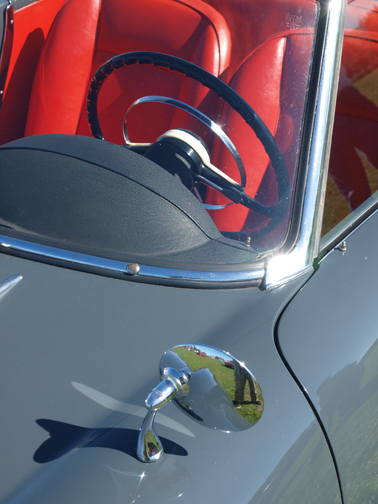
I just got back from the Alameda All-Italian Car and Motorcycle show, held around this time every year at Lincoln Middle School, in Alameda. There were more than 150 cars on display this year, including my 1978 Alfa Romeo Spider--more than I've ever seen before. There were cars from Alfa Romeo, Lancia, Fiat, Ferrari, Maserati, De Tomaso, Bertone, and Abarth Fiat. A big crowd turned out to see the cars as well. Proceeds from the event go to the Alameda Special Olympics.

As usual, the cars ran the gamut from Fiat clunkers to pristine concourse-ready restorations along with some beautiful unrestored cars. The oldest car this year was a 1925 Lancia. There were two "Jollies" (customizations, usually of the Fiat 600, done by the Ghia people, with wicker seats and frilly sunscreens; they were originally designed for use on the yachts of the very wealthy. Each one is unique. Only about 100 are said to exist).

Someone even brought a Yugo, presumably because it's essentially a Fiat. One year someone showed their Karman Ghia, because the body design is Italian. What I like about the Alameda show is just this laid-back attitude. Even the Ferrari owners that come are comparatively friendly. There were also about 40 motorcycles including an interesting 1946 Motto Guzzi. This show is always well worth the time--if you love Italian cars, or just love to look at art on wheels.


Saturday, October 9, 2010

Birds I'm Watching: Shollenberger Park (October 9, 2010)

In three hours I saw 41 species at Shollenberger Park, in Petaluma, this morning. The highlights were a Sora and two Virginia Rails. The rails came right out into the open, which is unusual. They like to hide in the reeds. There was a pair of Blue-winged Teals, as well. Also got to see a Peregrine Falcon spook a flock of about 250 Long-billed Dowitchers. Other raptors present were: American Kestrel, Northern Harrier, Cooper's Hawk, and White-tailed Kite. Many Song Sparrows.

The full list of birds I saw: Red-winged Blackbird, Killdeer, Western Gull, Northern Shoveler, Anna's Hummingbird, Mallard, Cooper's Hawk, American Kestrel, Northern Harrier, White-tailed Kite, Snowy Egret, Great Egret, American Goldfinch (50), Turkey Vulture, White-crowned Sparrow, Song Sparrow (11), Savannah Sparrow, Great Blue Heron, European Starling, American Crow, Avocet, Western Sandpiper, Mute Swan, Marsh Wren, Say's Phoebe (the first I've seen this season), Long-billed Dowitcher (250), Black-necked Stilt, Eared Grebe, Greater Scaup, American Coot (in the photo), Black-bellied Plover, White Pelican, Canada Goose, Sora, Virginia Rail (2), Ring-billed gull, Greater Yellowlegs, Scrub Jay, Peregrine Falcon, Blue-winged Teal, Black Phoebe.

For more information about bird watching in Sonoma County, see my Website Sonoma County Bird Watching Spots

Friday, October 8, 2010

Wines I'm Making: Harvest Still About a Week Away (2010)

I tested the grapes again yesterday (October 7). We seem to have made some progress in the past week. The Cabernet grapes are now at 22 Brix with a pH of 3.35. The Sangiovese grapes are at 17 Brix (in this case I deliberately excluded pinkish or greenish, obviously unripe grapes on the assumption that those will be eliminated when we de-stem) and a pH of 3.29. Both are still lower than I'd like sugar-wise. The weather is supposed to be good in the coming week. I think a little more patience is is order. I'd like to see the Cabernet at at least 23 and the Sangiovese at 19, if possible, but that may be wishful thinking this year. In other wine-related news, I've been preparing bottles over the past few days, getting ready to bottle last year's wine.

Wednesday, October 6, 2010

Wines I'm Drinking: Six Inexpensive White Wines

Tonight I blind tasted six inexpensive white wines from my local Grocery Outlet, ranging in price from $3.99 to $6.99--hoping to find the sort of bargain that was commonplace in France during my stay there over the summer. I was disappointed. Only two or three of the wines were very interesting, and only one of those was good enough that I'd consider buying it again, but every wine is a lesson, blind tasting is always interesting and instructive. Brief tasting notes follow.

2007 Genesis Columbia Valley Chardonnay: Very pale in color, quite thin at the edge, but has a pretty, greenish tint. Scents of apricots, butter, toasted grain, lemon rind. Attractive nose. Seems rich and more full-bodied on the palate than the color suggests it will. Vanilla creme on the mid-palate. Good acid. Tart/sweet effect is interesting. Moderate to good length. Feels a bit heavy (quite alcoholic, at 14.2%). Not exciting wine, but tasty and recommended for everyday drinking. A good value at $6.99 at Grocery Outlet. Genesis is a label associated with Hogue Cellars in Washington, which has always been a reliable producer in my experience. This was the most interesting of the six wines.

2006 Tempus Two Melange from South East Australia: A blend of Viognier, Marsanne, and Rousanne. A clear, medium-gold. The deepest in color of the six wines. Scents of wood, oak, vanilla, fresh vegetables, oatmeal biscuits. Not typical of wines with much Viognier in them. None of the usual peachy/spicy Viognier nose. Rather sweet on the palate--in this case, tasting like residual sugar rather than fruit sweetness. Flavors seem to fall off rather quickly. A bit hollow in the middle, but then comes back for a fairly long, sweet, not very nuanced finish suggestive mostly of pineapples. This is not the sort of wine I normally drink, but I can see it as a crisply chilled summer aperitif wine. Well enough made to be of some interest, if not my style. Good value at $3.99 at Grocery Outlet.

2006 R. H. Phillips California Sauvignon Blanc: Very pale and thin-looking. Fairly closed nose. Distant suggestions of lemons. Later hints of passion fruit, gooseberries. A bit nutty perhaps. Light on the palate. My tasting notes say "tastes like a thin Sauvignon Blanc," and that's what this is. Light, delicate, thinnish. Moderate to short. Seems thin on the finish as well. Perfumey aftertaste. Bland. Not very interesting. At $3.99 at Grocery Outlet this is cheap, but there are much better wines available at this price.

Glimmerglass California Proprietary Cuvée (non-vintage): Very pale gold. Unusual nose. Dough is the closest thing I can think of. Not unpleasant, but not the sort of scent that whets the appetite either. Rather closed. With a little time, the nose opened up a little to reveal mostly scents of wood and perhaps a little mint. Rather soft on the palate. A bit flat even. Little acid. Little fruit. Some attractive Semillon-like waxiness, but ultimately not very interesting. Inexpensive, but that's about its most appealing attribute. $3.99 at Grocery Outlet, but, again, there are much better wines available at this price point. I didn't read the label until after tasting the wine. This is 50% Chardonnay, 50% Semillon, which explains the waxiness--a fairly common trait in Semillon wines.

2006 Umamu Estate Margaret River Semillon/Sauvignon Blanc: I had high hopes for this, as Margaret River can make such good wine. I wasn't entirely disappointed. This was among the better wines of the group, along with  the Genesis Chardonnay and the Tempus Two Melange, but I'm afraid I had the likes of Leeuwin Estate in the back of my mind....

The Umamu Estate wine was a very pale straw color, thin at the edge and with a hint of green. Nice fresh nose. More powerfully scented than most of the rest of the group, but I found it hard to put my finger on exactly what was coming up out of the glass. Citrus hints. Wet paper (but not in a bad way). Not floral, but perfumed. Seemed somewhat thin on the palate. Tart. Light in body. Not especially interesting, but at least fresh and refreshing, and this seemed much more appealing after it had been open for a while. Good value for everyday drinking at $3.99 at Grocery Outlet. I'd look for this in more recent vintages.

2009 "Gaucho" Torrontes, from Mendoza, Argentina: The palest in color of the six wines. Very thin at the rim again. Distinctive nose. Odd and interesting, but not very appetizing. Something exotic, floral. Vanilla. Oranges. Incense--names like ylang ylang, patchouli, and frangipani came to mind, but I had none of these at hand to compare the wine against. Ultimately, I decided it was a soapy scent. Reminded me of certain hand soaps provided in airplane bathrooms. Tasted a bit like it smelled, too. Moderately sweet, medium body. Decent length. Interesting, but strange. Not like any Torrontes wine I've tasted before. With a little time the wine seemed drier, toastier, and a bit peachy. Pineapple guavas might be close. If you like oddities, you might find this interesting, but I can't imagine it with food, and I think tasting it once is probably enough. Inexpensive at $3.99 at Grocery Outlet.

For more reviews, use the "Wines I'm Drinking" label at the upper right.

Plants I'm Growing--First Blooms: Camellia Sasanqua "Chansonette" (2010)

The first blooms of 2010 opened yesterday on the low-growing camellia (Camellia sasanqua) under the flowering plum tree. This is a variety called "Chansonette." It's been extremely trouble-free and a reliable bloomer. It's done very well even in the hot, dry summers in Santa Rosa with only a small irrigation dripper and no water beyond that. It grows in full shade, but gets some sun at midday in the summer months. It's spread to about four feet across but stayed no more than about two feet high. It usually blooms into January. After ten years living in California again, it still surprises me to see flowers in the middle of winter. Impressions of Ohio winters remain hard to eradicate. Impossible really.

Plants I'm Growing: Evidence of this Summer's Odd Weather (2010)

I doubt anyone living in northern California needs evidence of how strange the weather has been this year, but I was startled a couple of days ago to see what looked like buds on my apple tree. That was at the end of September. Now, in the first week of October, the tree isn't exactly in full bloom, but it is blooming (this is the variety called Pink Lady). In the photo you can see the buds and new flowers and apples in the background--this year's apples (although there were very few and none suitable for eating). Very strange.

Tuesday, October 5, 2010

Wines I'm Drinking: 2003 Château d'Arcins Haut Medoc

I recently tasted the 2003 Château d'Arcins. This is a Cru Bourgeois from the Haut Medoc appellation--in other words, a "little" wine as the wines of Bordeaux go--and it is from what is generally considered to have been a difficult vintage, but I would judge this a success.

The Château d'Arcins is a deep blackish purple--with a hint of garnet  suggesting its age. The wine is already throwing a light, buoyant deposit. I'd recommend decanting this one. Brief tasting notes follow.

The nose was suggestive of blueberries and leather, but there was a distinct hint of anise as well. Later I got suggestions of rose water. On the palate, the wine at first seemed quite delicate, but with good tannic grip on the mid-palate. Lively acidity. Good length. With some time in the decanter, the wine began to fill out a little, and some suggestions of plums and cocoa began to develop. Nicely balanced between crispness and a sweet, fruity, almost buttery element. Overall, it's a bit lightweight, but the wine has enough nuance to be interesting. I suspect that this won't be a long keeper, but it's delicious right now. I bought six of these a few years back. I imagine I'll be drinking my remaining four bottles over the next 3-5 years--although it may be hard to resist opening another sooner rather than later. Recommended.
Related Posts with Thumbnails