Saturday, May 14, 2011

Found Art: Face and Hands--Mud on Mud Wall, May 14, 2011

On a visit to the Marin Headlands I found a beautiful wall of ochre mud at the edge of Rodeo Lagoon. Above the ochre layer was another of burnt umber-colored mud. Someone had dipped a finger in the dark mud to paint on the ochre-colored wall, leaving behind a face and handprints. Found art.

For more found art, see my blog Serendipitous Art.

Tuesday, May 10, 2011

Wines I'm Making: Shoot Thinning (2011)

I got into the vines today and made the final selection of the canes that will be allowed to grow and fruit this year. Tomorrow morning, if time permit, I'll do a second sulfur spraying to protect the vines against mold. So far, the plants look excellent. A lot of rain over the winter and cool, dry weather so far this spring have got them off to a very good start. I hope the wine will be as good as the condition of the plants promises. The photo above shows the vines before thinning, the photo below shows them after thinning.

[Update: Did the second sulfur spraying of the season the following morning, May 11.]

Sunday, May 8, 2011

Music I'm Listening To: Santa Rosa Symphony, Jon Nakamatsu (May 8, 2011)

I attended an afternoon Santa Rosa Symphony concert today directed by Bruno Ferrandis with pianist Jon Nakamatsu as soloist in the Tchaikovsky Piano Concerto No. 1. The scheduled program was all Russian music, but Ferrandis opened the concert with the "Nimrod" variation from Elgar's Enigma Variations, played in memory of Evert Person and Jess Jackson. Both were supporters of the Symphony and both died recently. The scheduled program began with Fairytale Poem, by contemporary composer Sofia Gubaidulina, followed by the Tchaikovsky concerto and then Mussorgsky's Pictures at an Exhibition after intermission.

I formed my impressions of the Gubaidulina piece before looking at the program notes. I had to laugh when I read through them. The music felt cinematic to me, but I was put in mind of 1950s science fiction rather than the animated subjects that are believed to have inspired the piece (it seems the composer has never really explained the precise meaning of the title). Apparently, Gubaidulina supported herself in the days of Soviet control of the arts by writing a great deal of music for films of all kinds, but apparently no science fiction. The program notes speak of "dangers lurking" but also of "cheerful adventure." I seem to have tuned in mostly to the dangers. The mood created seemed ominous to me, with quivering flutes and shimmering string tremolos particularly memorable. I half expected to hear a theremin emerge from somewhere toward the back of the stage--but no theremin was involved: Gubaidulina has drawn on conventional instruments to create a consistently interesting texture open to a variety of interpretations, it seems. The performers gave the impression of being well rehearsed today, right on top of the music, and very much in tune with the conductor. I enjoyed this very much. Gubaidulina is another composer I'll now be looking out for.

I must admit the Tchaikovsky piano concerto is not one of my favorite pieces of music, but it was a lot of fun to see it played, as it keeps both the soloist and the orchestra quite busy. Again the orchestra seemed in good form. Despite a couple of wobbly solo bits in the brass section and a rather hesitant-sounding flute at one point, the overall impression was solid, and Nakamatsu played very well. Nakamatsu got a standing ovation and a half out of his performance--the half standing ovation at the end of the first movement. Tchaikovsky sometimes had a way of making his music sound finished right in the middle (this piece and the Violin Concerto are good examples). While I don't mind people clapping after a particularly well-played movement, clearly some people thought the concerto had finished and it took a few moments for everyone to figure out why Nakamatsu remained seated and conductor Ferrandis continued to face the performers.

After intermission, Ferrandis led the Santa Rosa Symphony in Musssorgsky's Pictures at an Exhibition in the version orchestrated by Ravel. As a teenager just getting interested in classical music, this is one of the pieces I first latched onto (like many other people). It is varied, colorful, and immediately accessible. Again the performers seemed in good form. Although Ferrandis took some of the slower sections at a rather faster tempo than I would have preferred, the overall effect was persuasive.  Taken as a whole, a satisfying concert.

Jon Nakamatsu photo by Christian Steiner.

Wines I'm Drinking: 2007 Louis Latour Viré-Clessé

The label on this one had me a bit puzzled. Mâcon-Viré I knew and Mâcon-Clessé I knew, but Viré-Clessé? It seems I'm a bit behind the times. I see that what were once Mâcon-Villages bottlings from the villages of Viré or Clessé have since 1999 been subsumed into a larger AOC called Viré-Clessé, which can include wine from grapes grown in those villages as well as two other former Mâcon-Villages villages--Laizé and Montbellet. Still, it seems to me I've seen Mâcon-Viré and other village wines from this area more recently than 1999....

In any case, this is a Mâconnais wine (made from Chardonnay--about the only grape variety planted here) from Louis Latour. It seemed worth a try, and it was quite satisfying, offering up precisely what a good village wine from this area should: The wine was dry, crisp, light but flavorful and with a good balance between fresh acidity and a slightly buttery richness. A pretty, pale gold in the glass, the wine had attractive scents of melon and butter and just a suggestion of passion fruit. There was another scent that I couldn't quite pin down--raw zucchini perhaps? With a little time in the glass, there was also something suggestive of oranges. On the palate, the wine seemed quite dry at first--a bit austere even--with an interesting hint of astringency and bitterness that was nicely offset on the mid-palate by a rush of fruity sweetness and a richness that somehow suggested pastry to me. Good length and with a fairly nuanced finish that was marked by a back and forth between the buttery elements and the acidity. Not profound or especially complex, but solid wine for everyday drinking or better. Likely to be very pleasing well chilled, dining outdoors on a summer evening. Reasonably priced at $9.99 at Trader Joe's. The sort of wine I'm likely to buy again.

For more wine reviews, use the "Wines I'm Drinking" label at top right    

Saturday, May 7, 2011

Birds I'm Watching: Willow Creek Rd., Bodega Bay

I spent most of the day today out looking at birds. I joined a Madrone Audubon Society walk at Willow Creek Rd., north of Bodega Bay and on the way home stopped at Porto Bodega, the north end of Bodega Harbor, and went as far south as Campbell Cove. At Willow Creek, the highlight was watching a Bald Eagle spar with an Osprey over the hills that flank the Russian River as it meets the Pacific. At Bodega, I got some excellent photos of Black Oystercatchers, Western Grebes, and Common Loons.

At Willow Creek Rd., I saw 37 species (in order of their appearance): Common Raven, Osprey, Wrentit, Wilson's Warbler (singing everywhere), Song Sparrow, Mourning Dove, American Goldfinch, Red-tailed Hawk, Chestnut-backed Chickadee, Bald Eagle (One adult, one immature), Rufous Hummingbird, Double-crested Cormorant, Brown-headed Cowbird, Bushtit, White-crowned Sparrow, Great Blue Heron, Cliff Swallow, Turkey Vulture, Common Merganser, Northern Rough-winged Swallow, Allen's/Rufous Hummingbird, Allen's Hummingbird, Black headed-Grosbeak, Purple Finch, House Finch, Warbling Vireo, Anna's Hummingbird, Pacific Wren, Marsh Wren, American Robin, California Towhee, Western Scrub-jay, Spotted Towhee, Orange-crowned Warbler, Pacific-slope Flycatcher, Nuttall's Woodpecker, Steller's Jay, and California Quail.

At Bodega Bay (Porto Bodega), I saw: Black Oystercatcher (two adults and a juvenile, and got to see the adults doing some kind of display, although I can't say what the meaning of it was--heads straight up, beaks open, then heads way down low with a stiff tail sticking up in the rear...), Willet, a single Canada Goose (strange, but true), Western Gull, Double-crested Cormorant, Starling, Surf scoter, Western Grebe, Horned Grebe, Common Loon, House Sparrow, Pigeon. At the north end of the harbor, I saw: Western Grebe, Common Loon, Black Oystercatcher, Double-crested Cormorant, Turkey Vulture, Surf Scoter, and Osprey.

 For more information about bird watching in Sonoma County, see my Website Sonoma County Bird Watching Spots.

Friday, May 6, 2011

Beekeeping: Spring Honey Harvest

Last year I never got around to harvesting any honey, so my bees have been left unmolested for quite some time. Thinking it would be best to harvest some before they swarm, however, I extracted six frames yesterday. There is quite a bit more honey in the hive--another ten or twelve frames or so, but most of it incompletely capped with wax, so I will probably leave the bees alone again until late autumn. I usually harvest around October. This is the first time I've harvested honey in the spring. It's notably paler in color, less viscous, and less strongly flavored than what I usually get, but delicious nevertheless. Harvested about 20lbs.

Wednesday, May 4, 2011

Plants I'm Growing--First Blooms: Salvia Greggii, Monkey Flower, Yellow Bush Lupine, Native Yarrow

First blooms of 2011 on a number of plants in the garden again yesterday, including a yellow variety of Salvia greggii, one of several varieties of monkey flower, the yellow bush lupine by the driveway (Lupinus arboreus), and a native yarrow.

Found Art: Metal Van II (May 4, 2011)

Here's another shot of the immobile van parked down the street from my house. I love the shimmer of its silver sides. What is the meaning of the letters scratched into it? I don't know, but it looks like art to me. Found art.

For more found art, see my blog Serendipitous Art.

Tuesday, May 3, 2011

Books I'm Reading: Team of Rivals

I've just finished reading Team of Rivals, by Doris Kearns Goodwin (Simon & Schuster, 2005). I bought it several years ago, but got around to reading it only this week. Having recently read Bruce Catton's Civil War trilogy, it seemed an appropriate book to move on to.

Goodwin's book is a simultaneous biography of Lincoln and the leading men in his cabinet of 1860--with an emphasis on Seward, Chase, and Stanton. The rich narrative illuminates Lincoln's genius in handling subordinates, the clarity of his vision, and his ability to rise above the pettiness and devotion to self-interest that so often clouds the judgement of lesser men. Although the events of the Civil War are an essential backdrop, here the spotlights play on the personalities of Lincoln and those who worked for--and against--him and on the interactions of these people rather than on the progress of the war itself.

Lincoln seems almost superhuman. At every turn, his good sense, his ability to read moods and motivations, his empathy and compassion, his vast capacity for magnanimity, and his superlative timing are on display. Seward and Stanton shine brightly, Chase less so (although he did his job well, and Lincoln remained loyal to him for that reason). We get revealing sketches of many other players, including the wives and children of these men, along with Frederick Douglass, Horace Greeley, Thurlow Weed, Lincoln's secretaries John Nicolay and John Hay, and Lincoln's top generals. Goodwin confirms the impression I've had from other reading of General McClellan as a self-absorbed whiner capable of doing nothing with alacrity except assign the blame for his failings to other people. On the whole, though, what is astonishing is the high level of competence and integrity of the people running the United States during Lincoln's administration. I was struck particularly by the eloquence of these people. The quotes from letters, memos, speeches, and diaries Goodwin liberally uses are almost invariably a pleasure to read for the sheer beauty of the language employed. I found myself longing to live in an America governed by such brilliant people. Why do we have so few politicians of this caliber today?

Kudos to Simon & Schuster. It's rare these days--even at the best of publishers--to come across a book like this one, completely without printing or editing errors. Goodwin's writing, meanwhile, is fluid and lucid to the point of seeming almost transparent. The 754 pages of text slide down the mental gullet like oysters riding on Champagne. Pure intellectual pleasure. One of the best books I've read in a long time. Highly recommended.

Miscellaneous: What Our Eyes Fail to See

I don't mean to pick on Whole Foods, but here's another interesting sign I spotted at the Yulupa Ave. store in Santa Rosa. Look carefully. Notice anything wrong? The person who made the sign didn't. No one else in the store seems to have seen the problem until I pointed it out this morning (I actually noticed the mistake yesterday). Amazing what our eyes can fail to see.

Monday, May 2, 2011

Plants I'm Growing--First Blooms: Columbine, Echium Wildprettii, Rose "Easy Livin'"

First blooms of 2011 today on a number of plants in the garden. A succession of warm days is coaxing out new flowers every day now. First blooms on Echium wildprettii, known as "Tower of Jewels" (photo a left).  The large, yellow columbine with long spurs (below) bloomed today, along with one of the hybrid columbines in the garden that are spontaneous crosses between the yellow variety and Aquilegia formosa, the native Western columbine, which is also planted here. First blooms today also on the orange rose called "Easy Livin'."

Echium wildprettii bloomed on April 20 in 2010, for a botanical year of 377 days.The yellow columbine bloomed on April 19 in 2009, on April 21 in 2010, calculating years of 367 and 376 days.
The rose "Easy Livin," bloomed on April 9 in 2010, for a year of 388 days.


Miscellaneous: Should We Celebrate the Death of Osama Bin Laden?

The streets of Santa Rosa appear quiet today--at least in my neighborhood--and last night I heard no jubilation following the President's announcement of the killing of Osama Bin Laden. I have no regular TV service (by choice), so I am spared the constant spillage of images and commentary from the televised media, but stories on the Internet news services make it clear enough that some are celebrating today, that some Americans are photographing themselves with news bulletins in front of the White House, that some are chanting USA!--that some are literally dancing in the streets. What I have seen reminds me of images from Tehran in 1979 that showed crowds of young Iranians celebrating the capture and holding of hostages from the US Embassy there. I see the same lack of dignity.

Time has posted online a 20-page article originally published on September 14, 2001, the magazine's first extended reaction to the events of September 11, 2001. Reading it today brought back the sense of disbelief and then outrage 9/11 created, the sense that an important line had been crossed. Should we be glad that Osama Bin Laden is no longer free to spout invective, abet malice, spur violence? Yes. Was killing him just? Given there is little doubt that he planned the African embassy bombings (which killed many non-American muslims), the USS Cole incident, and 9/11, I would say yes. Should we be dancing in the streets, waving flags, chanting USA!? I think not. Images of Americans celebrating the death of Osama Bin Laden will not aid efforts to suppress terrorism. Osama Bin Laden will become a martyr to those who supported him, whether we celebrate or not, but in the minds of those that oppose US Middle East policy, images of celebration will be slotted alongside images of prisoners at Guantanamo Bay and Abu Ghraib. Ultimately, jubilation--at least such vulgar expressions of it--will not serve us well. More importantly, celebration of the killing of a man, any man, seems barbaric to me. Isn't barbarism among the things we pretend to fight against?

Photo credit: Osama Bin Laden, AP Photo/Ted S. Warren, 1998.

Plants I'm Growing--First Blooms: Scabiosa Farinosa

First blooms of 2011 yesterday on the low-growing scabiosa Scabiosa farinosa. This has been a very tough, reliable, drought-tolerant plant--much more robust than most scabiosas. It has pretty, glossy leaves and small, neat lilac-colored flower heads. Scabiosa farinosa bloomed on May 4 in 2009 and April 20 in 2010, calculating years from first flower to first flower of 351 days and 362 days.

Thursday, April 28, 2011

Wines I'm making: First Sulfur Spraying (2011)

Yesterday I did the first sulfur spraying on the grape vines, managing to get what looks like only a very light layer of sulfur on the new leaves, but the forecast is for cool, dry weather to continue for the time being, so the risk of mildew developing seems small at the moment. I will spray the new growth again in a week or so, when the shoots are approaching about 18 inches.

Wednesday, April 27, 2011

Plants I'm Growing--First Blooms: Roses, Phlomis Lanata, Cistus "Sunset," Sulfur Buckwheat

New flowers coming fast and furious in the garden. First blooms today on the large, pink, single-petaled climbing rose "Sally Holmes," on the pink, old-fashioned climber beside it on the back fence, called "New Dawn," on the rock rose called "Sunset," and on Phlomis lanata. First flowers on sulfur buckwheat (Eriogonum umbellatum) came on the 25th (below).

Music I'm Writing: String Quartet No. 7

I recently finished writing my seventh string quartet. I'm fairly happy with it, but I learn so much every time I write a something, that I quickly become dissatisfied and begin itching to start work on another piece--which I'm very likely to do.

Found Art: Yellow Arrow, San Francisco (April 27, 2011)

At the entrance to a San Francisco parking garage I recently found this yellow arrow over faded white script. Found art.

For more found art, see my blog Serendipitous Art.

Sunday, April 24, 2011

Plants I'm Growing--First Blooms: Peruvian Verbena, Echium Gentianoides, Iris "Change of Pace"

First blooms of 2011 in the past couple of days on Peruvian verbena, Echium gentianoides,  and the iris called "Change of Pace," which every year is the first of the irises to bloom. The iris started blooming on the 21st. "Change of Pace" bloomed on April 10 in 2009 and April 5 in 2011, so this is somewhat late. The plant has thus calculated years of 360 days and 381 days.

The Peruvian verbena (Verbena bonariensis)--a very tall, upright variety, started blooming on the 22nd (pictured above). It bloomed on May 11 in 2010, so this seems early. The plant calculated a year of only 346 days. The Echium--a pure blue variety--started blooming yesterday, the 23rd. I don't have a 2010 record for this Echium, but it bloomed on March 31 in 2009. I didn't get around to photographing any of the plants until today.

Friday, April 22, 2011

Plants I'm Growing--First Blooms: Rhododendron "Double Eagle," Butterfly Bush "Sungold," Salvia Lyrata

First blooms of 2011 on three plants in the garden yesterday and today. Yesterday the yellow rhododendron "Double Eagle" bloomed. In stark contrast to last year, there is only one flower cluster. Last year, the whole plant was covered in blooms. Rhododendrons are difficult....

Today the first flowers opened on the butterfly bush called "Sungold," which has distinctive yellow-orange globes of flowers in alternating pairs. First blooms today also on the low-growing salvia with purple leaves that I believe is Salvia lyrata. I let these go to seed each year and we get new ones in unpredictable places around the garden.

"Double Eagle" bloomed on March 29 in 2009 and on March 25 in 2010, so this is quite late. The plant has calculated botanical years of 361 days and 391 days. "Sungold" bloomed on May 2 in 2010, so this is earlier than last year and a year of 355 days. Salvia lyrata bloomed on May 4 in 2010 for a year of 353 days.

Thursday, April 21, 2011

Rain: More Rain (April 20-25, 2011)

Rain overnight on the 20th gave the garden a much-needed drink. Despite the higher-than-usual rainfall this season, there had been no substantial rain in several weeks. The rain last night saves me using the drip irrigation system for another week or so. We got 0.6 inches, which brings our total for the 2010-2011 rainy season to 36.3 inches, more than four inches above the historical average.

[Update: More rain overnight and on the morning of the 24th. The total is now 36.5 inches.]
[Update: Sprinkles last night added 0.1 inches, for a total of 36.6 inches.]

Wednesday, April 20, 2011

Found Art: Panel with Numerals, San Francisco (April 20, 2011)

Walking along the Embarcadero not long ago I happened across this green panel with numbers on it. I don't know what they mean or why they were there. They seemed abandoned--they seemed to have a significance long forgotten, but they looked like art to me. Found art.

For more found art, see my blog Serendipitous Art.

Tuesday, April 19, 2011

Plants I'm Growing--First Blooms: Penstemon Heterophyllus, Rose "Cocktail" (2011)

First blooms of 2011 on the pretty blue penstemon Penstemon heterophyllus and on the rose called "Cocktail." The penstemon is a variety I've seen blooming wild in northern California and Oregon by the roadside, but it has done very well in the garden here, despite (because of?) getting very little water or attention. The bright blue flowers have a beautiful, almost iridescent purplish sheen to them. Cocktail has been a reliable bloomer as well, with very cheerful bright red, single flowers with beige centers.

I'm surprised to see that I don't seem to have records for either Penstemon heterophyllus or "Cocktail" in 2010 or 2009, so I can't say whether they've bloomed early or late this year. In any case, they're pretty.

Monday, April 18, 2011

Movies I'm Watching: Little Voice

Our local Blockbuster Video shop shut down recently. I took advantage of the opportunity the closing afforded to pick up about a dozen films for only $2.99 each, as well as two seasons of Mad Men at a dollar a disk. Among the films I chose was Little Voice (1998, Directed by Mark Herman; starring Jane Horrocks, Michael Caine, Jim Broadbent, Brenda Blethyn, and Ewan McGregor), purely on the strength of Michael Caine's presence in the cast (I had not been aware of Horrocks before--most of her work appears to have been in television or--not surprisingly--doing voice characterizations).

I would call this a flawed gem. The writing struck me as weak in places: did Mari, the Brenda Blethyn character, have to be so unrelievedly loud and coarse? I think not. More importantly, the sudden nastiness of Michael Caine's character (down-and-out promoter Ray Say) toward Mari seemed out of character. He turns on her and needlessly humiliates her, saying, essentially, that she disgusts him physically. In the flow of the story, the scene is used to express his frustration when he begins to feel that Mari is an obstacle in the way of his efforts to exploit her daughter, the eponymous Little Voice, a pathologically shy girl that barely speaks yet has an extraordinary ability to mimic some of the more interesting female singers of the 1940s, '50s and '60s, including Judy Garland, Shirley Bassey, and Marilyn Monroe. Yet, Ray was happy to pick Mari up in the bar where he meets her and enjoy his time with her before he knew anything about the woman's extraordinary singing daughter--in other words, before he had any motive to pretend to be interested. Clearly he was attracted to her before Little Voice (or LV as she's known) becomes an issue. In contrast to this bit of nastiness, he is quite tender with LV (although he has a strong motive here, he seems genuinely to care about her). Is he really so two-faced? Is he really so unfeeling? Perhaps, but something in the logic of the scene with Mari seemed deficient.

Having said that, Jim Broadent is brilliant as the club owner, Ewan McGregor delivers a solid performance, and Jane Horrocks is simply phenomenal. It's really hard to believe she's not lip-synching, but apparently she isn't. She actually can sing like Judy Garland, like Shirley Bassey, like Marilyn Monroe. While the attachment of the shy LV to her dead father quickly becomes rather creepy, it's easy to ignore that and other problems for the sheer pleasure of hearing Horrocks sing. In other words, Little Voice works marvelously as a vehicle for her special talent. Not surprisingly, the film is an adaptation of a play of the same name originally written to showcase Horrocks and her singing. Recommended.

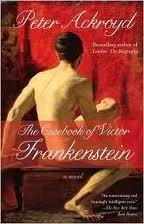
Books I'm Reading: The Casebook of Victor Frankenstein

Not long ago the subject of Frankenstein came up at a family gathering. I don't remember what got us started, but it occurred to me that my son had seen Young Frankenstein (1974, Directed by Mel Brooks, starring Gene Wilder, Peter Boyle, Madeline Kahn, Marty Feldman, Terri Garr, Cloris Leachman, and Kenneth Mars) and thought it funny, but never seen the original films that Young Frankenstein spoofed. Turns out my mother had never seen them either. So, we rented Frankenstein (1931, Directed by James Whale, starring Boris Karloff, Colin Clive, Mae Clark, and Edward Van Sloan) and The Bride of Frankenstein (1935, Directed by James Whale, starring Boris Karloff, Colin Clive, Valery Hobson, Ernest Thesiger, and Elsa Lanchester) and then watched Young Frankenstein again, having something of a Frankenstein Fest in the course of a few nights.

It had been a long time since I'd seen either of the original films.  It's funny how memory works: I see now that much of what Young Frankenstein makes fun of (and what I remember about the original films) is in The Bride of Frankenstein, rather than the first film. I've always thought (and would still say) the later film is the better of the two (partly because sound technology advanced a great deal in the four years from 1931 to 1935), but both have held up rather well. Director Whale and Karloff succeed in making the monster a sympathetic character--as I'm surely not the first to note. It's no excuse to lament being brought into the world against one's will--each one of us is born into the world without a say in the matter--but the misunderstood creature is mercilessly goaded; it's easy to see both that he is done in by his own character faults and that he's not really to blame for what he does. Is it going too far to call the story Shakespearean? I've never read the original story by Mary Shelley. I think the time has come. Clearly, she captured something elemental, something that continues to fascinate after nearly 200 years (the story was first published in 1818).

Peter Ackroyd's entertaining retelling comes at events from a new perspective--that of Victor Frankenstein himself--and ends with a sharp twist on the final page of the book, a twist I won't spoil. In this retelling (The Casebook of Victor Frankenstein, by Peter Ackroyd, 2008, Anchor Books), Frankenstein forms a friendship with Percy Bysshe Shelley at Oxford that serves to spur his experiments in the reanimation of dead tissue, experiments that inevitably escalate into an obsession. We witness at first hand the birth of the creature, its escape, and the revenge it takes upon its creator and the people he cares for--all narrated in what seems a period-perfect voice, as if Frankenstein is reading from his casebook. The matter-of-fact report that takes us through the process of the creation is deliciously ghoulish and in places truly horrifying in a way that the films never capture. A fast-paced, page-turner with depth. This one's very likely to get your electrical fluids going. Recommended.

We watched the films not long before my last birthday. My mother kindly thought to get me this book as a birthday gift. The timing was perfect.

Plants I'm Growing--First Blooms: White Rock Rose, Rosa Chinensis Mutabilis (2011)

A heavy load of work this week has caused me to miss the first blooms of 2011 on a number of plants in the garden this year, but I note that the large white Cistus on the side of the house, by the lamppost, started blooming on April 15--yet another Cistus, or rock rose, that I've lost track of the name of. One of the first plants I planted here, it thrives with almost no water and blooms reliably.

The blowsy multi-colored rose, also on the side of the house, began blooming around April 15 as well. Rosa chinensis mutabilis it's called. I like the name of this plant--as I may have remarked here before. It means "mutable Chinese rose" and the name is apt. The compact, neat buds begin a promising deep red, but the flowers open a medium purplish pink and then develop apricot centers as they quickly fade to pink and finally to a mottled pale beige. The flowers then fall apart and blow away. Perhaps this flower should be the symbol of romantic love, rather than the scarlet hybrid tea rose that has taken on that role.

First blooms yesterday, April 17, on the deep pink rose by the side of the deck, a variety called "Nearly Wild." It's a very pretty single-petaled, old fashioned-looking rose that reminds me of the wild roses I remember from summers in England as a child. The buds are a deep, deep pink. The long-lasting flowers open to show a somewhat paler center with cheerful yellow stamens. Generally trouble free, although it occasionally needs a light spraying with neem oil to prevent mildew and against aphids. "Nearly Wild" bloomed on April 9 in 2010, so it has calculated a botanical year of 356 days.

The climbing rose "Altissimo" has also started to bloom in the past few days, but I missed the first bloom this year.

Rain: Drizzle Today (April 18, 2011)

It's drizzling this morning, but not really raining. It's more of a mist, actually. The rain gauge overnight showed 0.1 inches--not enough to give the plants much, but rain is in the forecast for the entire week. Now that everything has dried out following an unusually wet March, we could use a good downpour. The rain overnight brings the total at my house for the 2010-2011 rainy season to 35.7 inches. The historical annual average for Santa Rosa is 31.91 inches.

Sunday, April 17, 2011

Birds I'm Watching: Ninth St. Rookery, Spring Lake (April 15-16, 2011)

I visited the "Ninth St. Rookery" for the first time this season on the 15th. The "rookery" is nothing more than four or five large trees in the median strip on West Ninth St. in Santa Rosa used each year by Great Egrets, Snowy Egrets, Black-crowned Night Herons, and Cattle Egret as a nesting site. The place always has a surreal quality. The trees are filled with starkly white birds making the strangest of noises--saying things that sound like "wubba-wubba, wubba-wubba." Usually active between late March and June, it's good place to see these birds up close.

Yesterday, I took a walk around Spring Lake and had the unusual pleasure of seeing an American Bittern that stood still long enough to photograph (below). Usually these birds are so well camouflaged that you simply don't see them, or the moment they see you, they're gone with a loud squawk! amid a noisy flapping of wings. I hadn't been to Spring Lake in quite a while. There were orange-crowned warblers singing everywhere, and enough Spotted Towhees to compare the rather similar trills these two birds make (I always have trouble telling them apart). Some of the Golden-crowned Sparrows were in their full breeding plumage, sporting starkly black-gold-black heads. I also saw the Great Horned Owl nesting at the lake again this year. A good way to start the day--before heading home to sit at the computer to work all day.

For more information about bird watching in Sonoma County, see my Website Sonoma County Bird Watching Spots.


Friday, April 15, 2011

Plants I'm Growing--First Blooms: Cistus

First blooms of 2011 today on the large white Cistus by the pink crabapple. Yesterday one of the other Cistus (or halimiocistus) varieties in the garden bloomed. Unfortunately, I've lost track of the names of these two plants. One is very large, growing to over six feet, the other, with the raspberry-jam spots on the flowers is a low-growing variety, possibly a Halimiocistus. Both are very pretty, but I've lost track of the names of these varieties.


Wednesday, April 13, 2011

Tuesday, April 12, 2011

Plants I'm Growing--First Blooms: Wisteria (2011)

First blooms today on the wisteria behind the house. The plant is one of two that now grow over the structure that supports my hammock. There are two plants, one on either side of the uprights at either end. One is in a comparatively shaded area. It looks like it will bloom this year for the first time. The two plants were grown from seed we put in pots around 2004. The more shaded plant has taken this long to reach the top of the structure and find full sun. The parent was an amazing deep pink wisteria we came across in southern Japan, at the Imari pottery festival, and picked up seeds from. The bigger plant that has been blooming for several years now turned out to be a normal purple wisteria, not the deep pink: seeds often don't come true. I suspect the second one will be the standard purple wisteria color as well, not the deep pink. We'll know in a few days. Likely to be a disappointment, but still pretty.
Related Posts with Thumbnails