

Wednesday, June 20, 2012
Wines I'm Making: Third Sulfur Spraying 2012 (June 20, 2012)


Friday, June 15, 2012
Books I'm Reading: A Man on The Moon: The Voyages of the Apollo Astronauts (June 15, 2012)

Andrew Chaikin's excellent book A Man on The Moon: The Voyages of the Apollo Astronauts (Penguin, 1995) covers the period of transition from the Gemini missions to the Apollo program following Kennedy's public challenge (to land a man on the moon and return him safely home before the end of the 1960s) through the last moon landing, in 1972. Chaikin pays careful attention especially to the preparations for the scientific work of the later missions, mostly geological investigations. While I remember some of the most important events of the time, A Man on the Moon puts it all into perspective. Perhaps the most startling thing that emerges is the brevity of it all. Only a little more than eight years separate Kennedy's historic speech of May 25, 1961 and the first moon landing, and the six lunar landings spanned only three-and-a-half years. The last of them was already 40 years ago.
Well written and meticulously researched, the book is based on contemporary media reports, NASA mission archives, and extensive interviews with 23 of the 24 men who visited the moon, as well as interviews with many of their wives and some of their children, and with Apollo program managers, experiment scientists, engineers, flight controllers, flight directors, geologists, historians, NASA administrators, and even some of the men that designed and created the spacesuits worn on the moon missions. The result is a narrative that gives a palpable sense of having been there. Highly recommended.
Tuesday, June 12, 2012
Beers I'm Drinking: Beers to Compete with Coedo's "Kyara" (June 12, 2012)

Anchor Steam "Breckle's Brown" (6% alcohol): Attractive copper color. Fairly strong hoppy scent with suggestions of wood and chrysanthemums. At first, seemed a typical, overly hoppy California beer, but it proved quite dry on the palate and the hoppy element wasn't overdone. Nice, lingering bitterness that was pronounced, but not excessive. After the Coedo "Kyara," I liked this beer best of the bunch. Recommended. Seems to strike a nice balance between hoppy and malty flavors, although it doesn't quite achieve the wonderful balancing act of the "Kyara," a beer that is rich and malty without being heavy or sweet and that has refreshing, vibrant carbonation.
21st Amendment Brewery "Bitter American" (4.4% alcohol): This came highly recommended at Trader Joe's. The woman at the checkout counter confirmed that it was very popular among the male staff members. I was less impressed--which is not to say that this is a bad beer. It's just not what I was looking for--a Coedo "Kyara" substitute. Golden Lager color. Floral scents. Sweet scents. Not very hoppy on the nose. Seems flat after the Anchor Steam beer--probably because it's considerably lower in alcohol and it has a finer, creamier head. Rather strong, hoppy aftertaste. Seems thin on the mid-palate and lacking in body. Having said that, not bad, just not "Kyara" and I preferred the "Breckle's Brown.
21st Amendment Brewery "Back in Black" (6.8% alcohol): Dark chestnut brown. Fairly unassuming nose. On the palate, suggests chocolate and coffee, particularly coffee, with a flat, creamy foam reminiscent of English dark beers--which is not a bad thing, but, again, not what I was looking for here. Slightly sweet on the finish. Less hoppy than the first two beers.
Coedo Brewery "Kyara" (5% alcohol): What makes this beer so appealing to me is its subtle balance of body, flavor, and texture, with the crispness and refreshingly bright characteristics of a lager. Pretty amber color. Malty nose. Good body and with more presence than the alcohol content would suggest. Crisp, with moderately fine, bright foam that's substantial without being heavy or too creamy. Dry but not overly hoppy. Again, "Kyara" seems perfectly balanced to me. Delicious. Highly recommended. Just wish it weren't so expensive.
In conclusion, I liked the "Kyara" best, followed fairly closely by the Anchor Steam "Breckle's Brown,"a beer I'll probably buy again, then by "Back in Black" and finally the "Bitter American." Despite the enthusiasm at Trader Joe's, I probably won't go back for more of the 21st Amendment Brewery beers, although they were tasty enough. Obviously, personal preference has a great deal to do with the decisions we make about what to buy and what to drink. I was looking for a beer with presence, good malty flavors, and hops--but not excessively hoppy--that also has crisp, refreshing carbonation: Coedo's "Kyara" seems to get this combination just right. The Anchor Steam "Breckle's Brown"is close to this view of an ideal beer as well.
As an appendix of sorts, I also tried the 21st Amendment Brewery "Brew Free or Die IPA" (7%). I must say, I rather liked it. No longer thinking about the Coedo "Kyara," I took it slowly and on its own terms. An attractive coppery gold with a creamy but persistent head. Hints of hops and molasses on the nose. Very flavorful. Has good body--reflective of its comparatively high alcohol content. Good hoppy taste, without being too hoppy and without the harsh bitter aftertaste of a more heavily hopped beer. Good, extended finish that was nicely balanced between hops and a very faint sweetness.
Tuesday, June 5, 2012
Miscellaneous: 2012 Transit of Venus (June 5, 2012)

Transits of Venus come in pairs, eight years apart. This one follows one in 2004. The next pair will occur more than 100 years from now, in 2117 and 2125. Transits of Venus show a repeating pattern over 243 years. Two transits separated by eight years are followed by another pair in 105.5 years. That pair is followed by another 121.5 years later. The pattern then repeats.
Transits of Venus are rare enough that only a handful of observations have been recorded. According to Wikipedia, there is no evidence that any of the great ancient civilizations were aware of the transits. The first documented scientific observation was in 1639, made by Jeremiah Horrocks, near Preston, England. Horrocks used his own corrections to Kepler's calculations of the orbit of Venus to estimate the timing of the event. Kepler had predicted the 1631 transit that preceded the one Horrocks observed. Horrocks appears to be the first to have understood that the transits would occur in pairs separated by eight years. Horrocks observed the transit the same way I did, by projecting an image onto a piece of paper using a simple telescope.
The next pair came in 1761 and 1769. Edmund Halley (after whom the comet is named) championed the idea of using the 1760s transits as a means of calculating the distance between the sun and the earth (known as the astronomical unit, or AU), having himself made calculations of the AU in 1676 using a transit of Mercury. He was unsatisfied with his results, however, because only one other scientist had made such an observation. The AU could be accurately measured, he reasoned, using triangulation, but that would require precisely simultaneous observations from widely separated points on Earth. He urged expeditions to make such observations. Halley died in 1742, but people listened. Among those who recorded the 1761 event were Captain James Cook, at Tahiti, on his first voyage around the world. Observations in 1761 from various locations around the globe yielded an estimate of 153mn kilometers for the AU--a significant improvement (Horrocks had estimated 95.6mn kilometers). Calculations from the 1874 and 1882 transits yielded a fairly accurate figure of 149.59mn kilometers. Today the AU is given as 149, 597, 870.700 kilometers--actually the mean distance, as the distance fluctuates slightly. Radio telemetry and radar have replaced the methods used in the past, but I found it satisfying to be able to do essentially what Horrocks did way back in 1639. I had the advantage, however, of being able to find the exact time of the event by using Google.
If you missed this event, there will be a transit of Mercury on May 9, 2016. Mark your calendar.
Monday, June 4, 2012
Rain: Late Season Rain Adds 0.15 Inches to 2011-2012 Total
In a somewhat surprising turn of the weather, we had rain overnight. Late this afternoon, it's clear and sunny again with only large cumulus clouds in the distance. It came quickly and left quickly as well--likely the last rain we'll have in the 2011-2012 season, which officially ends on June 30. The 0.15 inches we got brings our total to 26.45 inches--not bad, but below the historical average, which is a little under 32 inches.
Sunday, June 3, 2012
Plants I'm Growing: First blooms--Cacti in the Garden (June 3, 2012)
 I've become lazy about noting the first blooms on plants in the garden this year--an indication that my curiosity has been satisfied. About four years ago I began wondering how consistently plants bloom each year. I wanted to know if you could create a botanical calendar by planting the right species. I wondered if a year calculated as the date of first flowering of a given plant in two successive years was close to 365 days. With these questions in mind, I began recording the first blooms on all the plants in the garden. By doing so and collecting data, I came to the conclusion that I had thought most likely from the outset: that there is often a fairly significant difference from year to year, but a long year is usually followed by a short year, and vice versa, so that on average, plants do, in fact, calculate years close to an astronomical year.
Much has begun to flower in the past few weeks that I haven't recorded, but this morning I noticed two cacti in the garden had started to bloom and I was inspired to get out the camera. So, I record here first blooms of 2012 on the cactus Opuntia basilaris, or Beavertail Cactus (above), and on Opuntia elata, an obscure prickly pear cactus with a beautiful orange flower that appears to be native to Venezuela. The Beavertail Cactus bloomed on May 9, in 2009, May 20, in 2010, May 18, in 2011 and June 3 this year, so this is actually quite late for this plant. It has calculated years of 385, 354, and 381 days, averaging to 373 days, which is still somewhat long. Chances are good that it will bloom earlier next year. I really like the contrast between the blue-green stems of this cactus and its fuchsia-pink flowers.

Miscellaneous: Bookshelves Full (June 2, 2012)

Now, I need some new bookshelves....
Wednesday, May 30, 2012
Found Art: Blue Tire Tracks (May 30, 2012)

For more found art, see my blog
Serendipitous Art.
Saturday, May 26, 2012
Music I'm Listening To: Hilary Hahn with Osmo Vänskä Conducting the San Francisco Symphony (May 25, 2012)
Last night Hilary Hahn joined guest conductor Osmo Vänskä and the San Francisco Symphony for what turned out to be a rather exhilarating evening of music. The concert opened with modern Finnish composer Kalevi Aho's one-movement Minea, a piece composed in 2008 on commission from the Minnesota Orchestra. Hahn was then soloist in Prokofieff's Violin Concerto No. 1. After intermission, the Symphony played the Shostakovich Symphony No. 6.
Minea, debuted by the Minnesota Orchestra in November 2009, has not yet been released as a commercial recording. I heard it last night for the first time. The opening was memorable--a sustained tone held by many of the instruments on stage seemed to float over odd sounds produced on the brass instruments that suggested waves beating against a beach. The woodwinds were very much present, especially the flutes and bassoons, fluttering in long scale-like passages using many half steps evocative of Arabic or Arab-influenced Spanish music--something oriental anyway. Minea kept building through the addition of more instruments and a faster tempo. Eventually, the very large percussion section seemed to take the lead. By the time the piece was coming to a climax it had something of the relentless forward motion of Ravel's Boléro. Every section of the orchestra seemed to get a turn, which reminded me of Bartok's Concerto for Orchestra. Difficult to describe, but a lot of fun.
 Hahn was wonderful in the Prokofieff. Although she seemed to lose her concentration momentarily near the beginning of the second movement, it was a brief lapse (if it wasn't my imagination), and the rest of the performance was fairly riveting. I especially enjoyed the way she very clearly articulated the raspy, chopped notes that punctuate the concerto and the wonderful metallic quality she gave to the sections played close to the bridge. Just watching her rather fierce concentration was mesmerizing. It helped to be in seat C106, virtually right in front of her, and no more than about three yards away. The whole orchestra sounded rather good from that position--with an unusual clarity for Davies Symphony Hall. Some of the members of the orchestra seemed as entranced as the audience. Hahn, meanwhile, while tightly focused, found time to look over her shoulder from time to time to take in the view of the orchestra, clearly enjoying herself--which seems to be her habit. I noticed her doing the same thing last time I heard her play live, when she performed the Tchaikovsky Violin Concerto in San Francisco, with James Gaffigan conducting, in November 2008. Last night Hahn wore a beautiful tapered black silk taffeta gown with starkly contrasting splashes of flowers and leaves in gold embroidery and appliqué. The performance was very warmly received.
Hahn delighted the audience by playing two encores, one modern, one not. She first played The Blue Curve of the Earth, which she herself commissioned from composer Tina Davidson--a scintillating piece of restrained energy with much use of pizzicato playing that I rather enjoyed. Hahn seemed almost apologetic when she took up her violin a second time, eliciting a laugh, this time to play a portion of the Bach A minor Sonata No. 2 for solo violin. "They gave me permission to play another one," she announced, and she played it very sweetly indeed. Hahn signed autographs after the performance. I asked her to date mine. She said matter-of-factly, "You'll have to tell me what the date is," no doubt a symptom of much travel.
 I don't think I've heard a better reading of the Shostakovich. The ensemble was focused and tight. Vänskä elicited a memorable performance. All in all, perhaps the best concert this season--although I'd be hard-pressed to choose between this one and the December 8, 2011 performance with guest conductor Esa-Pekka Salonen and soloist Leila Josefowicz. Happily, there's no need to choose.
Photo of Hilary Hahn by Peter Miller. Photo of Osmo Vänskä by Ann Marsden. Both photos courtesy of the San Francisco Symphony web site.
Minea, debuted by the Minnesota Orchestra in November 2009, has not yet been released as a commercial recording. I heard it last night for the first time. The opening was memorable--a sustained tone held by many of the instruments on stage seemed to float over odd sounds produced on the brass instruments that suggested waves beating against a beach. The woodwinds were very much present, especially the flutes and bassoons, fluttering in long scale-like passages using many half steps evocative of Arabic or Arab-influenced Spanish music--something oriental anyway. Minea kept building through the addition of more instruments and a faster tempo. Eventually, the very large percussion section seemed to take the lead. By the time the piece was coming to a climax it had something of the relentless forward motion of Ravel's Boléro. Every section of the orchestra seemed to get a turn, which reminded me of Bartok's Concerto for Orchestra. Difficult to describe, but a lot of fun.

Hahn delighted the audience by playing two encores, one modern, one not. She first played The Blue Curve of the Earth, which she herself commissioned from composer Tina Davidson--a scintillating piece of restrained energy with much use of pizzicato playing that I rather enjoyed. Hahn seemed almost apologetic when she took up her violin a second time, eliciting a laugh, this time to play a portion of the Bach A minor Sonata No. 2 for solo violin. "They gave me permission to play another one," she announced, and she played it very sweetly indeed. Hahn signed autographs after the performance. I asked her to date mine. She said matter-of-factly, "You'll have to tell me what the date is," no doubt a symptom of much travel.

Photo of Hilary Hahn by Peter Miller. Photo of Osmo Vänskä by Ann Marsden. Both photos courtesy of the San Francisco Symphony web site.
Thursday, May 24, 2012
Beers I'm Drinking: Coedo Brewery, Japan

Good beer, like good wine, should be distinctive, and enthusiastic people in love with the product they make always seem to enhance the experience. Coedo has got both. I spent a pleasant fifteen minutes talking with Coedo president and CEO, Shigeharu Asagiri, who led me through a tasting. The blue-labeled Ruri (the word means "lapis" in Japanese: All of the beers are named after something Japanese associated with the beer by color) is a pilsener type (5% alcohol). Kyara (a yellow-brown traditional dye) is a lager (5%). Shikkoku (black) is a dark Schwarzbier (5%). Beniaka (red) is a barley lager (7%) that also uses the local sweet potatoes. Shiro (white) is a non-filtered hefeweizen, or wheat beer (5.5%). I enjoyed them all, but particularly Kyara, which had a clean, refreshing taste but not at the expense of flavor and body. Kyara has a rich malty aspect but manages to be quite crisp and dry at the same time--wonderfully balanced. These beers were a welcome change from the often overly hoppy local beers of northern California. Recommended--I just wish the stuff weren't so expensive.

Tuesday, May 22, 2012
Miscellaneous: Bookshelves and Manifest Destiny (May 22, 2012)


It will be only a matter of time--and not much time--before all the new space has been filled. The crack fillers will begin to appear again. Then little stacks of books will rise here and there on furniture and on the floor, and very little will have changed.
Of course, the cat has been helping. He said something about inspecting the drop cloth....

Books I'm Reading: Once Upon a Town


I must have been close to the location of what became known as The North Platte Canteen, but I saw no sign of it and didn't think to look, although I had heard something of the story before. Bob Greene's Once Upon a Town (Perennial, 2003) tells that story in detail.
 During the Second World War, hundreds of thousands of soldiers moved across the country on troop trains to their deployments, usually on the coasts. Many troop trains went through North Platte. Some soldiers passed through on their way back home on leave or after the war ended. Someone local got the idea of handing out food and drinks to the servicemen on their brief stops in the town (usually 10-15 minutes at most). It was an idea that took hold. Once started, the informal canteen provided a steady stream of refreshments, encouragement, gratitude, and friendly words to young men on their way to war--many of them having left home for the first time. It's remarkable that the canteen was open without fail from 5:00AM until after midnight on every day of the year in every year of the war (and for a period afterwards, greeting men coming home), staffed and supplied entirely by volunteers. Every train was met, without fail. All the food and drink was donated by the citizens of North Platte and surrounding communities. It was an act of love.
The North Platte Canteen disappeared when it was no longer needed. The building that temporarily housed it has been torn down. North Platte--then and now a place known mainly as somewhere on a road to somewhere else--for a few years was an overflowing well of the most generous hospitality. Once Upon a Town, based mainly on interviews with people who volunteered at the canteen and of the soldiers that found brief solace there becomes somewhat repetitive because of the use of personal accounts (many of which are necessarily similar), but the cumulative effect of the many little stories is to create a vivid picture of one corner of the home front during WWII--a picture that seems worth handing on to future generations.
Cars: 1961 Studebaker Hawk (May 22, 2012)

Monday, May 21, 2012
Miscellaneous: Annular Eclipse of the Sun (May 20, 2012)

Thursday, May 17, 2012
Wines I'm Drinking: 2005 Lucien Albrecht Alsace Grand Cru "Pfingstberg" Riesling

A medium, slightly green-tinged straw color. Distinct Riesling "petroleum" scents. Hints of honey on the nose. Clean and attractive nose overall. A bit distant at first on the palate. Delicate, but with extraordinary length. Bright sappy flavors initially, then rather austere on the mid-palate (with the acidity momentarily taking over from the fruit flavors), but the very dry mid-palate is followed by a delicate, honeyed sweetness offset by a more subtle acidity that lingers and keeps things interesting on the finish. At the very end, the wine is then slightly richer again, although the overall impression is of a steely, restrained fruitiness that just suggests sweetness. With a little time, begins to suggest hazelnuts. Excellent value.
Wines I'm Drinking: 2007 Cellier des Chartreaux "Chevalier d'Anthelme" Côtes du Rhône

A nice, deep, plummy red. Vaguely suggestive of cassis on the nose, at least at first. Some meaty scents. Later began to suggest vanilla and violets. Fairly dry and tannic initially on the palate, but rather light-bodied at the same time. Has a little fruity sweetness on the mid-palate, but the flavors fall off fairly rapidly--at least that was my first impression: With a little time and with food, this began to seem more interesting, gaining a little presence. Eventually it acquired a nice peppery scent, suggestive of Syrah. Not of any special interest, perhaps, but typical Côtes du Rhône and fairly priced at only $5.99 a bottle at my local Grocery Outlet (Santa Rosa, California). Although, I probably won't go back for more, this is decent, everyday wine.
Monday, May 14, 2012
Music I'm Listening To: Jean Ferrandis Joins the Santa Rosa Symphony (May 13, 2012)
I attended the Sunday, May 13 performance of a series of three concerts by the Santa Rosa Symphony conducted by Bruno Ferrandis, featuring the conductor's brother, Jean Ferrandis, on Flute. The program opened with Debussy's Jeux (poeme danse-ballet) for Orchestra. Ferrandis played the Mozart Flute Concerto No. 2 before intermission and Ibert's Concerto for Flute and Orchestra afterwards. The program ended with Ravel's La Valse (poeme choréographique) for Orchestra.
I had not heard Debussy's Jeux [meaning "games" or "play"] before. I can't say I much cared for it--or this performance of it, anyway. Debussy wrote the piece for a ballet conceived and choreographed by Nijinsky (now lost, apparently). The dance involved play--both literal (tennis) and figurative (flirting, erotic pursuit)--among three dancers, two women and a man, although Nijinsky's original idea was to use three men. According to the program notes, Debussy (once he agreed to take the commission) became interested in "the rapid moments of tennis and in erotic games of flirtation, pursuit, resistance, and yielding" and he is said to have tried to capture some of the feelings of change and discontinuity that characterize both types of play. Not having the dancing to turn to, however, the music seemed to me merely fretful and disjointed.
 The Mozart concerto was something of a disappointment as well. It was competently played, I suppose, but lacked any real sparkle. Ferrandis (the soloist) seemed not fully engaged. The flute sounded thin and distant. The whole came across as rather bland, despite Ferrandis's exaggeration of the dynamics (Ferrandis, the conductor, that is). The Ibert, however,was nicely done--played with verve and enthusiasm. I got the feeling that Jean Ferrandis was much more in his element playing a modern French piece than playing the Mozart. Following the Ibert concerto, which the audience received with rather more enthusiasm than it did the first half of the program, Jean played an encore, which sounded like something from Debusy's Prelude to The Afternoon of a Faun.
The Ravel was enjoyable but not wholly satisfying either. Ferrandis, the conductor, failed (in my opinion) to fully exploit the internal contrasts of the piece and he took the ending at what seemed an unnecessarily rapid and accelerating tempo.
Yesterday will have been my last concert in the Luther Burbank Center (or the Wells Fargo Center for the Arts as they insist on calling it). The Santa Rosa Symphony will start next season as the resident orchestra at the new Green Music Center. I very much look forward to hearing the new hall.
Photo of Jean Ferrandis (uncredited), from the Santa Rosa Symphony website.
I had not heard Debussy's Jeux [meaning "games" or "play"] before. I can't say I much cared for it--or this performance of it, anyway. Debussy wrote the piece for a ballet conceived and choreographed by Nijinsky (now lost, apparently). The dance involved play--both literal (tennis) and figurative (flirting, erotic pursuit)--among three dancers, two women and a man, although Nijinsky's original idea was to use three men. According to the program notes, Debussy (once he agreed to take the commission) became interested in "the rapid moments of tennis and in erotic games of flirtation, pursuit, resistance, and yielding" and he is said to have tried to capture some of the feelings of change and discontinuity that characterize both types of play. Not having the dancing to turn to, however, the music seemed to me merely fretful and disjointed.
The Ravel was enjoyable but not wholly satisfying either. Ferrandis, the conductor, failed (in my opinion) to fully exploit the internal contrasts of the piece and he took the ending at what seemed an unnecessarily rapid and accelerating tempo.
Yesterday will have been my last concert in the Luther Burbank Center (or the Wells Fargo Center for the Arts as they insist on calling it). The Santa Rosa Symphony will start next season as the resident orchestra at the new Green Music Center. I very much look forward to hearing the new hall.
Photo of Jean Ferrandis (uncredited), from the Santa Rosa Symphony website.
Saturday, May 12, 2012
Plants I'm Growing: First Blooms--Penstemon Heterophylla

Thursday, May 10, 2012
Miscellaneous: Obituary--Stuart Talcroft
(August
15, 1926 - February 7, 2012)
 |
| Playing chess with his father, circa 1934 |
Stuart Talcroft, last residing at 6433 Pine Valley Rd., in
Santa Rosa, California’s Oakmont community, died on February 7, 2012, at Santa
Rosa Memorial Hospital, at 8:10AM, following an extended battle with colorectal
cancer. He was 85 years old. He is survived by his wife of more than 40 years,
Nancy A. Talcroft, and two sons, Ian M. Talcroft and Colin M.
Talcroft, children by his previous wife, Barbara L. Talcroft. Stuart was born August 15, 1926, in Buffalo, New York, to
Alfred Charles Talcroft, originally of London, England, and Marguerite Ethel
Smale, their only child. Stuart grew up mainly in Kansas City, Missouri,
attending elementary school and Westport High School in that city, near the
William Rockhill Nelson Gallery of Art (today known as the Nelson-Atkins
Museum), about which he always spoke fondly.
 |
| Hugging a B.O.A.C. aircraft model, circa 1959 |
After his initial retirement, he worked for several years
for Malm Luggage in San Francisco and Corte Madera, California, but the bulk of
his business career was with British Airways, having started in 1958 on the New
York reservations desk when that airline was still British Overseas Airways
Corporation (B.O.A.C.). By 1965 he had become a Senior Sales Representative. He
was named US Salesman of the Year in fiscal 1966/67, according to a résumé
dating to the mid-1980s. In 1968, he became Deputy Sales Manager for British
Airways, stationed in San Francisco. In 1970, he became a District Sales
Manager, working in a number of regions of the US, with postings in
Minneapolis, Hartford, Rochester, Atlanta, Cleveland, and Detroit. He retired
from British Airways in 1985.
 |
| "First post-War car," a Pontiac convertible, circa 1947 |
Before starting a career in the travel industry, Stuart
worked as an actor, associated with the ABC, NBC, and CBS broadcasting
networks, with the Theater Guild, with Mutual Radio Broadcast Network, and
Paramount Pictures. It was theater and film that truly interested him. His
encyclopedic knowledge of the history of the cinema was well known among
friends and family. A résumé from his acting days shows that he worked in radio
(playing in episodes of Gunsmoke, Night Beat, Johnny Dollar, Line Up, Mr. President, Defense Attorney, Sky King,
The Cisco Kid, and Red Ryder); in TV (appearing in Racket Squad and in Fireside Theater productions on film and making live appearances on
Hawkins Falls, Hollywood Opening Night, Space
Patrol, Hall of Fame, The Colgate Comedy Hour, and Hollywood Career); and on the stage
(appearing opposite Agnes Moorehead in Come
of Age, directed by Byron Kelley, in Jane Cowl’s touring production of Elizabeth the Queen, directed by Bievans
Davis, and in summer and winter stock performances in La Jolla, Phoenix, Santa
Monica, and at the Pasadena Playhouse, where he played 14 leads between 1948
and 1951. In summer and winter stock, he worked with performers including
Vincent Price, Marsha Hunt, Victor Jory, Kurt Kasznar, Aldo Ray, and Teresa
Wright. He worked as an actor during the 1955 summer stock season at the Chase Barn Playhouse, in Whitefield, NH, and was director there during the 1956 season).
Stuart served in the US Marines as a hospital corpsman in
the Pacific Theater of WWII between 1944 and 1946, and was called for service
with the fleet marine force during the Korean War. During both conflicts, he
also worked as an entertainer on the Armed Forces Radio Service and in Special
Services. Immediately after WWII, he spent a year working as a stage manager
for the Martha Graham Dance Company. Between acting and his career with
B.O.A.C./British Airways, Stuart worked briefly for Angel Records, today part
of E.M.I.
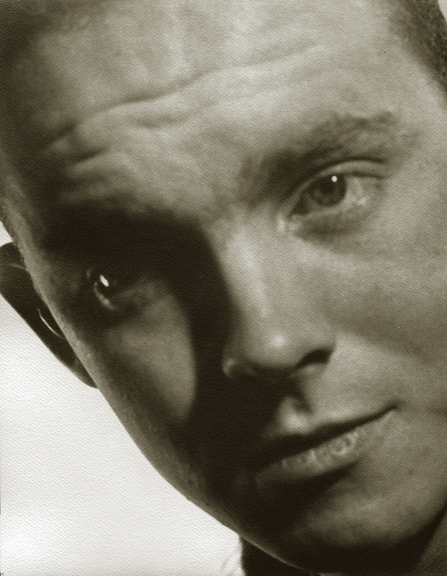 |
| Publicity photo, circa 1955 |
Stuart used to tell stories about his days as an
entertainer, occasionally involving famous people—about a pleasant day spent
with sculptor Isamu Noguchi moving sets for the Martha Graham Company, about
Leonard Nimoy and Charles Bronson at the Pasadena Playhouse (he admired Nimoy's diligence and didn't think much of Bronson's talents), and one about
riding around Hollywood with Victor Mature who had put a large phone in his car
and pretended he was talking on it while driving—but mostly when watching films Stuart would point
out largely unknown actors and actresses he had worked with. Watching old movies with him could be a lesson in the lesser-known personages of Hollywood.
Stuart was in many respects a self-taught man, but he was
educated at Kansas City Junior College, in Kansas City, Missouri, and held an
Associate Degree in Theater Arts from the Pasadena Playhouse (1950).
 |
| Stuart Talcroft, 2009 |
Wednesday, May 9, 2012
Plants I'm Growing: First Blooms--Scabiosa Farinosa, Salvia Sonomensis (May 8, 2012)

Tuesday, May 8, 2012
Books I'm Reading: Flowering of the Bamboo--A Bizarre Story of Murder and Cover-up in Post-War Tokyo (May 8, 2012)

I have an advantage over most readers in this instance. Having lived in Tokyo for about a third of my life, I was already familiar with the Teigin Jiken. I knew that a man posing as a doctor had appeared at a Tokyo bank branch in the early years of the post-WWII US occupation of Japan just before closing time and told the 16 people he found there to drink "medicine" he dispensed from an eyedropper (purportedly a prophylactic against dysentery, which was rife at the time) and had them wash it down with tea in their dutifully assembled tea cups and that the medicine turned out to be a preparation of hydrogen cyanide (or Prussic acid, so called because it was first isolated from the pigment known as Prussian blue). I knew that it had killed 12 of the victims, more or less instantly. All had unquestioningly complied with the mysterious man's directions (the survivors explained that the man had worn an armband identifying him as from the Metropolitan Office of the City Hall of Tokyo, that he had presented a card declaring him to be a doctor affiliated with the Welfare Ministry, and that he had said he'd been sent by the US occupation forces). I knew that the man and some money disappeared from the scene and that he was never positively identified, but I didn't know the details of the case, nor had I heard much about it in many years.
It's the sort of case that will never die, until it's solved (which now seems unlikely), a story much like that of D. B. Cooper, the man who hijacked a Northwest Airlines jet on November 24, 1971 between Oregon and Seattle, extorted $200,000 from the airline and, on a second, later flight, strapped to the money and the parachutes he had demanded, stepped into the sky, never to be seen again. Cooper--or whatever his name really was--killed no one, but the two tales live on in much the same way. They are stories half-forgotten, but dormant and alive nevertheless, lurking in anthologies of famous unsolved crimes for some new reader to stumble upon, or waiting to be mentioned in brief news articles on important anniversaries.
Triplett had learned of the Tokyo incident when he read just such an article in the Columbus Dispatch in 1978, 30 years after the murders. That an article about the death row wait of the man probably wrongly arrested for the crime appeared in the May 8, 1985 edition of The New York Times and that today is May 8, 2012 is entirely coincidental (see "For Man on Death Row, Time is Hangman" by Clyde Haberman, New York Times, May 8, 1985, Late City Final Edition, Section A, Page 2, Column 3). Intrigued, Triplett began to investigate, eventually spending seven years working on the story and writing his book. The research took him to Japan and to Washington D.C., where he turned up new details about the incident through Freedom of Information Act requests at the National Archives.
It goes without saying that the Teigin Jiken was far more sinister than the D. B. Cooper hijacking, and the investigation that followed it and its consequences were rather different as well. While it's still unclear what happened to Cooper and no one was arrested in the hijacking case, an artist named Sadamichi Hirasawa was held in connection with the Teigin Jiken poisonings. Later convicted of them, he was sentenced to death by hanging in 1950, a verdict appealed but upheld in 1955. When Triplett's book appeared in 1985, 93-year-old Arisawa was still awaiting execution. He died in prison two years later, in 1987, at the age of 95, after 32 years of incarceration on death row, having been the longest-serving death row inmate anywhere in the world. The execution was never carried out--a strange thing, as Japan is unsentimental about capital punishment. Executions usually are swift, little publicized, and infrequently questioned, but even the authorities in this case were so unsure of the condemned man's guilt that no one would ever sign the final papers required to actually kill him.
Triplett's detective work led him to information buttressing the view that Hirasawa was framed for the murders, that he became a scapegoat for an Occupation police system badly in need of a face-saving conviction in a case that absorbed the attention of the entire country and became notorious worldwide. He suggests that Japan's media contributed by jumping to conclusions, by publishing sensational articles based on hearsay, and that blame for the murders had to lie with someone trained to use the tricky poison that killed the 12 victims in the bank on that cold January day in 1948. There appears to be much evidence supporting the view that the murderer was associated during the war with the notorious Unit 731, headed by one Shiro Ishii, a Lieutenant General--the same unit that is at the center of Shusaku Endo's well-known novel Umi to Dokuyaku [The Sea and Poison], the first book I ever read cover to cover in Japanese. Endo, a Christian, once spoke at the church in Tokyo where I (not a Christian) was married. I had him sign my copy. I told him that it was the first book I had ever read in Japanese in its entirety. He seemed impressed, but must have thought it a strange choice--although my choice was virtually meaningless; it was simply a novel of a length that I thought I could handle before I started into it. After the war, the US gave Ishii and all of the men that had worked in Unit 731 doing ghastly experiments on live prisoners complete immunity from war crimes prosecution in exchange for details of the work they had done. To publicly tie the Teigin Jiken murders to Unit 731 would have been an embarrassment for all involved. It was assiduously avoided. Hirasawa's existence was convenient for many people, although he had been linked to the crime by highly circumstantial evidence.
Triplett's argument is convincing. His supporting evidence seems to corroborate what many have suspected all along, but it leaves one question unanswered. Why? What was the motive of whoever it was that poisoned 16 people in a Tokyo bank one day, seemingly for no reason? While the bank was robbed, the killer left twice the amount of money he took sitting on tables, laid out for counting. Was the theater of that day designed, as some argue, simply to show contempt for mindless obedience to authority? All possible answers seem to have the same fault: none seems to truly explain such a coolly calculated and seemingly random act. We'll probably never know why the bamboo flowered that day.
Tidbits: RIP--Maurice Sendak (May 8, 2012)
Writer and illustrator Maurice Sendak died today. He was 83. He is gone, now, but I suspect books like In the Night Kitchen, Where the Wild Things Are and the little stories in the Nutshell Library will live forever. RIP.
Sunday, May 6, 2012
Wines I'm Making: First Sulfur Spraying (2012)

Friday, May 4, 2012
Birds I'm Watching: California Quail (May 4, 2012)

For more about bird watching in Sonoma County, see my Website Sonoma County Bird Watching Spots.
Rain: A Little More Rain (May 3, 2012)
We got a little more rain yesterday, May 3. The rain gauge collected 0.15 inches, which brings our total for the 2011-2012 rainy season to 26.30 inches. That's respectable, but still on the low side. The historical annual average for Santa Rosa is just under 32 inches.
Found Art: Blue Dumpster (May 4, 2012)

For more found art, see my blog Serendipitous Art.
Wednesday, May 2, 2012
Plants I'm Growing: First Blooms--Monkey Flower, "Sungold" Butterfly Bush, More Roses (May 2, 2012)


The monkey flower bloomed on May 3 in 2010. I can't find a record for 2011. "Sungold" bloomed on April 22 in 2011 and May 2 in 2010. "Nearly Wild" bloomed on April 18 in 2011 and April 9 in 2010, so this is rather late for this rose, although one or two mis-formed buds did open a couple of weeks ago.... Perhaps in earlier years, I've counted the outliers....

Tuesday, May 1, 2012
Music I'm Listening To: Neil Buckley Octet (April 30, 2012)

Sunday, April 29, 2012
2008 La Marouette Viognier Vin de Pays d'Oc

A pretty, medium straw color. Toasted grain on the nose. None of the strong peach scent common in Viognier. Something a little musky. Similar on the palate. Seems quite restrained for a Viognier. Not a lot of overt fruit. Quite dry at first. Low in acidity. From the mid-palate begins to seem a little weightier, with some fruity sweetness, but the fruit remains subdued. Good texture, though. Not at all wimpy. If this wine were a person, it would be a quiet but self-assured intellectual--the sort of person that needs to be drawn out, but that has an affable side, if you can get to it. Hints of passion fruit develop with a little time. Good finish with lingering flavors suggesting vanilla and cherimoya. Although I would have liked a little more acidity to balance things, I enjoyed this wine. $10.99 at Thom's Natural Foods (5843 Geary), San Francisco.
Plants I'm Growing: First Blooms--Roses "Cocktail" and "Altissimo"

Subscribe to:
Posts (Atom)



 Posts
Posts

