Friday, April 22, 2011

Plants I'm Growing--First Blooms: Rhododendron "Double Eagle," Butterfly Bush "Sungold," Salvia Lyrata

First blooms of 2011 on three plants in the garden yesterday and today. Yesterday the yellow rhododendron "Double Eagle" bloomed. In stark contrast to last year, there is only one flower cluster. Last year, the whole plant was covered in blooms. Rhododendrons are difficult....

Today the first flowers opened on the butterfly bush called "Sungold," which has distinctive yellow-orange globes of flowers in alternating pairs. First blooms today also on the low-growing salvia with purple leaves that I believe is Salvia lyrata. I let these go to seed each year and we get new ones in unpredictable places around the garden.

"Double Eagle" bloomed on March 29 in 2009 and on March 25 in 2010, so this is quite late. The plant has calculated botanical years of 361 days and 391 days. "Sungold" bloomed on May 2 in 2010, so this is earlier than last year and a year of 355 days. Salvia lyrata bloomed on May 4 in 2010 for a year of 353 days.

Thursday, April 21, 2011

Rain: More Rain (April 20-25, 2011)

Rain overnight on the 20th gave the garden a much-needed drink. Despite the higher-than-usual rainfall this season, there had been no substantial rain in several weeks. The rain last night saves me using the drip irrigation system for another week or so. We got 0.6 inches, which brings our total for the 2010-2011 rainy season to 36.3 inches, more than four inches above the historical average.

[Update: More rain overnight and on the morning of the 24th. The total is now 36.5 inches.]
[Update: Sprinkles last night added 0.1 inches, for a total of 36.6 inches.]

Wednesday, April 20, 2011

Found Art: Panel with Numerals, San Francisco (April 20, 2011)

Walking along the Embarcadero not long ago I happened across this green panel with numbers on it. I don't know what they mean or why they were there. They seemed abandoned--they seemed to have a significance long forgotten, but they looked like art to me. Found art.

For more found art, see my blog Serendipitous Art.

Tuesday, April 19, 2011

Plants I'm Growing--First Blooms: Penstemon Heterophyllus, Rose "Cocktail" (2011)

First blooms of 2011 on the pretty blue penstemon Penstemon heterophyllus and on the rose called "Cocktail." The penstemon is a variety I've seen blooming wild in northern California and Oregon by the roadside, but it has done very well in the garden here, despite (because of?) getting very little water or attention. The bright blue flowers have a beautiful, almost iridescent purplish sheen to them. Cocktail has been a reliable bloomer as well, with very cheerful bright red, single flowers with beige centers.

I'm surprised to see that I don't seem to have records for either Penstemon heterophyllus or "Cocktail" in 2010 or 2009, so I can't say whether they've bloomed early or late this year. In any case, they're pretty.

Monday, April 18, 2011

Movies I'm Watching: Little Voice

Our local Blockbuster Video shop shut down recently. I took advantage of the opportunity the closing afforded to pick up about a dozen films for only $2.99 each, as well as two seasons of Mad Men at a dollar a disk. Among the films I chose was Little Voice (1998, Directed by Mark Herman; starring Jane Horrocks, Michael Caine, Jim Broadbent, Brenda Blethyn, and Ewan McGregor), purely on the strength of Michael Caine's presence in the cast (I had not been aware of Horrocks before--most of her work appears to have been in television or--not surprisingly--doing voice characterizations).

I would call this a flawed gem. The writing struck me as weak in places: did Mari, the Brenda Blethyn character, have to be so unrelievedly loud and coarse? I think not. More importantly, the sudden nastiness of Michael Caine's character (down-and-out promoter Ray Say) toward Mari seemed out of character. He turns on her and needlessly humiliates her, saying, essentially, that she disgusts him physically. In the flow of the story, the scene is used to express his frustration when he begins to feel that Mari is an obstacle in the way of his efforts to exploit her daughter, the eponymous Little Voice, a pathologically shy girl that barely speaks yet has an extraordinary ability to mimic some of the more interesting female singers of the 1940s, '50s and '60s, including Judy Garland, Shirley Bassey, and Marilyn Monroe. Yet, Ray was happy to pick Mari up in the bar where he meets her and enjoy his time with her before he knew anything about the woman's extraordinary singing daughter--in other words, before he had any motive to pretend to be interested. Clearly he was attracted to her before Little Voice (or LV as she's known) becomes an issue. In contrast to this bit of nastiness, he is quite tender with LV (although he has a strong motive here, he seems genuinely to care about her). Is he really so two-faced? Is he really so unfeeling? Perhaps, but something in the logic of the scene with Mari seemed deficient.

Having said that, Jim Broadent is brilliant as the club owner, Ewan McGregor delivers a solid performance, and Jane Horrocks is simply phenomenal. It's really hard to believe she's not lip-synching, but apparently she isn't. She actually can sing like Judy Garland, like Shirley Bassey, like Marilyn Monroe. While the attachment of the shy LV to her dead father quickly becomes rather creepy, it's easy to ignore that and other problems for the sheer pleasure of hearing Horrocks sing. In other words, Little Voice works marvelously as a vehicle for her special talent. Not surprisingly, the film is an adaptation of a play of the same name originally written to showcase Horrocks and her singing. Recommended.

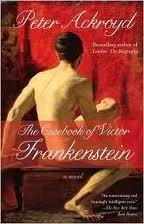
Books I'm Reading: The Casebook of Victor Frankenstein

Not long ago the subject of Frankenstein came up at a family gathering. I don't remember what got us started, but it occurred to me that my son had seen Young Frankenstein (1974, Directed by Mel Brooks, starring Gene Wilder, Peter Boyle, Madeline Kahn, Marty Feldman, Terri Garr, Cloris Leachman, and Kenneth Mars) and thought it funny, but never seen the original films that Young Frankenstein spoofed. Turns out my mother had never seen them either. So, we rented Frankenstein (1931, Directed by James Whale, starring Boris Karloff, Colin Clive, Mae Clark, and Edward Van Sloan) and The Bride of Frankenstein (1935, Directed by James Whale, starring Boris Karloff, Colin Clive, Valery Hobson, Ernest Thesiger, and Elsa Lanchester) and then watched Young Frankenstein again, having something of a Frankenstein Fest in the course of a few nights.

It had been a long time since I'd seen either of the original films.  It's funny how memory works: I see now that much of what Young Frankenstein makes fun of (and what I remember about the original films) is in The Bride of Frankenstein, rather than the first film. I've always thought (and would still say) the later film is the better of the two (partly because sound technology advanced a great deal in the four years from 1931 to 1935), but both have held up rather well. Director Whale and Karloff succeed in making the monster a sympathetic character--as I'm surely not the first to note. It's no excuse to lament being brought into the world against one's will--each one of us is born into the world without a say in the matter--but the misunderstood creature is mercilessly goaded; it's easy to see both that he is done in by his own character faults and that he's not really to blame for what he does. Is it going too far to call the story Shakespearean? I've never read the original story by Mary Shelley. I think the time has come. Clearly, she captured something elemental, something that continues to fascinate after nearly 200 years (the story was first published in 1818).

Peter Ackroyd's entertaining retelling comes at events from a new perspective--that of Victor Frankenstein himself--and ends with a sharp twist on the final page of the book, a twist I won't spoil. In this retelling (The Casebook of Victor Frankenstein, by Peter Ackroyd, 2008, Anchor Books), Frankenstein forms a friendship with Percy Bysshe Shelley at Oxford that serves to spur his experiments in the reanimation of dead tissue, experiments that inevitably escalate into an obsession. We witness at first hand the birth of the creature, its escape, and the revenge it takes upon its creator and the people he cares for--all narrated in what seems a period-perfect voice, as if Frankenstein is reading from his casebook. The matter-of-fact report that takes us through the process of the creation is deliciously ghoulish and in places truly horrifying in a way that the films never capture. A fast-paced, page-turner with depth. This one's very likely to get your electrical fluids going. Recommended.

We watched the films not long before my last birthday. My mother kindly thought to get me this book as a birthday gift. The timing was perfect.

Plants I'm Growing--First Blooms: White Rock Rose, Rosa Chinensis Mutabilis (2011)

A heavy load of work this week has caused me to miss the first blooms of 2011 on a number of plants in the garden this year, but I note that the large white Cistus on the side of the house, by the lamppost, started blooming on April 15--yet another Cistus, or rock rose, that I've lost track of the name of. One of the first plants I planted here, it thrives with almost no water and blooms reliably.

The blowsy multi-colored rose, also on the side of the house, began blooming around April 15 as well. Rosa chinensis mutabilis it's called. I like the name of this plant--as I may have remarked here before. It means "mutable Chinese rose" and the name is apt. The compact, neat buds begin a promising deep red, but the flowers open a medium purplish pink and then develop apricot centers as they quickly fade to pink and finally to a mottled pale beige. The flowers then fall apart and blow away. Perhaps this flower should be the symbol of romantic love, rather than the scarlet hybrid tea rose that has taken on that role.

First blooms yesterday, April 17, on the deep pink rose by the side of the deck, a variety called "Nearly Wild." It's a very pretty single-petaled, old fashioned-looking rose that reminds me of the wild roses I remember from summers in England as a child. The buds are a deep, deep pink. The long-lasting flowers open to show a somewhat paler center with cheerful yellow stamens. Generally trouble free, although it occasionally needs a light spraying with neem oil to prevent mildew and against aphids. "Nearly Wild" bloomed on April 9 in 2010, so it has calculated a botanical year of 356 days.

The climbing rose "Altissimo" has also started to bloom in the past few days, but I missed the first bloom this year.

Rain: Drizzle Today (April 18, 2011)

It's drizzling this morning, but not really raining. It's more of a mist, actually. The rain gauge overnight showed 0.1 inches--not enough to give the plants much, but rain is in the forecast for the entire week. Now that everything has dried out following an unusually wet March, we could use a good downpour. The rain overnight brings the total at my house for the 2010-2011 rainy season to 35.7 inches. The historical annual average for Santa Rosa is 31.91 inches.

Sunday, April 17, 2011

Birds I'm Watching: Ninth St. Rookery, Spring Lake (April 15-16, 2011)

I visited the "Ninth St. Rookery" for the first time this season on the 15th. The "rookery" is nothing more than four or five large trees in the median strip on West Ninth St. in Santa Rosa used each year by Great Egrets, Snowy Egrets, Black-crowned Night Herons, and Cattle Egret as a nesting site. The place always has a surreal quality. The trees are filled with starkly white birds making the strangest of noises--saying things that sound like "wubba-wubba, wubba-wubba." Usually active between late March and June, it's good place to see these birds up close.

Yesterday, I took a walk around Spring Lake and had the unusual pleasure of seeing an American Bittern that stood still long enough to photograph (below). Usually these birds are so well camouflaged that you simply don't see them, or the moment they see you, they're gone with a loud squawk! amid a noisy flapping of wings. I hadn't been to Spring Lake in quite a while. There were orange-crowned warblers singing everywhere, and enough Spotted Towhees to compare the rather similar trills these two birds make (I always have trouble telling them apart). Some of the Golden-crowned Sparrows were in their full breeding plumage, sporting starkly black-gold-black heads. I also saw the Great Horned Owl nesting at the lake again this year. A good way to start the day--before heading home to sit at the computer to work all day.

For more information about bird watching in Sonoma County, see my Website Sonoma County Bird Watching Spots.


Friday, April 15, 2011

Plants I'm Growing--First Blooms: Cistus

First blooms of 2011 today on the large white Cistus by the pink crabapple. Yesterday one of the other Cistus (or halimiocistus) varieties in the garden bloomed. Unfortunately, I've lost track of the names of these two plants. One is very large, growing to over six feet, the other, with the raspberry-jam spots on the flowers is a low-growing variety, possibly a Halimiocistus. Both are very pretty, but I've lost track of the names of these varieties.


Wednesday, April 13, 2011

Tuesday, April 12, 2011

Plants I'm Growing--First Blooms: Wisteria (2011)

First blooms today on the wisteria behind the house. The plant is one of two that now grow over the structure that supports my hammock. There are two plants, one on either side of the uprights at either end. One is in a comparatively shaded area. It looks like it will bloom this year for the first time. The two plants were grown from seed we put in pots around 2004. The more shaded plant has taken this long to reach the top of the structure and find full sun. The parent was an amazing deep pink wisteria we came across in southern Japan, at the Imari pottery festival, and picked up seeds from. The bigger plant that has been blooming for several years now turned out to be a normal purple wisteria, not the deep pink: seeds often don't come true. I suspect the second one will be the standard purple wisteria color as well, not the deep pink. We'll know in a few days. Likely to be a disappointment, but still pretty.

Wines I'm Making: First Grape Leaves (2011)

With the return of warm, dry weather, not only have flowers started blooming in the garden, but the grape vines in our backyard--and all over the county--have begun to come alive again. Another season begins. 2011 will be my eighth season making wine from the grapes that grow behind the house. Since 2007 or so, the wines have been getting appreciably better each year. The verdict on the 2010 (not yet bottled) remains out. It's not clear what the cold summer last year will have meant to the wine, but I'm hopeful. If it turns out to be less good than the 2009, I have the 2011 to look forward to. We'll see what the summer brings.

Monday, April 11, 2011

Plants I'm Growing--First Blooms: Cistus, Phlomis, Salvia, Convolvulus (April 11, 2011)

It's that time of year again. With warmer weather and the end of rain for the season--a lull, at least--every day brings new flowers into bloom in the garden. Today I note the first blooms of 2011 on six plants: Phlomis fruiticosa (Jerusalem sage, pictured abowe); Cistus salivfolius, Salvia "Point Sal Spreader," the white rose behind the house, the pink Cistus by the hammock (pictured below), and the silver-leafed bush Convolvulus mauritanicus, a relative of the morning glories.

Phlomis fruiticosa bloomed on April 10 in 2009 and on April 24 in 2010, thus calculating botanical years of 379 days and 352 days, which average to 365.5 days--very close to an actual year.

Music I'm Listening To: San Francisco Symphony (April 9, 2011)

I attended a very enjoyable concert by the San Francisco Symphony on Friday night (April 9). Osmo Vänskä, Music Director of the Minnesota Orchestra, conducted. San Francisco Symphony concertmaster Alexander Barantschik was the featured soloist, playing the Mendelssohn Violin Concerto in E Minor. The program opened with a new composition by Austrian composer Thomas Larcher entitled Red and Green. The second half of the program, after intermission, was taken up by a performance of Ralph Vaughn Williams' London Symphony.

Some people hate it, but I have a taste for modern music, and I particularly enjoy explorations of rhythm, texture, and timbre--including those that use unconventional instruments, non-instruments made into instruments, and extended techniques on traditional instruments. It's the sound of the music that fascinates me. Is that nonsensical? A better way to put it might be to say, it's the quality of the sound that I enjoy. Larcher's Red and Green was right up my alley. As the program notes point out, Larcher has more or less abandoned melody and harmony in this piece. Red and Green is concerned with rhythm, texture, and timbre--the quality of sound. The program notes obligingly list all the unusual "instruments" in the ensemble. I won't repeat it here, but it includes things like tin foil. The six-man percussion team (not including a couple more performers manipulating a piano and playing a celesta) was kept very busy. In the one place that a semblance of a melody did emerge, it had the feeling of something external--a snippet of some other composition fleetingly recalled. Trying to describe music like this--or any music, really--in words is a hopeless task (that's what we have music for). Suffice it to say that it was consistently interesting and I very much look forward to the release of a recording that includes Red and Green.

The piece was completed only in November of last year, as a commission for the San Francisco Symphony. The Thursday, Friday, and Saturday concerts this past weekend premiered the piece. Composer Larcher--a strikingly tall, awkward-looking man--appeared on stage after the performance and seemed very pleased--as he should have been. The orchestra was extraordinarily focused and responsive to Vänskä, who conducted without a baton, using his entire body to communicate--bending low with a cramped hand at his chest asking for more, or making broad gestures with his arms, or pointing energetically in anticipation of an entry. The San Francisco Symphony seemed in top form. Mr. Larcher may have been awkward on stage, and his comments about the music in the program notes didn't quite make sense, but who needs words when you can create music like this? Larcher is a composer I will be looking out for in the future.

The Mendelssohn Violin Concerto got off to a very rocky start, I thought. Was it just me? For the first few bars, Barantschik sounded out of synch with the orchestra. It was a short while before soloist and orchestra seemed to be conscious of each other's presence. I got the impression that conductor Vänskä started before Mr. Barantschik was quite ready. The playing overall was rather too deliberate for my taste. Competent, surely, but somehow lacking in fire. I thought the early cadenza and the slow middle movement the most effective parts of the performance. The orchestra didn't have the concentration so evident in the opening piece. Do performers go on auto-pilot when they play something as familiar as this concerto? Still, it was fun to learn that Mr. Barantschik played the violin on which the Mendelssohn concerto is believed to have been premiered by Ferdinand David, in March 1845, a 1742 Guarnerius del Gesu on loan exclusively to Mr. Barantschik from the Fine Arts Museums of San Francisco and that Jascha Heifetz had owned the violin from 1922 until his death, when he bequeathed it to the Fine Arts Museums. I probably own Heifetz recordings of this instrument.

I thought Vänskä led the symphony in a generally good reading of the London Symphony by Vaughn Williams, another very familiar composition, but one I'd never heard live before. By the end of this very long piece, however, the audience was getting restless. Still, all in all a very enjoyable evening.

(Photo of conductor Osmo Vänskä by Ann Marsden, photo of Alexander Barantschik uncredited. Both photos courtesy of the San Francisco Symphony)

Sunday, April 10, 2011

Tidbits: RIP--Sidney Lumet (April 9, 2011)

I was sorry to hear that director Sidney Lumet died yesterday. Lumet made some of my favorite movies--including famous films like 12 Angry Men (1957), Serpico (1973), Dog Day Afternoon (1975), and The Verdict (1982), but also some "smaller" films that deserve more recognition--notably Fail-safe (1964) and The Pawnbroker (1964). RIP

Wednesday, April 6, 2011

Plants I'm Growing--First Blooms: Halimiocistus Sahucii, Pacific Iris

First blooms today on the low-growing rock rose Halimiocistus sahucii and on the Pacific iris under the smoke tree at the front of the house. Halimiocistus sahucii bloomed on April 2 in 2009 and March 18 in 2010, calculating years of 350 days and 384 days, averaging to 367 days. The pacific iris bloomed on April 5 in 2010, for a year of 366 days, very close to an actual year.

The redbud tree by the garage started blooming on April 2 (I note belatedly). The tree first bloomed on March 26 in 2010, for a year of 372 days.

Monday, April 4, 2011

Plants I'm Growing--First Blooms: Scabiosa, Tulipa Clusiana

 First blooms of 2011 yesterday on the garden-variety scabiosa in the back of the house and on the few Tulipa clusiana tulips that survive. The tulips are very pretty, but haven't lasted well. Among the species tulips (that is, tulips that are not hybrids), Tulipa bakeri "Lilac Wonder" has been most reliable here.

Scabiosa bloomed on March 15 in 2009 but on April 5 in 2010. The plant thus calculated a year of 386 days last year and of 363 days this year. Tulipa clusiana bloomed on March 16 in 2010, for a year of 383 days.

Sunday, April 3, 2011

Wines I'm Drinking: Two Wines from BearBoat

Yesterday I tried two wines from BearBoat. I can't say I enjoyed either wine--a 2008 Alexander Valley Sauvignon Blanc and a 2007 Central Coast Riesling. The Sauvignon Blanc was thin and virtually tasteless. The Riesling was somewhat better, but not at all nuanced. Both wines were inexpensive at only $4.99 a bottle, and the BearBoat labels--or is that Bear Boat? (it's hard to tell)--are attractive and whimsical (on the Sauvignon Blanc label we see two bears in a boat musing on the meaning of life; one says he feels his life is adrift, the other, named Zeke, points out that they live on a rowboat...), but I don't think I'd buy either again; whimsy and packaging can't really make up for what's absent from the bottle. Brief tasting notes follow.

The 2008 Bear Boat Alexander Valley Sauvignon Blanc was a very pale gold. It had a slightly perfumed scent at first--offering something floral--with hints of vanilla, but little else. There was none of the gooseberry that usually identifies Sauvignon Blanc, although there was a vague suggestion of lime. On the palate, the wine was clean, light, and thin, but that's about all I can say for it.  It was virtually tasteless. There was no concentration at all. Not unpleasant, and there were even a few attractive hints of green melon, but, overall, I'd call this wine simply bland. Not recommended. (The 2007 label is shown here, but it's more or less identical to the 2008 label).

The 2007 Bear Boat Central Coast Riesling was a more interesting wine. If I had to choose between the two I'd take the Riesling simply because it had some flavor, but ultimately, this too, was rather dull. It was a medium gold color. It had the typical "petroleum" scent of Riesling with a hint of honey and later a suggestion of dried apricots, and on the palate it suggested candied grapefruit rind--which is a reasonably interesting to thing to suggest--, but the wine was one-dimensional and a little bit cloying. Not recommended (except perhaps well-chilled as a cheap summer barbecue aperitif for the undiscerning).

I write about many subjects. Use the labels at right above to explore this blog. For more wine reviews, use the Wines I'm Drinking label. 

Found Art: Graffiti on Blue Trash Container, Santa Rosa April 3, 2011

Yesterday, while walking around downtown Santa Rosa, I came across this dark blue trash container decorated with silver spray paint, in places etched away with a sharp tool. Unintended art. Collaborative art.

For more found art, see my blog Serendipitous Art.

Saturday, April 2, 2011

Birds I'm Watching: Crane Creek Regional Park (April 2, 2011)

I joined a morning hike with the Madrone Audubon Society today at Crane Creek Regional Park, which is only about 25 minutes from home, but I'd never been there before. It's a beautiful park with pretty walks through rolling hills studded with oaks and along small streams with the sort of brush that attracts many birds. At this time of year, the grass is lush green. Even the new poison oak leaves were pretty. I got some good photos of a female Red-winged Blackbird (above).

The highlights for me were first-of-season sightings of: Red-breasted Sapsucker, Pacific-slope Flycatcher, Western Kingbird, Orange-crowned Warbler, Western Meadowlark, Lincoln's Sparrow (last of season, perhaps, but first of 2011), and Bullock's Oriole--this last was fabulously bright. Some of the Yellow-rumped Warblers were also in very bright, attractive plumage, as were the male American Goldfinches.

I saw 47 species: Canada Goose, Mallard, Wild Turkey, Double-crested Cormorant, Great Egret, Turkey Vulture, White-tailed Kite, Cooper's Hawk, Red-shouldered Hawk, Red-tailed Hawk, Eurasian Collared Dove, Mourning Dove, Great Horned Owl (on a nest), Anna's Hummingbird, Acorn Woodpecker, Red-breasted Sapsucker, Nuttall's Woodpecker, Northern Flicker, Pacific-Slope Flycatcher, Western Kingbird, Western Scrub Jay, Common Raven, Tree Swallow, Violet-green Swallow, Oak Titmouse, Bushtit, White-breasted Nuthatch, Bewick's Wren, Western Bluebird, American Robin, European Starling, Orange-crowned Warbler, Yellow-rumped Warbler, Spotted Towhee, California Towhee, California Quail, Song Sparrow, Lincoln's Sparrow, White-crowned Sparrow, Golden-crowned Sparrow, Red-winged Blackbird, Western Meadowlark, Brewer's Blackbird, Bullock's Oriole, House Finch, Lesser Goldfinch, and American Goldfinch.

For more about bird watching in Sonoma County, see my Website Sonoma County Bird Watching Spots.

Wines I'm Making: Racked 2010 Wines Yesterday

I finally got around to racking the 2010 wines yesterday. I transferred eight gallons of Cabernet Sauvignon/Cabernet Franc to new containers and sulfited them lightly (to 48ppm). I also racked three gallons of experimental "second run" Cabernet--wine made by adding sugar and water back into the pressings of the real wine and letting it ferment again. The real wine smells good and tastes good as well. It seems to have retained the strong Cabernet spiciness I noticed in it the first time I racked it. The second-run wine will probably prove to have been a waste of time and sugar, but we'll see. Finally, I racked all the second-run rosé I made--again, an experiment, but one that looks like it may have been worthwhile.

Thursday, March 31, 2011

Plants I'm Growing--First Blooms: California Poppy (2011)

The first of the California poppies in the garden to bloom opened yesterday, March 30. The California poppy: An appropriate flower for a state that calls itself the "Golden State." Our first poppy opened on March 19 in 2009 and on March 5 in 2010, so this is comparatively late. California poppy has calculated botanical years of 351 days and 390 days.

Tuesday, March 29, 2011

Food I'm Eating: The Olive Project--Herbed Olives

It's been a couple of months since I tried brining olives at home for the first time. It went well and was easy enough that I was inspired to lay down more olives today--about 2,000 more. Our tree is still heavy with fruit even after today's harvest, and the original supply of finished olives is already dwindling.

The fruit is noticeably bigger now. I guess the olives are that much riper than they were back in January. In the meantime, I've been experimenting with different ways to eat the olives I've already made. Tonight I added olive oil, rosemary, raw garlic, and Meyer lemon zest to a bowl of finished olives, and they are very tasty indeed.

My original post on the subject of making olives at home is here: The Olive Project. Also see The Olive Project Continued.

Plants I'm Growing--First Blooms: Michelia Yunnanensis, Creeping Phlox, "Pink Lady" Apple, Pink Crabapple

First blooms of 2011 on a number of plants in the garden today (finally the rain has stopped). Flowers that had been holding back seem finally convinced there's a point to offering up their pollen. Flowers on Michelia yunnanensis, "Pink Lady" apple, and our pink crabapple all opened today. Some of the creeping phlox in the garden started blooming on Sunday (March 27).

Michelia yunnanensis (first photo) is a small relative of the magnolias native to Yunnan Province in China. It's finally taken off after a shaky start three years ago. It's covered with flowers this year and looks set to grow strongly. I love the deep cinnamon-colored covers to the buds and the creamy white flowers that contrast with the brown covers and the plant's deep green leaves. This plant bloomed on April 1 in 2009 and on March 22 in 2010, calculating botanical years of 355 and 373 days, which average to 364 days, or very close to a year by the sun. 

The "Pink Lady" apple bloomed on March 23 in 2009 and on March 30 in 2010, although in 2010 it bloomed a second time in October after bearing almost no fruit--odd behavior caused by the very cold summer we had last year. "Pink Lady" calculated years of 373 and 364 days, which average to 368.5 days--somewhat long, but I have only three years of data so far. My hypothesis is that over the years, all the plants in the garden (at least those native to this area) will calculate average years very close to actual years. 

The deep pink crabapple in the garden bloomed on March 26 in 2009 but on April 23 last year, almost a month later. I think 2010 was anomalous. The tree calculated years of 393 days and 340 days--both the shortest and longest years any plant have had since I started keeping track, but even these average to 366.5 days--very close to an actual year. 

Sunday, March 27, 2011

Music I'm Listening to: The San Francisco Symphony with Herbert Blomstedt and Arabella Steinbacher

Last night I attended one of three concerts the San Francisco Symphony is giving this weekend with Herbert Blomstedt as guest conductor and soloist Arabella Steinbacher. Only two pieces are on the program, the Mozart Violin Concerto No. 4 and Dvorak's New World Symphony, but the orchestra offered the Dvorak Slavonic Dance No. 1 as an encore, and Steinbacher played Fritz Kreisler's Recitativo and Scherzo as an encore piece.

The concert opened with the Mozart concerto, which was given a crisp, correct interpretation, but somehow didn't sparkle--which is not to say it wasn't enjoyable. Steinbacher is clearly a gifted violinist, although she had escaped my notice until last night. I very much liked the sound of Miss Steinbacher's violin. According to the program notes, she plays the "Booth" Stradivarius, of 1716, on loan from the Nippon Music Foundation. It has a very warm, dark sort of sound, especially rich in the lower register that I very much liked, although the Mozart didn't really showcase that. It was most interesting to listen to during the encore, and I would say the Kreisler piece was the highlight of the evening. The playing was precise but expressive--beautiful really.

At intermission I bought her recording of the two Bartok violin concertos with Marek Janowski conducting the Orchestre de la Suisse Romande (Pentatone Classics, PTC 5186 350). After listening to it in the car this morning as I drove around town doing some errands, I have to say I'm very impressed. It's a splendid recording. I'd put it right up there with my two favorite recordings of the Bartok No. 2--Kyung-wha Chung with Georg Solti and the London Philharmonic, a 1976 recording (London CS 7032 on LP in the US) and André Gertler with the Czech Philharmonic Orchestra, conducted by Karel Ancerl, a 1965 recording that appears to have been released originally on the Supraphon label, although I have it on a much later re-release, (still on LP), on the Quintessence label (PMC 7181). It's probably about time to try to find that one on CD, as I think it remains my very favorite. I went digging around my record and CD collection to find the Gertler disc, and I see that I own no fewer than eight recordings of the Bartok Violin Concerto No. 2 (I guess I like it). I'll probably feel compelled to listen to them all again to see if I still like these three best (Steinbacher, Chung, and Gertler). Other recordings I have include performances by Yehudi Menuhin, Midori, Anne Sophie-Mutter, and Itzhak Perlman.

But, to get back to the concert, I don't think Maestro Blomstedt got the best out of his performers. The first two movements of the New World Symphony seemed rushed, the final two movements were marred by some wobbly horn entrances (although, to be fair, that has never before happened at San Francisco in the three years I've been a subscriber), and in a number of places the conductor let the horn section overpower everything else. Still, the Dvorak was fun to watch--it was the first time I'd seen this very familiar music played live.

The encore came off rather better. The orchestra sounded relaxed and strong playing Dvorak's Slavonic Dance No. 1. The audience loved it. The concert ended with a standing ovation. So, it was an evening during which the highlights came with the encores, as sometimes happens.

Photographs of Herbert Blomstedt and Arabella Steinbacher courtesy of the San Francisco Symphony

Saturday, March 26, 2011

Rain: OK, I'm Officially Tired of It (March 26, 2011)

It just keeps coming down. We are in a lull this morning, but it's rained virtually all week. Yesterday and last night added another 3.6 inches to our total for the 2010-2011 rainy season, bringing it to 35.6 inches at my house. Other places in Santa Rosa have recorded as much as 38 inches. The historical average rainfall for Santa Rosa has been rising. It is now 31.91 inches, but we are already more than three inches above that before the end of March (the current rainy season ends June 30). The historical average for March 26 is 27.9 inches, so we are nearly eight inches above normal for this day and only 10 inches below the fifth wettest year on record, which was 45.8 inches, recorded in 1894-1895. I'm officially tired of it now. A little bit of sun, please?

Tuesday, March 22, 2011

Tidbits: RIP-- Blues Great "Pinetop" Perkins

I was sorry to hear that blues pianist "Pinetop" Perkins died yesterday. He was 97, but had been performing recently, mostly in Austin, Texas. I had the privilege of sitting with him and talking backstage at a Tokyo blues festival in 1999 (photo) while doing research for the liner notes that eventually accompanied And This Is Maxwell Street, the recordings from Mike Shea's 1964 documentary film And This Is Free. Perkins played for many years with the Muddy Waters band but had also known Robert Nighthawk, the guitar wizard featured on many of the Shea Maxwell Street recordings. We wanted to talk with people that had worked with Nighthawk. Perkins was a soft-spoken, slow-moving man that gave an impression of gentleness, but, like many aging blues musicians I've met (notably Frank Frost, B. B. King, and R. L. Burnside), he dropped about 50 years as he got up on stage and began to make music. RIP

Monday, March 21, 2011

Music I'm Listening to: The Santa Rosa Symphony with Bruno Ferrandis and Elina Vähälä (March 20, 2011)

I attended a Santa Rosa Symphony concert Sunday afternoon (March 20) conducted by Bruno Ferrandis. The program included Serious Song, by contemporary composer Wolfgang Rihm, Symphony No. 4 by Brahms, and the Brahms Violin Concerto, with soloist Elina Vähälä.

Overall, an enjoyable concert, but rather uneven, I'm afraid.

I did like the Rihm Serious Song. Immediately upon entering the concert hall it was apparent that something a little unusual was about to begin; there were no violins on stage--among the strings, only the violas, cellos, and basses were present. Also unusual was the presence of four clarinets at the front of the ensemble. I would say the piece didn't seem very song-like, but it was certainly serious. Opening with quavering dissonances among the four clarinets in the low register, the piece was dark and somber throughout with all the instruments mainly being given the lower notes in their ranges. No flutes either. According to the program notes, the piece was commissioned by conductor Wolfgang Swallisch who wanted a composition explicitly evoking Brahms. Composer Rihm was particularly impressed by the Four Serious Songs by Brahms and looked also to the example of the Deutches Requiem for the orchestration without the bright-sounding violins and flutes. To many I suspect this tone poem--that's what it seemed to be--will sound too abstract, too somber, too brooding, but it appealed to me. I applaud the inclusion of something rather different from the standard fare. It was a nice counterpoint to the very familiar pieces that followed.

In the Brahms Violin Concerto Soloist Vähälä played well, but seemed to have difficulty keeping her instrument in tune. I always hesitate to say things like that (not that anyone cares very much what I say) because I never trust my ears entirely, but I thought she was out of tune for about the first third of the first movement--a little bit sharp on at least one string. She tried to retune a couple of times using the fine adjustments at the bridge but finally resorted to turning one of the tuning pegs--a very risky thing to do while in the middle of playing, given the coarse adjustment the tuning peg provides. I'm persuaded that I was not mistaken about her difficulties by the extensive tuning she did between the first and second movements. Once she got things straightened out, everything sounded better.

Her instrument had a surprisingly strident sound. As it happens, that was rather effective in some of the rapid passages of double-stopping in the concerto, but otherwise it gave a cold and at times somewhat whiny impression. She was playing a 1678 Stradivarius. I am no expert, but I do know that that would be an early violin in Stradivari's career. Perhaps that has something to do with it? The second movement was marred by repeated wobbly entrances by at least one of the horns. Having said all that, I thought the Santa Rosa Symphony musicians focused and responding much better to Maestro Ferrandis's direction than usual, which is a good thing, and it's always interesting to hear such a familiar piece live. Despite the hiccups, I enjoyed hearing the concerto and the crowd--notably younger than is usual in Santa Rosa--was very appreciative.

The Fourth Symphony by Brahms is another very familiar piece, being one of the first I was attracted to during my shift as a teenager away from rock music in favor of classical. I'm afraid the ensemble wasn't quite up to it. The focus apparent during the violin concerto was nowhere apparent here. The players simply weren't together much of the time. Still, the ensemble has come very far in the 10 years I've been a subscriber to their concerts, and I mean no ill will. I'm glad they're here and I will continue to support them. At their best, they can be very fine indeed.

Photos of Bruno Ferrandis and Elina Vähälä courtesy of the Santa Rosa Symphony

Sunday, March 20, 2011

Plants I'm Growing--First Blooms: Flowering Cherry "Snow Fountain"

First blooms on March 19 on the "Snow Fountain" weeping flowering cherry in the side garden. Only one or two flowers have opened, and even those have mostly been blasted by the heavy rains we've had, but the first flowers opened yesterday. "Snow Fountain" bloomed on March 23 in 2009 and on March 14 in 2010, calculating years of 356 days and 370 days, which average to 363 days, just short of an actual year.
Related Posts with Thumbnails