
Saturday, December 6, 2014
Rain: Another 0.85 inches
Although it was clear today (December 6, 2014), off-and-on rain in the past couple of days has added another 0.85 inches to our annual total. We now stand at 8.20 inches at my location for the 2014-2015 rain year, which is a little more than an inch ahead of normal for this date in Santa Rosa.


Friday, December 5, 2014
Plants I'm Growing: Flowering Cherry (December 4, 2014)

Tuesday, December 2, 2014
Art I'm Looking At: "The Art of Collage" on the Art Wall at Shige Sushi (Dec. 6, 2014 - Jan. 31, 2015)
 A sushi bar in the middle of downtown Cotati--Shige Sushi (8235 Old Redwood Highway, Cotati, CA 94931 (707) 795-9753)--has recently given me a free hand to curate small art shows on one wall of the restaurant. I've just finished organizing the first show and designing announcements for it--The Art of Collage--which will run from December 6, 2014 to January 31, 2015. There will be a meet-the-artists reception from around 7:00PM on Wednesday, December 17. The show includes collage works by Claude Smith, Sherry Parker and me. Claude's work, using Xerox transfer printing and other monoprinting techniques is bold and gestural in some instances, cryptically narrative in others, but always arresting. Sherry Parker's collages, mostly using found pictorial elements, combine whimsy, the surreal, and an exquisite design sense. I'm looking forward to sharing the work of these outstanding artists with the community and to organizing future shows for the new Art Wall at Shige Sushi.

Rain: More Rain (December 2, 2014)
More rain overnight and today so far, as predicted. There was a new 0.75 inches in the rain gauge when I checked it this morning, but it's rained more since then. I hope it keeps going. It looks like this group of storms will at least bring us up to normal for the current rain year, which began on July 1, 2014 and ends on June 30 2015. The average for this date (December 2) historically is 6.02 inches in Santa Rosa. The more the merrier, though, as we have a substantial cumulative deficit from the past couple of years when rainfall was markedly lower than average.
[Update: As of the evening of the 3rd, we had received 1.5 inches of new rain since reporting the 0.75 inches mentioned above, so a total of 2.25 inches of new rain. That brings our total for the year as of today to 7.35 inches--slightly above average now for the first time this rain year.]
[Update: As of the evening of the 3rd, we had received 1.5 inches of new rain since reporting the 0.75 inches mentioned above, so a total of 2.25 inches of new rain. That brings our total for the year as of today to 7.35 inches--slightly above average now for the first time this rain year.]
Art I'm Making: New Collages (November, 2014)

In contrast, Untitled Collage No. 82 (Santa Rosa) shown below is mostly in neutral shades, although with accents in a deep grey-blue and in purples. It's an altogether more contemplative piece. It incorporates a few bits of paper with torn edges. I mostly use a paper cutter to get straight edges, but I liked these ragged scraps. I've let one push out below the bottom of the picture edge.
I'll be showing some of my collages in December and January at Shige Sushi, in downtown Cotati, on the new Art Wall there. Come by and meet me and the other artists participating in the show (Claude Smith and Sherry Parker) called "The Art of Collage" on December 17, 2014 at 7:00PM. The show will run from December 6 through the end of January 2015.
Click on the images for a larger view. For more, use the Art I'm Making tab to the right or visit my collage website at http://ctalcroft.wix.com/collage-site/ (requires Flash Player).

Saturday, November 29, 2014
Rain: Much Rain in the Forecast
It's been misting all night and, as I looked out my studio window this morning, a brief, full-on downpour began. How long it will last, I don't know, but there's rain in the forecast for the entire coming week--rain we desperately need. I'm hoping to go to the Santa Rosa Farmer's Market this morning, but I'm happy to have the rain. No complaints. Looking a the rain gauge this morning after the skies cleared, we seem to have had 0.85 inches overnight and in the morning. That brings our total for the 2014-2015 rain year to 4.25 inches--still woefully low, but it was good to get nearly an inch, and more is supposed to be on the way.
[Update: We had more rain (an additional 0.5 inches) overnight on the 29th-30th, bringing the total so far this rain year to 4.75 inches. Later on the 30th, more light rain added 0.35 inches, for a total of 5.10 inches this rain year. Clear today (December 1) but more rain is expected in the next three days.]
[Update: We had more rain (an additional 0.5 inches) overnight on the 29th-30th, bringing the total so far this rain year to 4.75 inches. Later on the 30th, more light rain added 0.35 inches, for a total of 5.10 inches this rain year. Clear today (December 1) but more rain is expected in the next three days.]
Friday, November 28, 2014
Music I'm Listening To: Santa Rosa Symphony Youth Orchestra and Young People's Chamber Orchestra

The Gershwin was an interesting arrangement by Cristian Macelaru and Howard Cable, commissioned by Lyndsay Deutsch, that makes a violin the main soloist--although the famous opening clarinet solo is left to the clarinet. My son played the opening solo and acquitted himself quite well, I thought. After the concert, Ms. Deutsch told me she's played the piece with several professional orchestras and that my son handled the solo better than some of the professionals she's worked with--which was gratifying to hear--but the entire orchestra played wonderfully. It includes some very talented young musicians.
I had never seen or heard Ms. Deutsch play before, but I was very impressed by her focus and energy on stage, not to mention her gracious and friendly manner off stage. She has real charisma. I expect we'll be hearing more about this young violinist in the future. I took photos during rehearsals at the request of the Youth Orchestra, so I got to hear much of the program from the stage, up close, which was a lot of fun. The photograph above shows Deutsch and Conductor Loheyde discussing the Gershwin in rehearsal. The next concert featuring the Youth Orchestra and the YPCO will be March 6, 2015, with guest artists Trebuchet.
Serendipitous Art: Parking Garage Spots (November 28, 2014)

For more unintended art, see my blog Serendipitous Art.
Thursday, November 27, 2014
Miscellaneous: Where Did Throwback Thursday Come From?

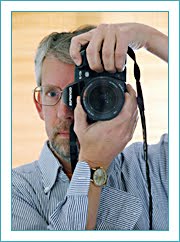
Above is my contribution for this Thursday--a photo of me in my first apartment in Columbus, Ohio. I found it yesterday while trying to clean up and organize my studio.
I lived for a year at 1350 Highland St., about a block south of King Ave., south of the Ohio State University campus. I had spent the previous year at Webster College, now Webster University, in St. Louis. Behind me on the walls are paintings I had done recently. Above right is a view of the houses across the street on Highland St. Below that is a view of my across-the-street neighbor's house in Dayton, Ohio, a painting I did when in high school. Just behind my head is a self portrait I did in my Webster College dorm room. Some of my Webster friends may remember that one. The large abstract painting to my right (left in the photo) I did in my Webster dorm room as well. The self-portrait is dated 1978. It hangs in my studio today. This photo is probably from about 1981.
[Update: A Google search, naturally, reveals something about the origins of throwback Thursday. Here's an article on the subject.]
Saturday, November 22, 2014
Art I'm Making: Two Small Collages

Untitled Collage No. 80 (Santa Rosa), pictured below, uses umber, black, and a very deep (nearly black) navy blue offset with warm tones. Both collages are small--about four inches square.
Click on the images for a larger view. For more, use the Art I'm Making tab to the right or visit my collage website at http://ctalcroft.wix.com/collage-site/ (requires Flash Player).

Thursday, November 20, 2014
Rain: Rain Yesterday and Today is Helping a Little (November 20, 2014)
Rain yesterday and continuing today after a short lull is bringing some relief to the landscape. We've accumulated about an inch in the past 24 hours, but it's still coming down--which is a good thing. We are about 8 inches below normal for the year and have a cumulative deficit of something like 30 inches over the past three years, so everything helps. As of 11AM on November 20 we have had 1.25 inches of rain in the past couple of days, bringing the total at my location so far in the 2014-2015 rain year (which extends from July 1, 2014 to June 30, 2015) to 2.95 inches.
[Update: More rain on the evening of the 21st and into the morning of the 22nd has added 0.45 inches of rain, bringing the season total now to 3.40 inches--still well below normal, but every little bit helps.]
[Update: More rain on the evening of the 21st and into the morning of the 22nd has added 0.45 inches of rain, bringing the season total now to 3.40 inches--still well below normal, but every little bit helps.]
Tuesday, November 4, 2014
Art I'm Making: An Old New Collage

Click on the image for a larger view. For more, use the Art I'm Making tab to the right or visit my collage website at http://ctalcroft.wix.com/collage-site/ (requires Flash Player).
Monday, November 3, 2014
Books I'm Reading: Lawrence of Arabia--A Film's Anthropology

The better you know the film, the more interesting his book will be. I can imagine some of the detailed analysis of individual scenes being hard to follow if they aren't already fairly firmly embedded in memory. Given the time, the best strategy would be to watch the movie, read the book, and then watch the movie again. I suspect even people who know the movie very well will find something new to see in Lawrence of Arabia after reading Caton's analysis from the point of view of an anthropologist, examining the implications of the film's assumptions about other cultures, about colonialism, about class and gender. Caton succeeds in suggesting the film is rather more complex and ambivalent than it may at first seem. He also stresses how important it is to see Lawrence of Arabia as originally edited, arguing that seemingly insignificant details often cut to make a very long film more manageable are essential to understanding what the script writers and Lean intended. Worth a read if you're a fan of the film and want to add another dimension to your appreciation of it.
Friday, October 31, 2014
Wines I'm Drinking: 2005 Arceno Chianti Classico Riserva

Saturday, October 25, 2014
Rain: Finally a Little Rain (October 25, 2014)
Finally--a little rain. Too little, unfortunately, but at least a momentary downpour. It's been raining on and off all day, actually. I just checked the rain gauge and was pleased to find 0.5 inches there. That brings our total so far for the 2014-2015 rain season to 1.45 inches. It's a start.
[Update: On Friday, the 31st, we had another 0.25 inches, bringing the total to 1.70 inches.]
[Update: On Friday, the 31st, we had another 0.25 inches, bringing the total to 1.70 inches.]
Miscellaneous: I actually Used Pi to Solve a Real-life Problem

I started out with enthusiasm but quickly abandoned the project because of something my girlfriend's mother said as I was attempting to rattle off what I had learned--she questioned the need to memorize 100 digits if my intent was just to impress people. She reasoned that most people probably know the value of π to four or five digits at most. Therefore, she said, it would be more efficient to memorize the first 10 digits or so and then make up the rest because almost no one listening would ever know the difference.
At this remove, I've retained the value of π in my head to nine digits--3.141592635. That seems like plenty to impress and for practical use, and yesterday I used π to solve a real-life problem. I was drilling drainage holes in ceramic pots. I was trying to decide whether it was more efficient to drill three 3/4-inch holes in the bottom of each pot or to drill two one-inch holes. To compare the area opened up by each of the two options I had to know the value of π. Three 3/4-inch holes gives 7.0 square inches of drainage (0.75 x 3π), while two one-inch holes gives 6.3 square inches (2π)--close enough given how hard it is and how long it takes to drill holes in a thick ceramic material. Nine digits was more than enough to do the calculation. Thanks Mrs. Knoll.
Monday, October 20, 2014
Rain: Drizzle
Overnight we had a light rain. Rain is good, but it was hardly enough to make any difference. I found only 0.1 inches in the rain gauge this morning. That brings our total for the 2014-2015 rain year to 0.95 inches.
Thursday, October 16, 2014
Art I'm Making: Another New Collage

Sonoma County Art Trails 2014 continues next weekend (October 18 and 19). My studio is No. 125. I'm also showing photography and printmaking.

Click on the images for larger views. For more, use the Art I'm Making tab to the right or visit my collage website at http://ctalcroft.wix.com/collage-site/ (requires Flash Player).
Rain: 0.1 inches on October 15
The forecast promised real rain on the night of the 14th and into the 15th, but we got only 0.1 inches, at least at my house. It's supposed to rain again at the end of the week, but the long-term forecast is for another dry winter. I miss the big three-day storms and downpours we used to get regularly in the winter months. The recent rain brings our total for the 2014-2015 rain year to 0.85 inches.
Tuesday, October 14, 2014
Art I'm Making: Sonoma County Art Trails 2014 First Weekend
 I opened my studio as part of the 2014 Sonoma County Art Trails event on October 11 and 12 (the event continues next weekend, October 18 and 19) and enjoyed talking about art and making art with the many visitors who stopped by. It was a pleasure to get feedback on work I've never shown publicly before. During lulls, I had time to do a little work and finished a couple of pieces using paper I made to demonstrate my working process, which involves painting on paper or mono-printing on paper and then using the papers I make to create collages.
Pictured above is Untitled Collage No. 75 (Santa Rosa), which uses some paper elements printed using Sennelier's Naples yellow and incorporates some scraps of a sheet of paper with pastel marks on it that a fellow collage artist brought me.
Sonoma County Art Trails 2014 continues next weekend (October 18 and 19). My studio is No. 125. Stop by to see my work in person. I'm also showing photography and printmaking.
Click on the images for larger views. For more, use the Art I'm Making tab to the right or visit my collage website at http://ctalcroft.wix.com/collage-site/ (requires Flash Player).
%2Bsmallcmt.jpg)
Wine I'm Making: 2014 Cabernet Pressed, Sangiovese Rosé Racked

Monday, October 13, 2014
Art I'm Making: New Collages (October 12, 2014)

The second uses a rather large swath of green to balance the dark forms at the left and top edges. The green is offset by a beige circle.
Sonoma County Art Trails 2014 continues next weekend (October 18 and 19). My studio is No. 125. Stop by to see my work in person. I'm also showing photography and printmaking.
Click on the images for larger views. For more, use the Art I'm Making tab to the right or visit my collage website at http://ctalcroft.wix.com/collage-site/ (requires Flash Player).

Books I'm Reading: Exhibitionism: Art in an Era of Intolerance

President Johnson signed the NEA into law on September 29, 1965 following a congressional act of August 1964 that had created the National Council on the Arts. The council--an impressive group that included Isaac Stern, David Brinkley, Gregory Peck, David Smith, Leonard Bernstein, and later John Steinbeck, Richard Diebenkorn, and Sidney Poitier, among others--was tasked with creating an outline of the new Endowment's mission. An advisory panel that set priorities for the Endowment's visual arts program recommended that top concerns should include providing "direct assistance to the creative artist" and recognizing "excellence in artistic achievement." The first group of NEA grantees included men and women from all over the country working in a wide range of styles of painting and sculpture. The grants were based on a combination of artistic excellence and need. In other words, the people who created the NEA saw the Endowment's role as a source of direct support for the best working artists in the country, particularly those who were struggling financially. Many of the artists chosen to receive grants had virtually no income from their art, while producing work widely recognized as superior. Gene Davis, Edward Ruscha, Donald Judd, and Mark di Suvero were among the first group of grantees.
With the election of Richard Nixon came a change of leadership at the NEA that immediately and permanently changed its tenor, propelling it in the direction of the controversy perhaps most associated with the entity today, and, ultimately, creating public skepticism about the wisdom of any kind of public arts funding, sabotaging the original intent of those who brought the NEA into existence, people who took it for granted that quality art was essential to the life of a healthy nation. At the same time, Nixon's advisors recommended vastly increasing the NEA's grants--but mostly for political reasons; they believed spending on the arts domestically would go some way toward ameliorating the increasingly negative impact at home of what was going on in Vietnam. The associated bureaucracy grew and efficiency declined. The NEA's budget was less than $10mn in 1969, but well over $60mn already in 1974, when Nixon left office. The NEA awarded $16 in grant money for every administrative dollar spent in 1967 but only $10 per administrative dollar by 1983.
When Nixon appointed Nancy Hanks to the leadership of the Endowment, a shift in emphasis away from artistic excellence and toward pluralism accelerated. Nixon wanted to expand the audience for art. Hanks wanted that and much more. With growing funding at her disposal, she oversaw a sharp shift away from supporting individual artists (which, as Munson notes, became the Endowment's lowest priority). Public outreach and support for art institutions became the priority while the scope of eligible activities was expanded to include photography, printmakers, videographers, performance artists, conceptual artists, and even art critics. Before long, virtually any kind of creative activity or arts-related entity (many highly controversial) became eligible for NEA funding and the NEA began to feed the fringes of an expanding art world rather than support traditional artists in their studios.
As Munson puts it, "This weakened standard for awardees, together with the increases in funding, encouraged a freewheeling approach to grant making. Instead of painstakingly whittling down a list of candidates to only the best and brightest, the visual arts panels were now handing out hundreds of grants." The NEA was fueling the expansion of just about every new trend that came along, creating an illusion of value where often there was none and debasing itself at the same time. Eventually, the NEA came to sponsor the radical and deliberately controversial almost exclusively, effectively censoring most serious artistic activity. To get a grant, it was more important to be different, "interesting," or shocking than to exhibit any kind of technical skill or artistic vision. The NEA came to foster exhibitionism while banishing what many would still today consider more serious art from the pool of those eligible for support. This is the exhibitionism of Munson's title. The intolerance she refers to is the entrenched institutional hostility toward traditional art forms that has come to characterize the contemporary art world. Her book goes a long way toward explaining how we got where we are now.
The story of the NEA's evolution nicely illuminates the backdrop of public confusion about the visual arts today and deep public skepticism about art and government agencies associated with the arts. It also suggests why the only people that make a living as artists today seem to be those that feed off the arts bureaucracy--the posers that create "art" for dealer and gallery leaches that foist a great deal of trash on "collectors" who have no taste and have few places to go to look for less-biased guidance. While not everyone will agree with me about the lamentable state of affairs that has resulted from trends in the last 40 years or so, Exhibitionism: Art in an Era of Intolerance is well written, well argued, and hard to put down.
Thursday, October 9, 2014
Art I'm Making: Last Collages Before Art Trails


Books I'm Reading: Inventing Wine

Inventing Wine (Norton, 2012) is a history of winemaking from ancient times to the present with an emphasis on how wine was transformed from a highly perishable, short-lived, near accident to a highly sophisticated creation of the human imagination, benefiting from the choices winemakers are afforded today by innovations like temperature-controlled fermentation. Lukacs makes it clear that the global selection of high-quality wines we take for granted today is a very recent development.
Winemaking is believed to have begun as long as 8,000 years ago, but wine is highly susceptible to the effects of oxygen and spoilage caused mainly by the strains of bacteria that convert wine into vinegar. Most wine through history has been short-lived. While amphorae allowed quantities of wine to be sealed against oxygen and stored for long periods if unopened, most wine was stored in casks that, once breached, allow the contents to quickly turn sour if not topped up. Wine was often transported in animal skins (which imparted scents and flavors few would tolerate in wine today). It was typical to add spices, herbs, and resins to wine to mask off flavors and spoilage. Wine has not always been the sophisticated, natural drink it has become. What we think of as wine is comparatively new. Inventing Wine takes the reader on a journey through the history of winemaking with an emphasis on how we got from sour, adulterated wines of little distinction to the highly particular, carefully handled fresh-grape creations we enjoy today.
Serendipitous Art: Loading Dock, Graton (October 9, 2014)

For more unintended art, see my blog Serendipitous Art.
Tuesday, September 30, 2014
Art I'm Making: September 2014 Collage Work

Click on the images for larger views. For more, use the Art I'm Making tab to the right or visit my collage and photography website at http://ctalcroft.wix.com/collage-site/ (requires Flash Player).

Books I'm Reading: Just My Type

Garfield takes the reader on a grand tour of typography. The book is an entertaining, often witty look at typefaces--where they come from and what they do for us. You may never look at street signs, billboards, print advertising, or book pages the same way again. Particularly fascinating is the way Garfield puts fonts into historical context. Next time you're watching a movie, you may find yourself looking for examples of lettering set in typefaces that didn't exist at the time of the film's setting--a new dimension in movie error trivia to explore.
Monday, September 29, 2014
Wines I'm Making: Fermentation (September 29, 2014)

Sunday, September 28, 2014
Wines I'm Making: Harvest 2014 (September 24, 2014)

The Sangiovese must tested at 22.8 degrees Brix and a pH of 3.47, the Cabernet at 24.5 degrees Brix and a pH of 3.37, both close to ideal, although these are averages of all the grapes in the vineyard. I would like to have let the fruit hang a little longer, but I'm hoping the wine will be at least as good as it usually is--which is not bad at all.
I pressed the Sangiovese grapes on the following morning. I always make a rosé from the Sangiovese. The juice was about 18 hours on the skins, which has been normal. That amount of skin contact typically produces a wine of a pale salmon hue. The Cabernet is still cold soaking (or cool soaking anyway). I usually let the crushed grapes sit for about three days before inoculating with yeast. The Sangiovese fermentation is already underway. As usual, I have used the Epernay yeast for the rosé, the French Red yeast for the Cab. Soon the house will smell like a winery.
Subscribe to:
Posts (Atom)



 Posts

